
Why Refurbished Doesn't Mean Inferior: The Truth About Ex-UK Laptops in Kenya
Walk into almost any electronics conversation in Nairobi, and you'll eventually hear the term "ex-UK laptop" — sometimes said with genuine enthusiasm by someone who's had a great experience, sometimes said with quiet suspicion by someone who's heard secondhand horror stories, and often said without either party fully understanding where these laptops actually come from or why they exist in such large numbers in Kenya's market in the first place. This piece is a genuine, detailed explanation of the ex-UK and refurbished laptop phenomenon — not a sales pitch, but an honest account of the industry that supplies a huge share of Kenya's functioning computing power, brought to you by City Gadgets Kenya, a business built entirely around getting this category right.
Where Ex-UK Laptops Actually Come From
The term "ex-UK" specifically refers to laptops that were originally purchased and used by organisations in the United Kingdom — corporations, government departments, universities, hospitals, and large private businesses — before being retired from that original service and exported into secondary markets, of which Kenya is one of the largest and most established in East Africa. The "ex" prefix simply signals prior ownership by a UK-based organisation, similar to how "ex-Japan" or "ex-Germany" vehicles carry the same meaning in Kenya's used car market — a genuinely familiar concept to most Kenyan consumers already, just applied to laptops rather than cars.
Why the UK specifically? The United Kingdom has one of the world's most mature corporate IT leasing and refresh markets. Large UK organisations — banks, insurance companies, law firms, government bodies, universities — typically don't buy laptops outright and use them until they physically fail. Instead, they lease hardware, or purchase it under strict internal policies that mandate replacement every three to four years, regardless of whether the existing hardware is still perfectly functional. This isn't wasteful indulgence — it's a deliberate corporate IT strategy: keeping hardware within warranty periods, maintaining consistent performance across a large workforce, and avoiding the accumulated support costs of maintaining an ageing, increasingly diverse fleet of older machines.
What happens to the retired hardware? When a UK bank or law firm retires 2,000 laptops as part of a scheduled refresh, those machines don't go to a landfill — they enter a well-established, professional IT asset disposition (ITAD) industry. Specialist companies collect this hardware, wipe all corporate data securely (a genuinely important, legally mandated step under UK data protection law), test the units, and then either resell them within the UK's own domestic secondary market or export them in bulk to international markets, including Kenya, where demand for capable, affordable business laptops is strong and growing.
The Genuine Quality Argument: Why This Hardware Is Often Better Than New Budget Laptops
This is worth explaining clearly and directly, since it's the single most counterintuitive but genuinely true claim in this entire piece: a three-year-old ex-UK business laptop is very often a meaningfully better piece of hardware than a brand-new budget consumer laptop sold at the same price in Kenya today.
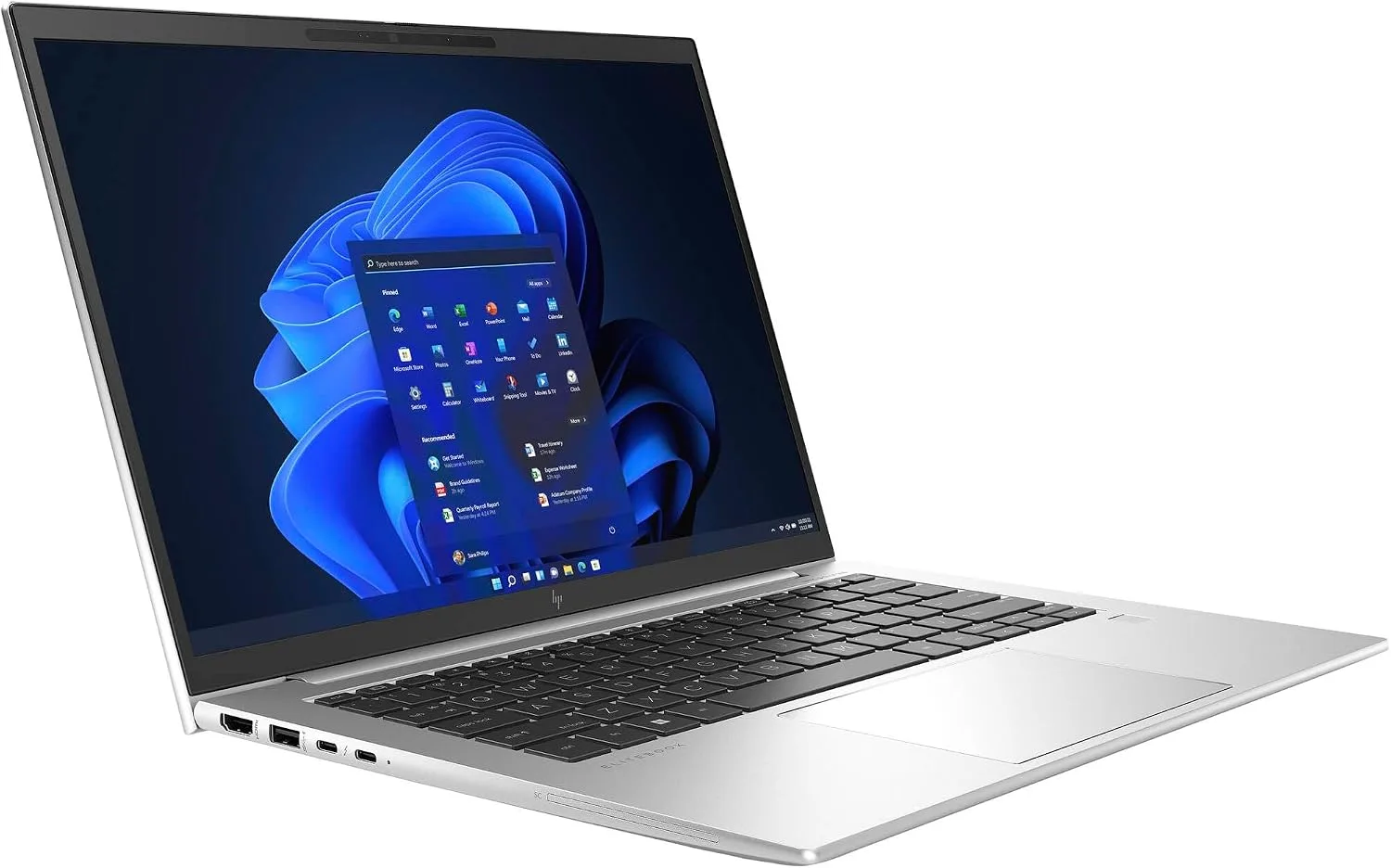
Why this is true, mechanically: UK corporations equipping their workforce don't buy the cheapest available laptops — they buy business-grade hardware from HP, Dell, and Lenovo's dedicated business lines (EliteBook, Latitude, and ThinkPad respectively), specifically because these lines are engineered for durability, serviceability, and consistent performance across years of daily professional use. These aren't consumer laptops built down to a price point for retail shelves — they're built up to a specification that corporate IT departments demand, because a laptop failure costs the organisation real, measurable productivity, and corporate procurement teams factor this into what they're willing to pay upfront.
The specification comparison, made concrete: as detailed throughout our buying guide catalog, a genuine Core i7 processor, 16GB RAM, and business-grade chassis construction is routinely available in the ex-UK refurbished market at price points where a brand-new laptop would only offer an entry-level Core i3 or Celeron processor with 4-8GB RAM and considerably flimsier construction. This isn't a marginal difference — it's often the gap between a laptop that handles your daily workload comfortably and one that frustrates you within months.
Understanding the Genuine Refurbishment Process
It's worth explaining what "refurbished" should genuinely mean in practice, since this term gets used loosely by some sellers without the actual process behind it that the label implies.
Data wiping and security clearance. Before any UK corporate laptop leaves its original organisation, it undergoes secure data wiping — a genuinely important step that protects both the original organisation's confidential information and the eventual buyer, who wants a clean, ready-to-use machine rather than someone else's leftover files.
Physical inspection and cleaning. A genuine refurbishment process includes physically opening and cleaning the unit — removing accumulated dust from internal components, particularly cooling fans and heat sinks, which affects long-term performance and reliability if left unaddressed.
Component testing. This is where the real quality assurance happens: testing the battery's remaining health and capacity, verifying every key on the keyboard functions correctly, checking the display for dead pixels or backlight issues, testing every port for functional data transfer and charging, and confirming the storage drive passes health diagnostics without errors.
Grading and honest condition disclosure. Reputable refurbishers grade units by cosmetic and functional condition, and a trustworthy Kenyan seller — like City Gadgets Kenya — passes this grading information on honestly, rather than describing every unit as flawless regardless of its actual condition.
Software installation and licensing. A properly refurbished laptop should arrive with a genuine, properly licensed operating system installed and ready to use — not a pirated or improperly activated copy that could cause future complications.
Addressing the Genuine Skepticism Head-On
It's worth directly addressing the concerns that make some Kenyan buyers hesitant about ex-UK and refurbished laptops, since dismissing these concerns outright would be dishonest — some of them reflect genuine, real risks in the less reputable corners of this market.
"These laptops are basically e-waste being dumped on Africa." This characterization, while understandable given genuinely irresponsible dumping that has occurred with some categories of electronic waste globally, doesn't accurately describe the legitimate ex-UK laptop trade specifically. Genuine ITAD companies test and certify functional hardware before export — the entire economic model depends on the hardware being resaleable and functional, not simply discarded. Laptops that genuinely fail testing are recycled for parts or materials, not shipped abroad as functioning products under false pretences by legitimate operators in this industry.
"You never know what you're actually getting." This is a fair concern about the informal, unverified corners of the secondhand market specifically — an individual reseller with no testing process and no warranty genuinely does carry this risk. This is precisely why buying from an established, reputable seller who tests units and offers a genuine warranty, as detailed throughout our buying guide catalog, resolves this concern directly rather than requiring you to gamble on an unknown, untested unit.
"The battery will die immediately." Battery health genuinely varies across refurbished units, as covered extensively in our new vs refurbished and buying checklist guides — this is real, legitimate variability worth checking directly with any seller, not a reason to dismiss the entire category. A reputable seller confirms battery health before sale and stands behind it with a warranty.
"It's illegal or somehow improper to sell used corporate hardware this way." This is genuinely not the case — the international trade in tested, functional secondary IT hardware is a legitimate, well-established global industry, subject to standard import regulations like any other traded good, not an underground or improper practice.
The Environmental Case for Ex-UK and Refurbished Laptops
Beyond the price-to-specification argument, there's a genuine environmental dimension worth understanding. Manufacturing a new laptop carries a substantial environmental footprint — mining rare earth minerals, manufacturing energy, and the carbon cost of global shipping from primarily Asian manufacturing centres. Every ex-UK laptop that finds a genuine second working life in Kenya represents one fewer new laptop that needed to be manufactured, extending the useful lifespan of hardware that still has years of productive service left in it. This isn't the primary reason most Kenyan buyers choose refurbished — price and specification typically drive that decision, as detailed throughout our buying guides — but it's a genuine, additional benefit worth acknowledging.
Why Kenya Specifically Has Become Such a Strong Market for This Hardware
Kenya's position as a genuine hub for the East African refurbished laptop trade reflects several converging factors worth understanding. Nairobi's role as a regional business and technology centre creates substantial genuine demand for capable computing hardware across businesses, students, and professionals. Kenya's relatively developed logistics and import infrastructure, compared to some neighbouring markets, makes it a practical entry point for bulk hardware imports that often subsequently redistribute to other East African countries as well. And Kenya's own growing population of digitally literate, price-conscious consumers — students navigating tight family budgets, small business owners bootstrapping their ventures, freelancers and remote workers building careers requiring genuine computing capability — creates a large, sophisticated buyer base that understands, or is increasingly learning to understand, the genuine value proposition this market offers.
How to Tell a Reputable Ex-UK/Refurbished Seller From an Unreliable One
Given everything explained above, it's worth being practical about how to navigate this market safely, building on the verification guidance covered throughout our buying guide catalog:
A reputable seller tests every unit and can speak specifically to what was tested. Vague assurances ("it's all good, trust me") are a genuine warning sign compared to a seller who can walk you through battery health, keyboard function, and storage health specifically.
A reputable seller offers a genuine, clearly-defined warranty. As emphasised throughout our buying checklist guide, this should be stated in writing, with a clear time period and clear coverage scope.
A reputable seller has a verifiable business presence. Whether a physical location, an established online store, or both, this reduces the risk compared to an anonymous individual seller with no accountability if something goes wrong.
A reputable seller states specifications honestly and precisely. Exact processor generation, RAM capacity, and storage type, rather than vague marketing language, signals a seller who genuinely understands and stands behind their inventory.
A reputable seller doesn't pressure rushed decisions. Confidence in your own inventory means welcoming questions and giving buyers time to verify details, rather than creating artificial urgency.
The Genuine Economics: How This Pricing Actually Works
It's worth walking through the economics honestly, since understanding why prices are what they are helps buyers make sense of the market rather than treating pricing as arbitrary. A UK corporation might have originally paid the equivalent of KES 150,000-200,000 for a business laptop when new. Three to four years later, having depreciated substantially on the corporation's own books (a standard accounting practice), that same laptop — still genuinely functional, often with years of useful life remaining — enters the ITAD resale pipeline at a fraction of its original value. By the time it's shipped, tested, and resold in Kenya, a realistic price point might be KES 20,000-50,000 depending on the specific configuration and condition — still profitable for every legitimate business in this supply chain, while delivering genuine value to the Kenyan buyer who receives meaningfully stronger hardware than an equivalent-priced new budget laptop would offer.
What Buyers Should Realistically Expect, Set Correctly
It's worth setting honest expectations rather than either oversold enthusiasm or unwarranted suspicion. A genuinely well-tested ex-UK or refurbished laptop should:
- Function reliably for daily use across all core components (keyboard, screen, ports, storage)
- Show honest, disclosed cosmetic wear appropriate to its age (minor scratches, slight fading) without functional impact
- Carry a battery with meaningfully retained capacity, verified and disclosed by the seller
- Come with a genuine, clearly-stated warranty period
- Perform according to its actual, verified specification — not an inflated or vague claim
It should not be expected to look pristine and unused, carry a full manufacturer warranty equivalent to a new purchase, or represent the absolute newest available processor generation on the market — these are the genuine, reasonable trade-offs for the substantial price and specification advantage this category offers.
A Closer Look: The Journey of a Single Laptop, From London Office to Nairobi Desk
It's worth tracing this journey concretely, since abstract explanation sometimes lands less vividly than a specific example. Imagine a Lenovo ThinkPad T480, originally purchased by a mid-sized UK insurance company in 2019 as part of a bulk order for its underwriting department. For three years, this specific laptop sits on an underwriter's desk in a Manchester office, running spreadsheet-based risk models, email, and internal case management software daily — a genuinely demanding, business-critical role, but well within the machine's intended capability. In 2022, the company's IT department begins its scheduled three-year refresh cycle, and this laptop, alongside hundreds of others, is collected by a contracted ITAD provider. The provider wipes the drive according to strict data protection protocols, runs diagnostic tests confirming the battery retains strong capacity and every component functions correctly, and grades the unit's cosmetic condition — perhaps noting light wear on the palm rest from years of use, but no significant damage. This laptop then enters a bulk export shipment destined for the East African secondary market, arriving eventually in Kenya, where a reputable dealer like City Gadgets Kenya receives it, runs its own independent verification testing, and lists it with an honest, accurate specification and a genuine warranty. A Kenyan small business owner or university student then buys this same laptop — still carrying years of genuine useful life — at a fraction of what an equivalent brand-new machine would cost.
Common Misconceptions Worth Directly Correcting
Misconception: "Refurbished laptops are always older, outdated models." While refurbished inventory does skew toward slightly older processor generations compared to the very newest models on the market, as detailed throughout our buying guides, "older" in this context typically means one to four years behind the newest release — not obsolete or incapable hardware. A 2020-era Core i7 remains genuinely capable for the vast majority of everyday, business, and even moderate creative computing tasks covered throughout our entire buying guide catalog.
Misconception: "You can't get a warranty on used hardware." As emphasised throughout this piece, reputable sellers in Kenya's refurbished market genuinely do offer warranties — typically six months from established sellers like City Gadgets Kenya — providing real protection that many buyers assume simply doesn't exist for secondhand goods.
Misconception: "New laptops are always more reliable long-term." Reliability depends far more on original build quality than newness alone — a genuine business-grade ThinkPad or EliteBook, even several years old, was engineered to a higher durability standard than many brand-new budget consumer laptops sold at the same price point, as detailed throughout our brand comparison guides.
Misconception: "Refurbished sellers are hiding problems with the hardware." This characterization fits genuinely disreputable, unverified sellers, but doesn't describe the legitimate refurbished industry, where testing and honest disclosure are precisely what separates reputable operators from the unreliable corners of the market that give the entire category an undeserved reputation among skeptical buyers.
The Role of Corporate IT Asset Disposition (ITAD) Companies in Quality Assurance
It's worth understanding this industry layer specifically, since it's largely invisible to the eventual Kenyan buyer but does much of the genuine quality assurance work before hardware ever reaches a Kenyan retailer. ITAD companies operating in the UK are typically certified against recognised data destruction and environmental standards, reflecting the genuine seriousness with which UK corporations treat both data security and responsible hardware disposition. These companies have strong commercial incentives to test hardware accurately, since their entire business model depends on accurately grading and reselling functional equipment — a company that consistently misrepresents hardware condition would quickly lose the trust of the bulk buyers and international distributors it depends on for ongoing business. This professional, commercially-incentivized quality layer is precisely why the ex-UK laptop supply chain, when it reaches a reputable Kenyan retailer who adds their own additional verification layer, produces genuinely reliable, well-tested hardware rather than a random gamble.
Comparing Ex-UK Laptop Sourcing to Other Refurbished Markets
Kenya's ex-UK laptop trade sits alongside similar established trades sourcing from the US and other European markets, each with broadly similar underlying dynamics — corporate fleet refresh cycles feeding a legitimate secondary market. The UK specifically has become particularly prominent in Kenya's market due to historical trade relationships, established shipping routes, and the sheer scale of the UK's corporate leasing and IT refresh industry relative to its population. This doesn't mean ex-US or ex-European hardware is inferior — the same genuine quality principles discussed throughout this piece apply regardless of the specific originating market, provided the same testing and disclosure standards are met by the eventual Kenyan retailer.
What This Means for Kenya's Broader Digital Access and Economic Development
Beyond individual purchasing decisions, it's worth briefly noting the broader significance of this market. Affordable access to genuinely capable computing hardware — rather than only the cheapest, most limited new options — has real, meaningful implications for Kenya's growing digital economy: students able to afford hardware genuinely capable of demanding coursework, freelancers and remote workers able to compete globally with capable tools rather than being limited by inadequate hardware, and small businesses able to digitise their operations without prohibitive upfront technology costs. The ex-UK and refurbished laptop trade, done responsibly and transparently, is a genuine enabler of this broader digital access story, not merely a niche budget shopping category.
Frequently Asked Questions
Is buying an ex-UK laptop in Kenya genuinely legal and above-board? Yes — this is a legitimate, established international trade in tested, functional secondary IT hardware, subject to standard import regulations like any traded good.
Why do UK organisations replace laptops that still work fine? Corporate IT policy typically mandates hardware refresh cycles (often three to four years) to maintain warranty coverage, consistent performance across a workforce, and manageable support costs — not because the hardware has genuinely failed.
Does "refurbished" always mean the same level of quality across different sellers? No — this is precisely why choosing a reputable seller who genuinely tests units and offers a real warranty matters enormously, as the term itself isn't legally standardised or guaranteed across every seller using it.
Is there a way to verify a laptop is genuinely ex-UK and not simply an unverified used unit? Reputable sellers can often speak to their sourcing and testing process directly — worth asking, though the more practically important verification is the functional testing and warranty coverage discussed throughout this piece, regardless of the specific originating market.
Should I be worried about buying stolen laptops through this market? Legitimate ITAD and refurbished supply chains involve properly decommissioned corporate assets with clean provenance — buying from an established, reputable seller with a genuine business presence, as emphasised throughout this piece, is the practical protection against this concern.
Does the "ex-UK" label add any genuine value over a laptop simply described as "refurbished" without specifying origin? Not inherently on its own — the origin matters less than the testing, grading, and warranty process applied before the laptop reaches you, though buyers sometimes find the specific origin detail reassuring as one additional data point about the hardware's likely history and usage pattern.
How can I tell if a laptop was genuinely used in a corporate environment versus a home user environment before being resold? This is difficult to verify with certainty as an individual buyer, though bulk-sourced ex-UK inventory, by its nature, overwhelmingly originates from the corporate and institutional refresh cycles described throughout this piece, since this is where the large-scale, consistent supply genuinely comes from.
Is it worth paying slightly more for a laptop explicitly marketed as ex-UK versus a generically described "refurbished" unit? The premium, where it exists, often reflects the specific testing and grading process applied by reputable importers and retailers rather than the UK origin alone — focus your evaluation on the seller's own testing and warranty standards, as detailed throughout this piece, rather than the origin label in isolation.
Experience the Genuine Difference at City Gadgets Kenya
Every laptop at City Gadgets Kenya undergoes the genuine testing process described throughout this piece — battery, keyboard, display, storage, and ports all verified — and is backed by a real 6-month warranty. Browse our laptops category or message us on WhatsApp to experience what genuinely well-tested refurbished hardware feels like.