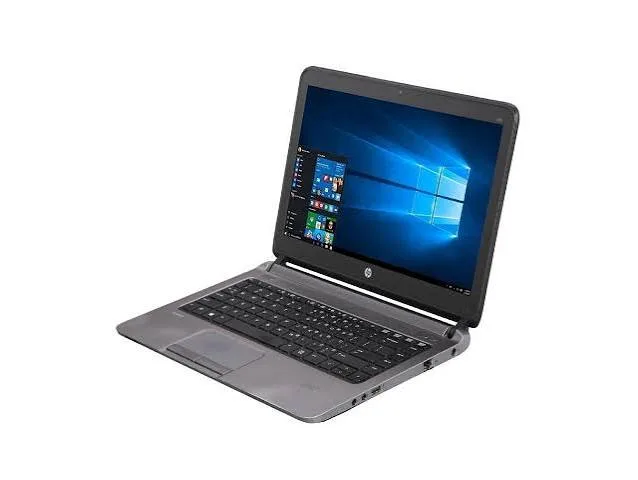
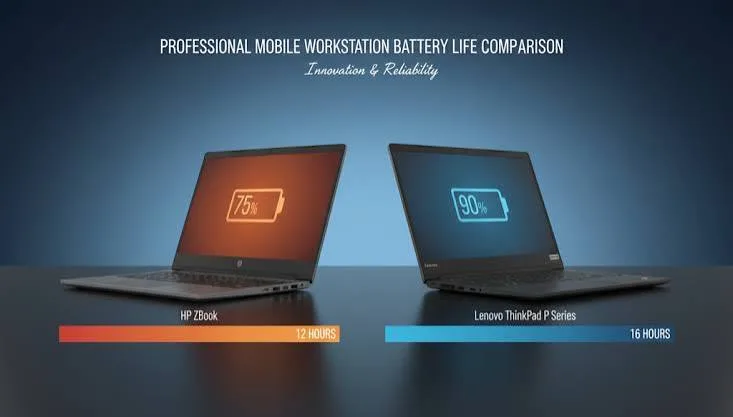
Somewhere between a standard business laptop and a full desktop workstation sits a genuinely distinct category that most casual buyers have heard of but few fully understand: the mobile workstation. HP's ZBook, Dell's Precision, and Lenovo's ThinkPad P-series all occupy this category, and this piece explains precisely what genuinely separates a mobile workstation from a standard business laptop — not just marketing language, but the real engineering and certification differences that justify their distinct positioning, using real configurations available at City Gadgets Kenya.
The Core Definition: What Makes a Laptop a Genuine Workstation
A mobile workstation is a laptop specifically engineered and certified to run professional engineering, design, and scientific software reliably — CAD applications (AutoCAD, SolidWorks, Revit), 3D rendering and visualisation tools, video editing and colour grading software, and scientific simulation applications. The defining, genuinely distinguishing feature isn't simply "more powerful hardware" in a vague sense — it's specifically certified professional graphics and driver stability engineering that standard business or consumer laptops, even ones with strong general specifications, don't carry.
NVIDIA Quadro and RTX A-Series: The Certification That Defines This Category
As detailed extensively in our CAD and engineering student buying guide, this is the single most important technical distinction worth understanding clearly. NVIDIA produces two genuinely separate graphics card product lines built on similar underlying hardware architecture but with meaningfully different driver engineering: GeForce/GTX/RTX consumer cards, optimised and driver-tuned primarily for gaming performance and broad compatibility across consumer software; and Quadro (and its successor naming, RTX A-series) professional cards, specifically certified in partnership with software vendors like Autodesk (AutoCAD) and Dassault Systèmes (SolidWorks) for stability, accuracy, and optimised performance within these specific professional applications.
Why this certification genuinely matters in practice: professional CAD and technical software often relies on very precise rendering behaviour — accurate wireframe display, correct handling of complex assembly models with many interconnected parts, and stable performance during extended, demanding sessions. Consumer graphics drivers, tuned primarily for gaming's different visual priorities, can genuinely produce rendering glitches, instability, or suboptimal performance in these professional applications that certified Quadro/RTX A-series drivers are specifically engineered to avoid.
HP ZBook: HP's Mobile Workstation Line
As covered throughout our HP-focused product content, the ZBook line spans a genuinely broad range within the mobile workstation category itself — from the more compact, business-travel-friendly ZBook 14u and 15u configurations to the more powerful ZBook Studio and Power lines built for the most demanding professional workloads. This breadth means ZBook configurations at City Gadgets Kenya span a wide budget range, making genuine Quadro-certified graphics accessible at multiple price points rather than only at the premium end of the market.
Dell Precision: Dell's Mobile Workstation Line
Dell's Precision line, covered extensively throughout our Dell product coverage, offers a particularly clear internal tier structure — from the accessible Precision 3541 with entry Quadro P620 graphics, through the mid-tier Precision 5530/5540/5550 configurations, up to the flagship Precision 5570 with the newest RTX A-series graphics available in our catalog. This structure makes it straightforward for buyers to understand precisely what graphics tier they're getting relative to their budget, similar to the tier clarity our Dell Latitude coverage emphasises for business laptop buyers.
Lenovo ThinkPad P-Series: Workstation Power With ThinkPad Heritage
The ThinkPad P-series (P1, P50, P51s, P52s, P53s, as covered throughout our engineering student buying guide) combines genuine Quadro certification with the keyboard quality and durability testing standards discussed in our dedicated ThinkPad-focused piece — a genuinely compelling combination for engineering students and professionals who value both certified professional graphics and the daily typing comfort that makes ThinkPad's business line broadly popular.
Beyond Graphics: Other Genuine Differences in Workstation Engineering
While certified graphics represents the defining distinction, mobile workstations typically differ from standard business laptops in a few other genuine, meaningful respects worth understanding.
Enhanced cooling systems designed to sustain heavier processing loads for extended periods without thermal throttling, similar to the sustained-performance engineering discussed in our video editing buying guide's discussion of gaming laptop cooling — professional CAD and rendering work often runs demanding processes for extended, unattended periods (overnight renders, for instance), making this sustained cooling capability genuinely important.
ISV (Independent Software Vendor) certification testing, where manufacturers work directly with software companies to certify specific hardware and driver combinations against their professional applications — a genuine, ongoing engineering relationship beyond simply shipping capable hardware, ensuring compatibility is actively verified rather than simply assumed.
Higher RAM ceiling support in many configurations, accommodating the substantial memory demands of complex 3D models and large datasets discussed throughout our CAD and engineering buying guide.
ECC memory support in some higher-tier workstation configurations — memory with built-in error correction capability, relevant for scientific computing and mission-critical professional applications where data integrity during processing is genuinely important, a feature rarely found in standard consumer or business laptops.
Why Workstations Command a Genuine Price Premium, and Why This Creates Refurbished Value
It's worth connecting this back to the broader ex-UK and refurbished market economics discussed throughout our catalog. Mobile workstations were genuinely expensive when new, purchased primarily by engineering firms, architecture practices, and technical departments within larger corporations specifically because the certified graphics and professional software compatibility discussed throughout this piece justified the premium for their specific professional needs. When these organisations refresh their hardware fleets on the same three-to-four-year cycles discussed in our ex-UK laptop piece, genuinely capable, certified workstation hardware enters Kenya's refurbished market at a fraction of its original price — precisely why our CAD and engineering student buying guide can recommend genuine Quadro-certified configurations at prices accessible to Kenyan students, a value proposition that simply wouldn't exist if buying equivalent hardware new.
How ISV Certification Actually Works, in More Detail
It's worth explaining the ISV (Independent Software Vendor) certification process in more concrete detail, since it's referenced above but deserves fuller explanation as the genuine backbone of what makes workstation hardware distinct. When HP, Dell, or Lenovo develops a new mobile workstation configuration, they don't simply ship it with Quadro or RTX A-series graphics and assume compatibility — they submit the specific hardware and driver combination to software vendors like Autodesk, Dassault Systèmes, and Adobe for formal certification testing. These vendors run their own professional software through extensive internal test suites against the proposed hardware configuration, checking for rendering accuracy, stability under extended use, and correct handling of the specific, sometimes idiosyncratic features their professional software relies on. Only after passing this vendor-specific certification does a configuration earn official "certified" status for that particular software title — meaning a genuine, verified compatibility guarantee rather than a general assumption that professional-grade components should probably work fine together. This is precisely the process consumer gaming laptops and standard business laptops skip entirely, since their target software (games, everyday business applications) doesn't demand this level of formalised vendor certification.
A Practical Example: Why This Matters for a Kenyan Engineering Student
To make this genuinely concrete, consider a scenario directly relevant to our CAD and engineering student buying guide: a student running a complex SolidWorks assembly model with dozens of interconnected mechanical parts. On a standard laptop with consumer or integrated graphics, this kind of complex assembly can genuinely cause visual glitches — parts flickering, incorrect shading, or the software becoming unresponsive during rotation and zoom operations — not because the raw processing power is necessarily insufficient, but because the graphics driver simply isn't engineered or certified to handle SolidWorks' specific rendering demands reliably. On a genuine Quadro or RTX A-series certified configuration, this same assembly model renders smoothly and predictably, precisely because of the certification process described above — a tangible, felt difference for a student working under deadline pressure on a genuinely important coursework project, not an abstract specification difference that only shows up in a benchmark chart.
The Genuine Cost-Benefit Calculation for Buyers on the Fence
For buyers uncertain whether the workstation category genuinely justifies its price premium over a standard business laptop with similar raw processor specifications, it's worth framing the decision around a simple, honest question: does your primary software specifically benefit from or require certified professional graphics drivers? If the answer is genuinely yes — as it typically is for the CAD, 3D modelling, and professional video colour grading software discussed throughout this piece — the premium is well-justified by the smoother, more stable experience certification provides. If your primary software is standard business applications, web browsing, or even moderate creative work in applications like Photoshop that don't specifically rely on certified professional drivers, that same budget is generally better spent on a standard business laptop with stronger processor or RAM specifications instead, as detailed throughout our broader buying guide catalog.
Who Genuinely Needs a Mobile Workstation, and Who Doesn't
It's worth being honest about this distinction, since workstation-class hardware isn't the right choice for every buyer, despite its genuine capabilities.
Genuine workstation buyers include CAD and engineering students (as detailed in our dedicated buying guide), architects and structural engineers, video editors and colour graders working with professional software, and 3D artists and animators — anyone whose software specifically benefits from or requires certified professional graphics drivers.
Buyers who don't need this category include standard business users, students in non-technical fields, casual creative hobbyists, and general everyday computing users — for these buyers, the standard business laptops covered throughout most of our buying guide catalog offer better value, since paying for certified professional graphics you won't actually use in specialised software provides no genuine benefit over standard integrated or consumer dedicated graphics.
Frequently Asked Questions
Is a mobile workstation genuinely faster than a standard business laptop for everyday tasks? Not necessarily — for typical browsing, document editing, and everyday business use, a mobile workstation offers no meaningful advantage over a standard business laptop with similar processor and RAM specifications; the genuine benefit is specifically in certified professional software performance.
Can I use a mobile workstation for gaming? Generally yes, reasonably well, though Quadro/RTX A-series graphics are optimised for professional stability rather than gaming performance specifically, meaning a similarly-priced consumer gaming laptop (like our MSI Stealth line) may offer better gaming-specific performance for the same money.
What's the difference between Quadro and the newer RTX A-series naming? Both represent NVIDIA's professional graphics line with certified drivers — RTX A-series is simply the newer generation naming convention, serving the same certification purpose as the longer-established Quadro branding, as detailed in our CAD and engineering buying guide.
Is it worth buying a mobile workstation if I only occasionally use CAD software? Depends on how essential smooth, stable CAD performance is to your work — occasional, light CAD use may be adequately served by a standard business laptop, while regular, serious CAD work genuinely benefits from certified graphics, as detailed throughout our engineering student buying guide.
Do all three brands (HP, Lenovo, Dell) offer genuinely comparable mobile workstation quality? Yes, broadly — all three apply serious engineering investment to their respective workstation lines, with genuine differences in specific configuration options, keyboard feel, and tier structure clarity rather than a fundamental quality gap between brands.
Are mobile workstations significantly heavier than standard business laptops? Often somewhat, particularly in higher-performance configurations with more robust cooling systems, though the more compact workstation configurations (like the ZBook 14u or Precision 3541) remain reasonably portable, similar in weight to standard business laptops in the same size category.
Does buying a refurbished mobile workstation mean I'm getting outdated Quadro/RTX A-series graphics? Not necessarily — as covered throughout our Dell Precision product coverage, our catalog spans multiple Quadro and RTX A-series generations, from accessible entry-tier P620 configurations to the newest RTX A2000 graphics, letting you match generation and budget to your genuine performance needs.
Can I run standard consumer software equally well on a mobile workstation? Yes — certified professional graphics drivers don't restrict or limit standard software use; a mobile workstation runs everyday applications, browsers, and general business software just as capably as any standard business laptop, simply with the added benefit of certified professional software compatibility layered on top.
Is it worth buying a used mobile workstation instead of a new consumer laptop with a similar price tag? Often yes, for the genuine reasons discussed throughout this piece and our broader ex-UK laptop coverage — a refurbished workstation frequently offers meaningfully stronger, certified graphics capability than an equivalent-priced new consumer laptop, provided you have genuine use for that professional certification.
How do I know if my specific CAD or design software requires Quadro/RTX A-series certification, or works fine on consumer graphics? Check the software vendor's own published hardware recommendations or certification lists, typically available on their website — vendors like Autodesk and Dassault Systèmes publish specific certified hardware configurations for their flagship professional applications.
Explore Genuine Mobile Workstations at City Gadgets Kenya
Every mobile workstation at City Gadgets Kenya, including certified Quadro/RTX A-series graphics function, is fully tested and backed by a genuine 6-month warranty. Browse our laptops category or message us on WhatsApp to find the right workstation configuration for your professional software needs.