Every business laptop brand has a story behind its reputation, and HP's EliteBook — alongside Lenovo's ThinkPad and Dell's Latitude, the third pillar of Kenya's refurbished business laptop market discussed throughout our HP vs Dell vs Lenovo comparison guide — has a genuinely distinct history worth understanding. This piece traces how HP built the EliteBook into a business laptop line trusted enough to anchor corporate fleets across the UK and beyond, feeding directly into the ex-UK refurbished supply chain that stocks City Gadgets Kenya's catalog today.
HP's Business Computing Roots, Before EliteBook Existed
To understand EliteBook's position within HP's broader history, it's worth noting that HP's involvement in business computing predates the EliteBook name by decades. HP built its early reputation on measurement and computing instruments for engineering and scientific applications as far back as the 1930s, later expanding into business computing and printing technology that made HP a household name in corporate IT departments worldwide well before EliteBook specifically launched. This deep, pre-existing institutional relationship with corporate IT buyers gave HP a genuine head start in credibility when it came to establishing a dedicated premium business laptop line — HP wasn't a newcomer trying to convince skeptical IT departments to trust an unfamiliar brand; it was extending decades of established enterprise technology relationships into a new, dedicated laptop category.
The EliteBook Name: Positioning From the Outset
HP introduced the EliteBook name specifically to create a clear, premium tier within its broader laptop portfolio, distinct from its consumer-facing Pavilion line and its more budget-conscious ProBook business line, discussed in our dedicated Dell Latitude vs HP ProBook comparison guide. This naming and positioning decision reflected a deliberate strategy: rather than a single, undifferentiated "HP business laptop" category, HP built a genuine tier structure allowing corporate buyers to select the appropriate specification and build-quality level for different roles within their organisation — ProBook for standard staff, EliteBook for roles demanding more premium build quality, portability, or specific security features.
Engineering Investments That Defined EliteBook's Reputation
Durability testing rigor. As discussed in our ThinkPad-focused piece on business laptop durability, HP applies its own comprehensive testing regime to the EliteBook line, covering drop resistance, temperature extremes, humidity, and vibration — genuine engineering investment matching the scale of testing rigor competitors apply to their own flagship business lines.
HP Sure View privacy screen technology. This is worth highlighting as a genuinely distinctive EliteBook innovation, discussed briefly in our ThinkPad vs EliteBook comparison guide — an integrated privacy filter that can be toggled on to narrow the display's viewing angle, preventing people beside or behind the user from reading the screen, addressing a genuine corporate security concern (confidential information visibility in shared or public spaces) that most competing business laptop lines address only through separate, physical add-on privacy filters rather than integrated display technology.
HP Sure Start and Sure Click security features. Beyond Sure View, HP developed a broader suite of hardware-level security technologies specifically for the EliteBook line — Sure Start providing firmware-level protection against sophisticated attacks targeting a laptop's most fundamental startup processes, and Sure Click providing isolated, sandboxed browsing protection against malicious websites — genuine security engineering investment reflecting corporate IT departments' growing concern with sophisticated cybersecurity threats beyond standard antivirus software.
Consistent design language and build quality across generations. HP maintained a recognisable, professional EliteBook design aesthetic across many product generations, similar to the design continuity discussed in our ThinkPad history piece — a deliberate choice supporting corporate buyers' preference for consistent, predictable hardware across large-scale, multi-year fleet deployments.
The EliteBook 800-Series: HP's Core Business Workhorse Line
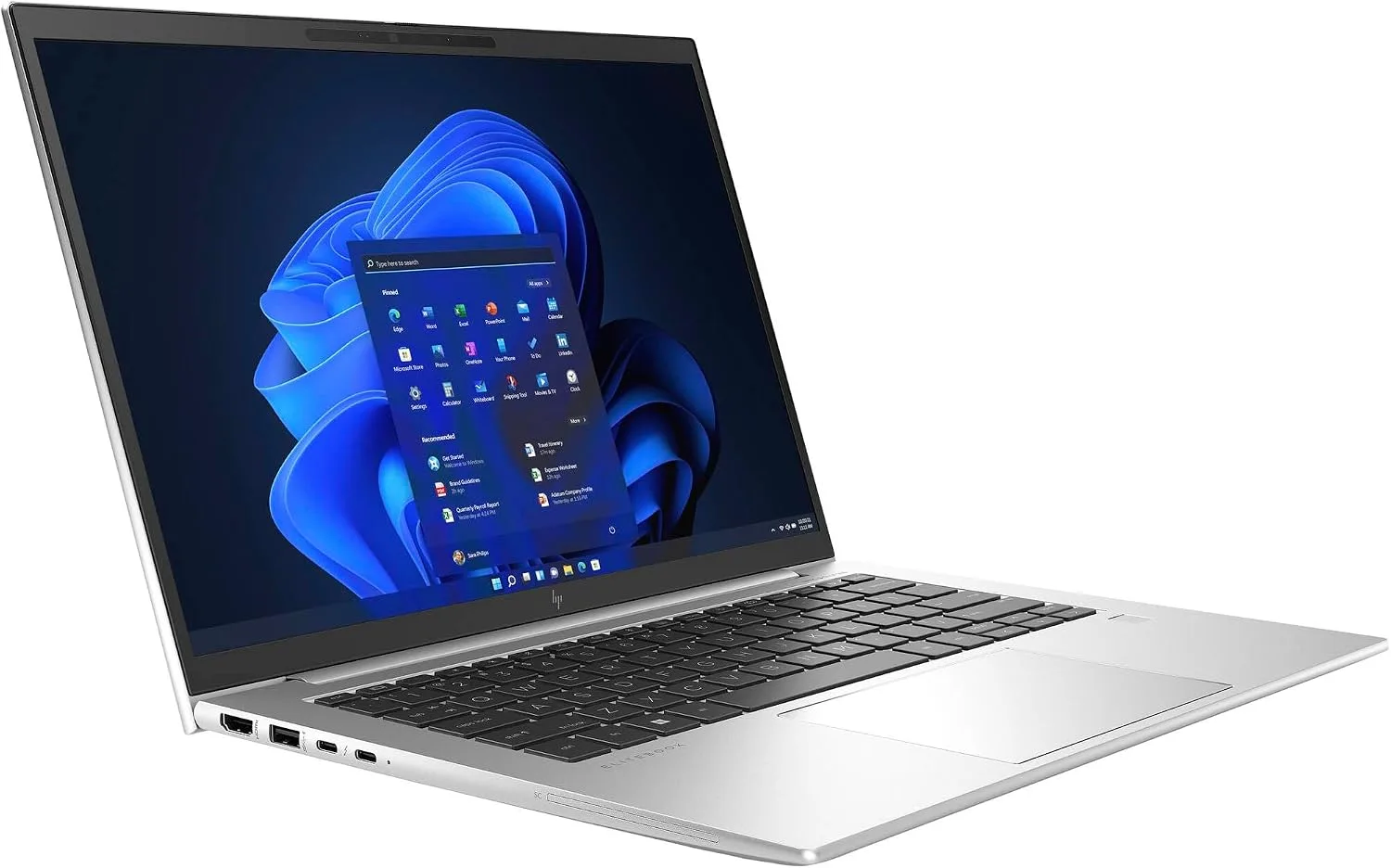
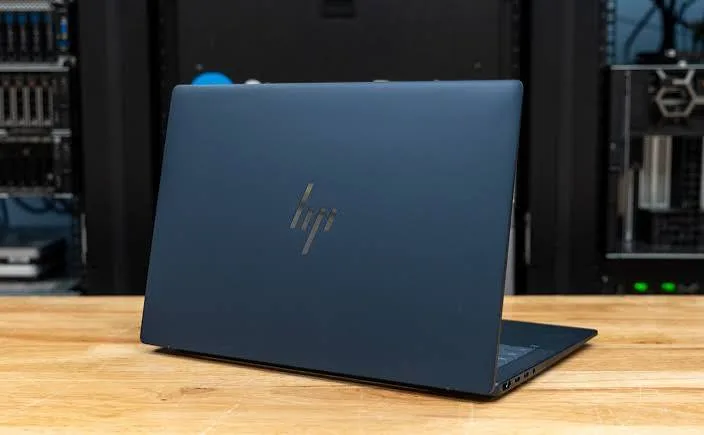
As covered extensively throughout our HP-focused product content, the EliteBook 800-series (830, 840, 850) represents HP's most widely deployed business configuration family, spanning compact 13-inch to full-size 15-inch chassis options. This breadth of options within a single, coherent product family reflects HP's understanding that different roles within the same organisation genuinely need different form factors — a compact 830 for frequently travelling executives, a full-size 850 for desk-based analysts needing more screen real estate — while maintaining consistent build quality, security features, and IT management compatibility across the entire family.
The Dragonfly: HP's Answer to the Ultra-Premium Segment
As discussed in our lightweight and ultraportable laptop buying guide, HP's EliteBook Dragonfly represents HP's direct competitive response to Lenovo's flagship ThinkPad X1 Carbon, using magnesium alloy construction to achieve genuinely impressive weight reduction without sacrificing the durability testing standards discussed throughout this piece. The Dragonfly's existence reflects HP's broader strategic commitment to competing at every tier of the premium business laptop market, not conceding the ultra-premium segment to competitors.
ZBook: Extending the EliteBook Philosophy Into Mobile Workstations
As detailed in our dedicated mobile workstation piece, HP's ZBook line applies this same engineering philosophy and business-grade durability standard to the mobile workstation category, offering genuine Quadro-certified professional graphics alongside the reliability engineering that defines HP's broader business computing reputation — a natural extension of the EliteBook philosophy into a more specialised, professionally-demanding product category.
How HP's Corporate Relationships Fed the Ex-UK Refurbished Pipeline
Connecting this brand history back to the practical relevance for Kenyan buyers discussed throughout our ex-UK laptop piece: HP's decades-long, deeply established relationships with major UK corporations, government departments, and institutions meant EliteBook units were deployed in genuinely enormous numbers across the exact organisations that feed the corporate refresh cycle explained in that piece. This scale of deployment, combined with the genuine multi-year durability discussed throughout this piece, is precisely why EliteBook units appear so consistently and in such volume across Kenya's refurbished laptop market — not a coincidence, but a direct consequence of HP's sustained, decades-long investment in winning and maintaining large-scale corporate IT contracts.
Manufacturing Quality Control: What Sets Corporate-Grade Production Apart
It's worth explaining a less visible but genuinely important aspect of EliteBook's reputation: the manufacturing quality control processes HP applies specifically to laptops destined for large corporate fleet orders. Corporate buyers purchasing thousands of identical units expect genuinely minimal variance between individual units — a corporate IT department can't tolerate meaningful quality inconsistency across a 2,000-unit deployment the way an individual consumer might tolerate minor variation in a single retail purchase. This expectation drives HP toward more rigorous batch testing and quality control sampling specifically for business-line production runs, a genuine manufacturing discipline that consumer laptop production, sold through more fragmented retail channels with less concentrated buyer scrutiny, doesn't face to the same degree. This is one of the less-discussed but genuinely real reasons why business laptops, EliteBook included, tend to age more consistently and predictably than consumer laptops of similar original cost — the entire production process was built around satisfying buyers who would genuinely notice and complain about inconsistency across a large, identical fleet.
The Genuine Competitive Dynamic Between EliteBook and Its Rivals
It's worth understanding that EliteBook's development didn't happen in isolation — HP's engineering investment in durability, security, and premium construction was substantially shaped by direct, ongoing competition with Lenovo's ThinkPad line specifically, each pushing the other toward genuine engineering improvements over successive product generations. This competitive dynamic, playing out over roughly two decades, is precisely why both lines have converged on broadly similar core standards (rigorous durability testing, strong keyboard engineering, comprehensive security features) while maintaining genuinely distinctive individual strengths — ThinkPad's keyboard heritage and TrackPoint versus EliteBook's Sure View and broader configuration breadth, as detailed throughout our direct comparison guide. Kenyan buyers benefit directly from this decades-long competitive pressure, since it's precisely what has kept both lines genuinely improving rather than resting on established reputation alone.
Frequently Asked Questions
Is EliteBook genuinely as durable as ThinkPad, or is ThinkPad's reputation stronger? Both apply genuinely rigorous durability testing, as detailed throughout our ThinkPad vs EliteBook comparison guide — ThinkPad's MIL-STD-810G certification is slightly more explicitly and consistently documented, though EliteBook's own testing regime is comparably serious in practice.
What does HP Sure View actually do, and is it genuinely useful? It's an integrated privacy screen that narrows the display's viewing angle when activated, genuinely useful for anyone regularly handling confidential information in public or shared spaces like cafés, co-working spaces, or open-plan offices.
Why does HP have both ProBook and EliteBook business lines? This reflects HP's deliberate tier strategy, discussed throughout this piece and our Dell Latitude vs HP ProBook guide, allowing corporate buyers to match specification and build quality to different roles' genuine needs and budgets within the same organisation.
Is the EliteBook Dragonfly genuinely comparable to the ThinkPad X1 Carbon? Yes, broadly — both represent each brand's ultra-premium, lightweight flagship offering, using different but comparably effective lightweight materials (magnesium alloy versus carbon fibre) to achieve similar genuine weight and durability goals.
Does HP's security technology (Sure Start, Sure Click, Sure View) still function on a refurbished EliteBook? Generally yes, since these are largely firmware and hardware-level features built into the laptop itself rather than requiring ongoing HP subscription services — worth confirming specific feature availability with your seller for any particular unit and generation.
Has HP's EliteBook engineering investment been consistent across every generation, or has quality varied? Broadly consistent in its core commitment to durability testing and business-grade construction, as discussed throughout this piece, though as with any long-running product line, specific feature sets and design details have evolved across generations — worth confirming exact specifications for any particular generation you're considering, as emphasised throughout our buying checklist guide.
Explore HP EliteBook's Business Legacy at City Gadgets Kenya
Every HP EliteBook at City Gadgets Kenya is fully tested and backed by a genuine 6-month warranty. Browse our laptops category or message us on WhatsApp to find the right EliteBook configuration for your needs.