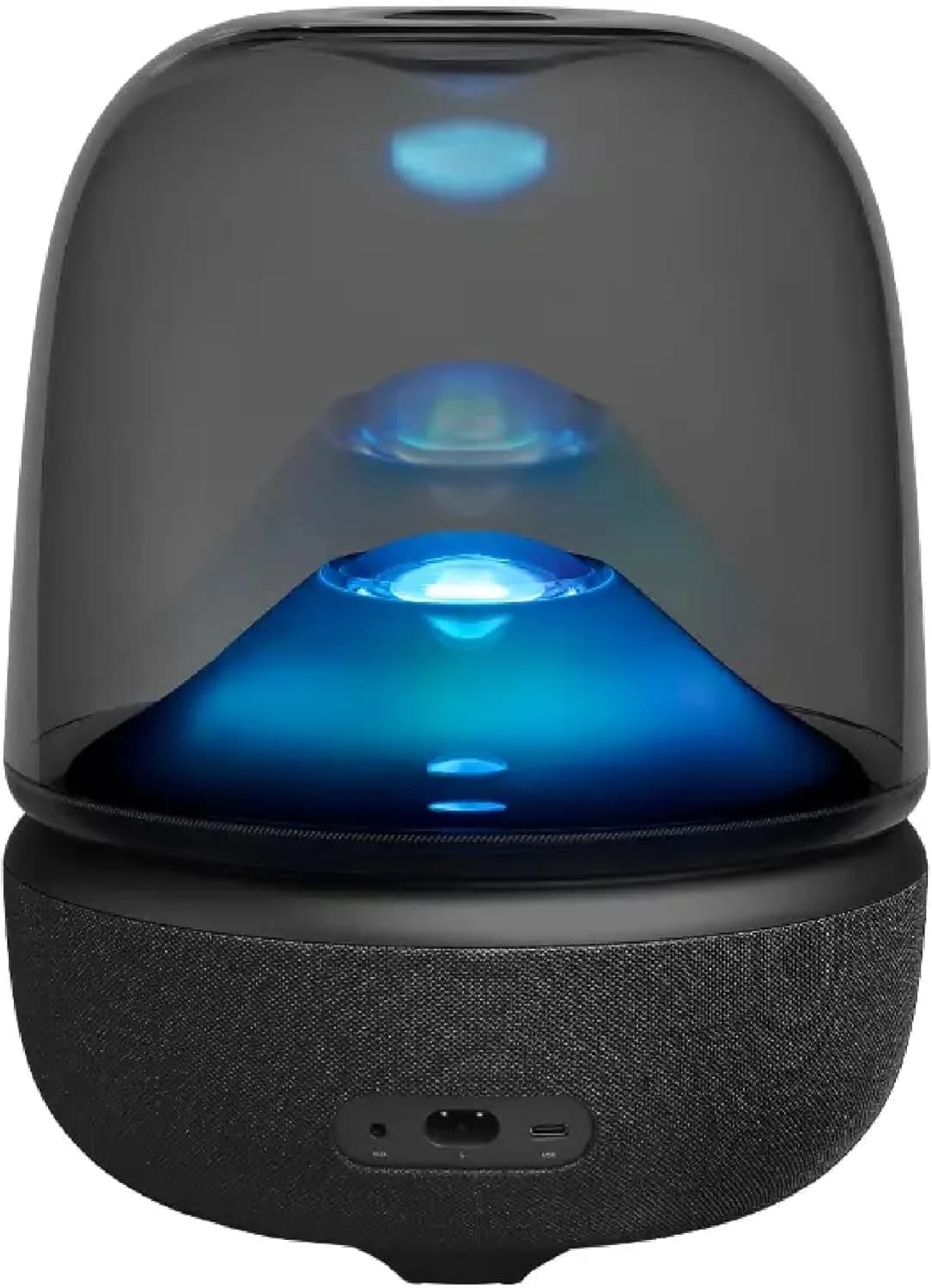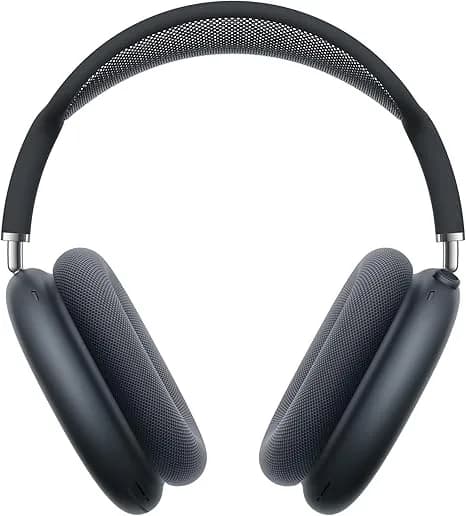
"Dolby Atmos". "Spatial Audio". "360 Audio". "DTS:X". These labels now appear on soundbars, TVs, phones, earbuds, streaming apps and even laptops, usually next to a promise that sound will come "from all around you". Some of it is genuinely impressive. Some of it is marketing on top of ordinary stereo. This guide gives you spatial audio and Dolby Atmos explained properly: what object-based sound is, how it differs from 5.1 and 7.1 surround, what you need on the content side and the hardware side, how it works on headphones and earbuds, how soundbars create height without ceiling speakers, what room and ceiling conditions help or hurt, which streaming services and devices support it, and how to avoid fake Atmos claims. We use real products from our range, including the Sony BRAVIA Theatre System 6 (HT-S60), Hisense AX5100Q, Apple AirPods 4, Samsung Galaxy Buds3 Pro and Sony WH-1000XM6, and our TVs and streaming boxes, as examples.
The short version
- Traditional surround (5.1, 7.1) assigns sound to fixed speaker channels around you.
- Dolby Atmos is object-based: sound designers place sounds as objects in a 3D space (including above you), and your system works out how to reproduce them using whatever speakers you have.
- Spatial audio is the broader term, used for Atmos on headphones and for Apple's, Samsung's and Sony's own implementations. On headphones, it is a clever simulation using psychoacoustics, not real speakers.
- You need three things to hear it: Atmos or spatial content, a device that can decode and send it, and speakers or headphones that can reproduce it.
- It is a real improvement for films, series, concerts and games, a subtle one for ordinary music, and no help at all if any part of the chain is missing.
First, a quick refresher: how we hear direction
Your brain locates sound using tiny clues. If a sound reaches your left ear a fraction of a millisecond before your right, it must be on the left. If one ear hears it slightly quieter, same story. Your outer ears (pinnae) also shape high frequencies depending on whether a sound comes from above, below, front or behind, and your head blocks and filters sound differently depending on direction.
Spatial audio technologies work by recreating or exploiting these clues. With real speakers placed around the room, the clues arrive naturally. With headphones, the system has to fake them by processing the sound with a model of how your head and ears affect sound (a head-related transfer function, or HRTF). That is why spatial audio on headphones sometimes feels astonishing and sometimes feels odd: your ears are not the average ears the model assumes.
From stereo to Atmos: a short history
Stereo (2.0) has two channels, left and right. It can place sounds anywhere between the two speakers, but not behind you or above.
5.1 and 7.1 surround add a centre channel for dialogue, surround speakers at the sides or rear, and a subwoofer for low-frequency effects (the ".1"). Each channel is a fixed feed. Sound designers mix to those channels, and every system must have exactly those speakers to reproduce the mix as intended.
Dolby Atmos (2012 in cinemas, around 2014 for home use) changed the idea. Instead of mixing only to channels, creators place audio objects (a helicopter, rain, a voice) with coordinates in 3D space. The Atmos renderer in your device then decides, in real time, which of your speakers should play each object to put it in the right place. If you have more speakers, the placement is more precise. If you have fewer, it adapts.
DTS:X is a competing object-based format with similar goals. Sony 360 Reality Audio is Sony's own object-based music format. Apple Spatial Audio uses Dolby Atmos content with Apple's head-tracking processing for its devices. Samsung 360 Audio works with Galaxy Buds and compatible Samsung devices.
What "object-based" means in practice
Imagine a thunderstorm scene in a film. In a 5.1 mix, the sound team pans rain across the five channels. In an Atmos mix, they place thunder as an object high overhead and rain as a field of objects above and around you. If you have height speakers or up-firing speakers, the thunder comes from above. If you have only a soundbar, the system uses processing to suggest height. If you have headphones, it uses binaural processing.
The same mix adapts to different hardware instead of requiring a different mix for each one. That is the genuine technical advance.
The channel notation: what "5.1.2" and "7.1.4" mean
Home Atmos setups use three numbers. The first is the number of ear-level speakers, the second the number of subwoofers, and the third the number of height speakers.
| Notation | Meaning |
|---|---|
| 2.0 | Stereo, no sub, no height |
| 2.1 | Stereo plus subwoofer |
| 5.1 | Front left, right, centre, two surrounds, one sub |
| 5.1.2 | 5.1 plus two height channels |
| 7.1.4 | Seven ear-level, one sub, four height channels |
A soundbar described as "Dolby Atmos 5.1" with no explicit height number usually creates height using up-firing speakers or virtual processing. The Sony HT-S60 is a 5.1-channel system with a soundbar, subwoofer and two rear speakers, supporting Dolby Atmos and DTS:X, using what Sony calls a Vertical Surround Engine to create height without up-firing or ceiling speakers. The Hisense AX5100Q is also a 5.1-channel bar with a wireless subwoofer and two rear surround speakers, with Dolby Atmos and DTS:X support. We compare soundbars in detail in our guide to the best soundbars in Kenya and Sony vs Hisense soundbars.
The three links in the Atmos chain
You need all three links. If any one is missing, you hear ordinary surround or stereo.
1. Content with Atmos in it
Not all content is in Atmos. Common sources include:
- Streaming services: several major video services offer Atmos on selected titles, sometimes only on a premium tier or on supported devices. Music streaming services offer Atmos tracks as spatial audio on some tiers.
- 4K Blu-ray discs: many include Atmos, usually the lossless Dolby TrueHD version.
- Games: many modern console and PC games support Atmos.
- Apple devices and Apple Music: use Spatial Audio with Atmos content.
If you play an old stereo film on a Dolby Atmos soundbar, the soundbar will play stereo, or upmix it. Upmixing can sound pleasant but it is not Atmos.
2. A device that can decode and pass it on
The device that plays the content (a smart TV, a streaming box such as an Apple TV 4K, a games console, a Blu-ray player or a laptop) must support Atmos and send it to your speakers. Two connection details matter:
- HDMI ARC (Audio Return Channel) carries compressed Dolby Digital Plus, which is the format streaming services use for Atmos. It works for most streaming Atmos.
- HDMI eARC (enhanced ARC) has far more bandwidth and carries lossless formats such as Dolby TrueHD with Atmos, the high-quality version found on 4K Blu-ray. For lossless Atmos you need eARC on both TV and soundbar. The Sony HT-S60 lists HDMI eARC.
If your soundbar connects by optical cable, you will not get Atmos at all, because optical cannot carry it. This is one of the commonest reasons buyers say their Atmos soundbar "doesn't do Atmos". See our blog on HDMI ARC and eARC.
3. Speakers or headphones that can reproduce it
A soundbar with Atmos support, a home theatre system, a TV with good speakers or Atmos-capable headphones. Even a high-quality Atmos soundbar cannot recreate a cinema, but a good one produces a clear sense of width and some height.
How a soundbar creates height
A cinema has speakers in the ceiling. Most Kenyan living rooms do not. Soundbars use three approaches to suggest height.
Up-firing drivers
Some soundbars include drivers angled upwards. They bounce sound off the ceiling, and your ears interpret the reflection as sound from above. This can be convincing, but it depends on your ceiling: a flat, reasonably low, reflective ceiling (roughly 2.4 to 3.7 metres) works best. Very high ceilings, vaulted or heavily textured ceilings, or soft acoustic tiles reduce the effect.
Virtual height processing
Other soundbars, such as the Sony HT-S60 with its Vertical Surround Engine, use signal processing and the arrangement of the speakers to create the impression of height without up-firing drivers. This works less spectacularly than real overhead speakers, but it is more consistent across rooms with unusual ceilings, and it suits the typical Nairobi apartment.
True height or ceiling speakers
Home cinema enthusiasts with an AV receiver can install ceiling or in-ceiling speakers for genuine overhead sound. It is the most accurate and also the most expensive and complicated approach.
| Method | Realism of height | Ceiling dependent? | Cost and complexity |
|---|---|---|---|
| Virtual processing | Modest | Little | Low |
| Up-firing drivers | Good | Yes | Medium |
| Ceiling or height speakers | Best | No | High |
The honest summary: soundbar "Atmos" gives you a wider, taller, more enveloping sound than stereo, but it will not deliver the pinpoint helicopter-overhead realism of a cinema. If a seller promises that, be sceptical.
Rear speakers: where much of the surround really comes from
In practice, the rear speakers contribute more to the sense of surround in a soundbar system than the height effect does. A 5.1 system such as the Sony HT-S60, with a bar, a subwoofer and two rear speakers, gives you actual sound behind you. The HT-S60's rear speakers and subwoofer are wireless but need power sockets, which is a practical note for planning cable runs and sockets. The Hisense AX5100Q's rear speakers are semi-wireless: they connect to the bar wirelessly and need power. Plan where the rears will sit (ideally behind or beside the seating position) and where the sockets are.
Room and placement: what matters in a Kenyan home
Room size. Soundbar systems suit small to medium living rooms and bedrooms. Very large halls need a more powerful system.
Seating position. Sit within the "sweet spot" in front of the bar, roughly centred. Atmos effects diminish for people sitting far off to the side.
Soundbar placement. Place the bar at ear height when seated if you can, directly below or above the TV, and not inside a closed cabinet, which muffles sound. A bar that sits in front of a wall-mounted TV on a shelf works well.
Subwoofer placement. Rooms with hard floors and bare walls can sound boomy. Try the subwoofer in different positions, a few steps apart, and keep it off the thin floor of an upstairs flat if you have neighbours below.
Neighbours. High-powered systems with big subwoofers carry through walls. A "night mode" reduces loud peaks.
Walls and furnishing. Curtains, sofas and carpets absorb echo and improve clarity. Bare tiled rooms sound harsh.
Power. Surround systems have several powered parts. A decent surge-protected extension or UPS protects a home theatre system in places with unstable mains.
Spatial audio on headphones and earbuds
On headphones there are no speakers around you, so spatial audio works by binaural rendering: the system takes an Atmos mix and processes it with an HRTF so the left and right ear signals mimic how sounds from different directions would reach your ears.
Head tracking
Premium systems add head tracking using gyroscopes and accelerometers in the earbuds. As you turn your head, the sound field stays anchored to your screen, as if the sound were coming from speakers in the room. This makes a film feel like it has a screen in front of you, instead of the sound moving with your head. Apple's Spatial Audio, available on supported AirPods including AirPods 4, uses this approach with iPhone, iPad and Apple TV. Samsung offers a similar 360 Audio feature with Galaxy Buds on compatible Samsung devices.
Personalisation
Some systems let you personalise the effect by scanning your ears with the phone's camera to select a more suitable HRTF. This can noticeably improve realism for some listeners.
What it does for music
For music, spatial audio can add width and separation, especially for tracks mixed in Atmos. But it can also change the tonal balance, and some listeners prefer the original stereo mix. Most apps let you turn it on or off. A good approach: try an Atmos mix of a song you know well and decide for yourself.
What it does for films and games
Films and games benefit most, because they are designed around moving sounds, ambience and dialogue anchored to a screen. On a flight or a late-night session, a pair of headphones with spatial audio and a good surround mix is a genuine step up from stereo.
Support by product
| Product | Spatial audio support (per manufacturer information) |
|---|---|
| Apple AirPods 4 (and ANC version) | Spatial Audio with Apple devices, with head tracking on supported devices |
| Samsung Galaxy Buds3 Pro | 360 Audio with compatible Samsung devices |
| Sony WH-1000XM6 | Sony's spatial and immersive audio features through its app; ask us to confirm which formats apply to the version you order |
| Anker Soundcore range | Spatial audio features on selected models; check the product page |
| Standard stereo earbuds | None; you can still play Atmos content, but it will play as stereo |
Spatial features vary by phone, app and firmware. Ask us to confirm compatibility with your phone before you buy.
Which streaming services and devices give you Atmos?
Support changes over time, so check each service's current plan details. In general:
- Video streaming services offer Atmos on some titles, sometimes only on premium tiers and supported devices.
- Music streaming services offer Atmos or spatial tracks, sometimes at no extra cost.
- Smart TVs from brands such as Samsung and Sony support Atmos in their apps and can pass it to a soundbar over HDMI eARC/ARC.
- Streaming boxes and sticks such as the Apple TV 4K support Atmos output; see our guide to the Apple TV 4K and best streaming devices.
- Game consoles support Atmos on many games and in media apps.
The data cost in Kenya
Atmos audio adds a modest amount of data compared with the video stream itself. Streaming Atmos adds only a few hundred kilobits per second to the stream, so it hardly changes your data use. What matters more is the video resolution. See our blog on streaming resolution and data use in Kenya.
Atmos TV or Atmos soundbar? What the TV can do alone
Many modern TVs list Dolby Atmos support, but a TV's own speakers are thin, small and aimed forwards or downwards. A TV that "supports Atmos" can decode it, but its built-in speakers rarely reproduce height convincingly. The real value of Atmos support on the TV is in passing the signal to a soundbar or receiver. Premium TVs do have better built-in speakers, but a dedicated soundbar is still a bigger step up. For more on this, read our blog on why built-in TV speakers are weak.
Is it worth it? An honest guide
| You are... | Verdict |
|---|---|
| A film and series lover with a decent living room | Yes. A good Atmos soundbar system is a big improvement over TV speakers |
| A gamer on console | Often yes, especially with headphones or a soundbar |
| Someone who mostly watches news and local TV | Probably not. A simple soundbar for clearer dialogue is enough |
| A music listener | Optional. Spatial music can be great for some tracks, but is not essential |
| Someone in a very small room or a bedsitter | A compact 2.1 soundbar is probably enough; surround adds little |
| Someone with a very high or textured ceiling | Up-firing Atmos may disappoint; consider virtual height or rear speakers |
| Someone on a tight budget | Prioritise clear dialogue and a subwoofer over Atmos labels |
The best use of money is usually a soundbar with a good centre channel and a subwoofer. Atmos is a bonus on top of a good basic system, not a substitute for one.
Setting up Atmos properly: a checklist
- Use the right HDMI port. Connect the soundbar to the TV's HDMI eARC/ARC port, not to a regular HDMI input.
- Set the TV's audio output to pass-through, "Auto" or "Dolby Digital Plus/Atmos" rather than "PCM" or "Stereo".
- Set the source device (streaming box, console) to output Dolby Atmos or "Bitstream" where the option exists.
- Enable HDMI-CEC if you want one remote.
- Check the soundbar display or app. Many bars show "Atmos" when playing Atmos content.
- Test with known Atmos content, such as a demo clip or a title that lists Atmos on the streaming service.
- Calibrate levels. Adjust the subwoofer, rear and height levels in the app or on the remote.
- Update firmware on the TV and soundbar.
- Use a quality HDMI cable. An old or damaged cable causes dropouts. See our guide to cables for the principles of buying decent ones.
Gaming with spatial audio
Spatial audio matters in games for a practical reason, not just immersion: it helps you locate sounds. Footsteps behind you, a vehicle approaching from the left, an enemy above on a balcony. A good surround or spatial mix gives you cues that stereo cannot.
Console gaming. Modern consoles can output Atmos to compatible TVs, soundbars and headphones, with settings in the audio menu. Games that support Atmos or the console's own 3D audio mix benefit most.
PC gaming. Windows supports spatial sound for headphones through built-in options, and Atmos through apps. Dedicated gaming headsets often include their own virtual surround. Be aware that virtual surround modes can change the tonal balance, and some players prefer plain stereo for competitive shooters. Test both.
Latency. Wireless spatial audio adds a small delay. For competitive games, a wired headset or a low-latency wireless mode is better. See our guide to the best gaming headsets and the console guides.
Soundbars for gaming. Many players love a soundbar with a subwoofer for single-player games. A game mode that reduces processing delay helps.
Five misconceptions about spatial audio
"Atmos always sounds better." Only when the content, the chain and the speakers are all good. A poor Atmos mix on a weak soundbar can sound worse than a clean stereo mix.
"More speakers always means better." A well-placed 2.1 system can beat a badly placed 5.1 system. Placement and room matter as much as the count.
"Headphone spatial audio is the same as real surround." It is a clever simulation. It can be convincing, but it does not suit everyone's ears equally.
"Atmos needs a huge room." No. It suits cinema rooms, but soundbar versions are designed for living rooms and bedrooms.
"Atmos is just louder." It is about placement and clarity, not volume. In fact, good Atmos mixes have a wide dynamic range, with quieter moments as well as louder ones, which is why night modes exist.
A simple listening test before you buy
If you can, audition a system in person. Here is a short routine we use in the shop when customers ask.
- Dialogue test. Play a scene with quiet speech. Can you hear every word without turning up the volume?
- Bass test. Play a scene with explosions or low music. Is the bass tight or boomy? Does it shake the table?
- Width test. Play rain or a crowd. Does the sound extend beyond the TV's edges?
- Rear test. Play a scene with sounds behind you. Can you hear them behind, or only in front?
- Height test. Play a helicopter or thunder scene. Does the sound seem to rise above the TV? Remember that real overhead sound needs real overhead speakers.
- Music test. Play a familiar song. Does the sound remain natural?
- Night test. Switch on night mode and see whether quiet speech stays clear while the explosions shrink.
If a system sounds impressive on a showroom clip but poor on the content you actually watch, trust your own experience.
Troubleshooting: "My Atmos soundbar isn't doing Atmos"
The bar says Dolby Digital or PCM instead of Atmos. The content may not be in Atmos, the source device may be outputting stereo, or the TV may be converting the audio. Check the source device settings.
Connected by optical. Optical cannot carry Atmos. Use HDMI eARC/ARC.
TV app does not pass Atmos. Some TV apps do not output Atmos over ARC. Use an external streaming box with Atmos output, or check the TV's settings.
Audio drops or has delay. Update firmware, try another HDMI cable or port, and check lip-sync settings.
Rear speakers silent. Check the power, pairing and rear level. Wireless rears need a power socket.
Dialogue too quiet. Raise the centre or voice level, or use a dialogue mode (the Sony HT-S60 lists Voice Zoom 3 for clearer dialogue).
If you are stuck, message us on WhatsApp with your TV and soundbar models and we will help.
How to spot fake Atmos and spatial audio claims
"Atmos" has become a sales word, and not every product wearing the logo deserves it.
1. Check the model on the manufacturer's website. Genuine Atmos products are listed on Dolby's and the manufacturer's pages. A soundbar with an "Atmos" sticker that the manufacturer's site does not list is suspicious.
2. Check the inputs. A device that claims Atmos but has only an optical or 3.5 mm input cannot receive it. Look for HDMI eARC/ARC.
3. Look for the display or app confirmation. Genuine bars show an Atmos indicator when it is active.
4. Beware "virtual Atmos" from a tiny bar. A cheap 2.0 bar that says "Dolby Atmos virtualised" may be doing very little. A claim of "7.1.4" from a small, cheap bar is not credible.
5. Check the power rating honestly. Peak power figures can be inflated; look for RMS where available. See our blog on speaker watts, RMS and peak.
6. Check the weight and speaker count. A genuine 5.1 system has real weight and multiple drivers. Light, cheap plastic is a sign.
7. For earbuds, test the spatial feature. Genuine Apple, Samsung and Sony spatial features appear in the phone's settings and the official app. If the option does not exist, the claim is false.
8. Check serial numbers. For AirPods and other branded products, check the serial number with the brand.
9. Check the price and seller. A soundbar "with 1,000W Atmos" at a tiny price is the usual trap.
10. Buy where you can listen. A good seller lets you hear the product.
The bottom line on spatial audio and Dolby Atmos
Atmos and spatial audio are genuine technologies, and for films, series and games they can add real depth. But they are the last 10% of a good audio system, not the first. Start with clear dialogue, a decent subwoofer and a sensible room position. Then add rear speakers for true surround. Then think about height. If you mostly listen on headphones, a pair with head-tracked spatial audio can make movies on a phone or tablet far more engaging, as long as your phone supports it. And whatever you buy, check the chain: content, device, connection and speakers. If you want us to check your chain for you, send us the models on WhatsApp and we will tell you exactly what will and will not work together.
Quick glossary
Object: a sound with a position in 3D space, rendered to your speakers. Bed: the fixed-channel foundation of an Atmos mix (for example 7.1) onto which objects are layered. Renderer: the processor in your TV, soundbar or receiver that turns objects into speaker feeds. HRTF: the model of how your head and ears affect sound, used for headphone spatial audio. Head tracking: sensors that keep the sound field anchored as you turn your head. eARC: the HDMI feature that carries lossless Atmos to a soundbar or receiver. Up-firing: drivers that bounce sound off the ceiling to suggest height.
Why buy your audio gear from City Gadgets Kenya
- Genuine products from Sony, Hisense, Samsung, Apple and Anker, with specifications and connection details confirmed for the exact unit.
- Real advice about your room. Tell us your TV model, room size and ceiling height and we will say what is worth buying, and what is not.
- A real shop in Nairobi CBD: New Alnoor Exhibition, Second Floor, Shop C7, Accra Road, where you can see and hear products.
- Same-day delivery in Nairobi and next-day outside Nairobi, with M-Pesa payment.
- After-sales help with setup and troubleshooting.
Browse our accessories category.
Frequently asked questions
What is Dolby Atmos in simple terms? An object-based surround format that places sounds in 3D space, including above you, and adapts to the speakers you have.
What is the difference between spatial audio and Dolby Atmos? Atmos is a specific format. Spatial audio is a broader term, and on headphones it is a simulation of surround sound, often built on Atmos content.
Do I need special speakers for Atmos? You need Atmos-capable speakers or a soundbar to get the full effect. Standard stereo plays Atmos content as stereo.
Does my TV's Atmos support mean it sounds like Atmos? Not necessarily. It can decode Atmos, but its small speakers rarely reproduce it well.
Why does my Atmos soundbar not show Atmos? Check HDMI eARC/ARC, the source device's audio output setting and whether the content is actually in Atmos.
Can earbuds do Dolby Atmos? They can render Atmos binaurally, with Apple, Samsung and Sony offering their own spatial features on supported products.
Is Dolby Atmos worth it for music? It can be, for tracks mixed in Atmos, but opinions differ, so try it yourself.
Does Atmos use more data? Only slightly. Video resolution matters much more.
Do I need a big room? No, but a soundbar system suits small to medium rooms best.
Can you help me pick a system? Yes. Tell us your TV, room and budget and we will recommend one.
Ready to choose?
Send us your TV model, room size and how you watch, and we will recommend the soundbar, home theatre or headphones that suit you.
WhatsApp: wa.me/254745575931 Visit: New Alnoor Exhibition, Second Floor, Shop C7, Accra Road, Nairobi CBD. Same-day delivery in Nairobi; next-day outside Nairobi.
Related reading: HDMI ARC and eARC explained, what does 5.1 and 2.1 mean, best soundbars in Kenya.