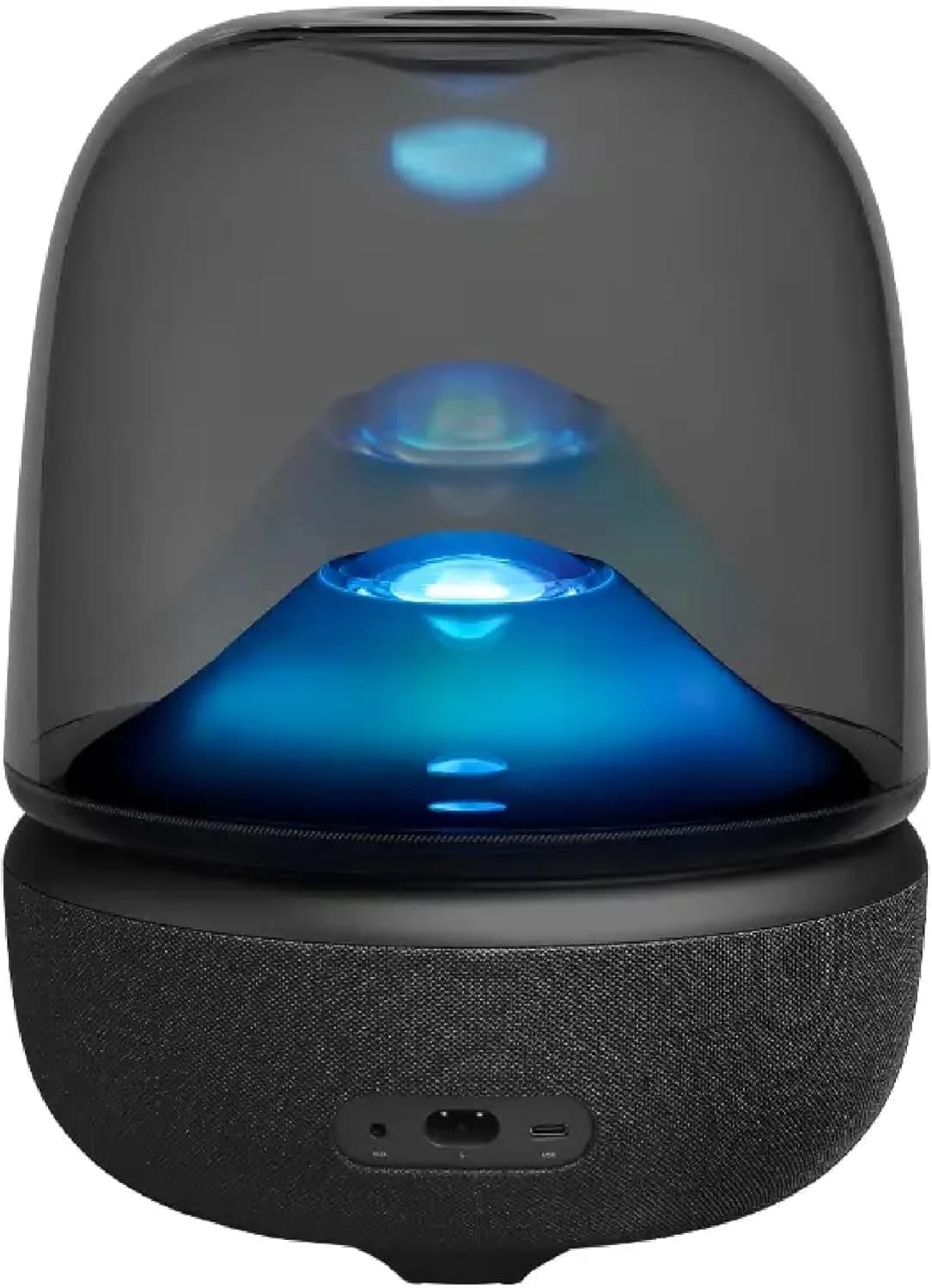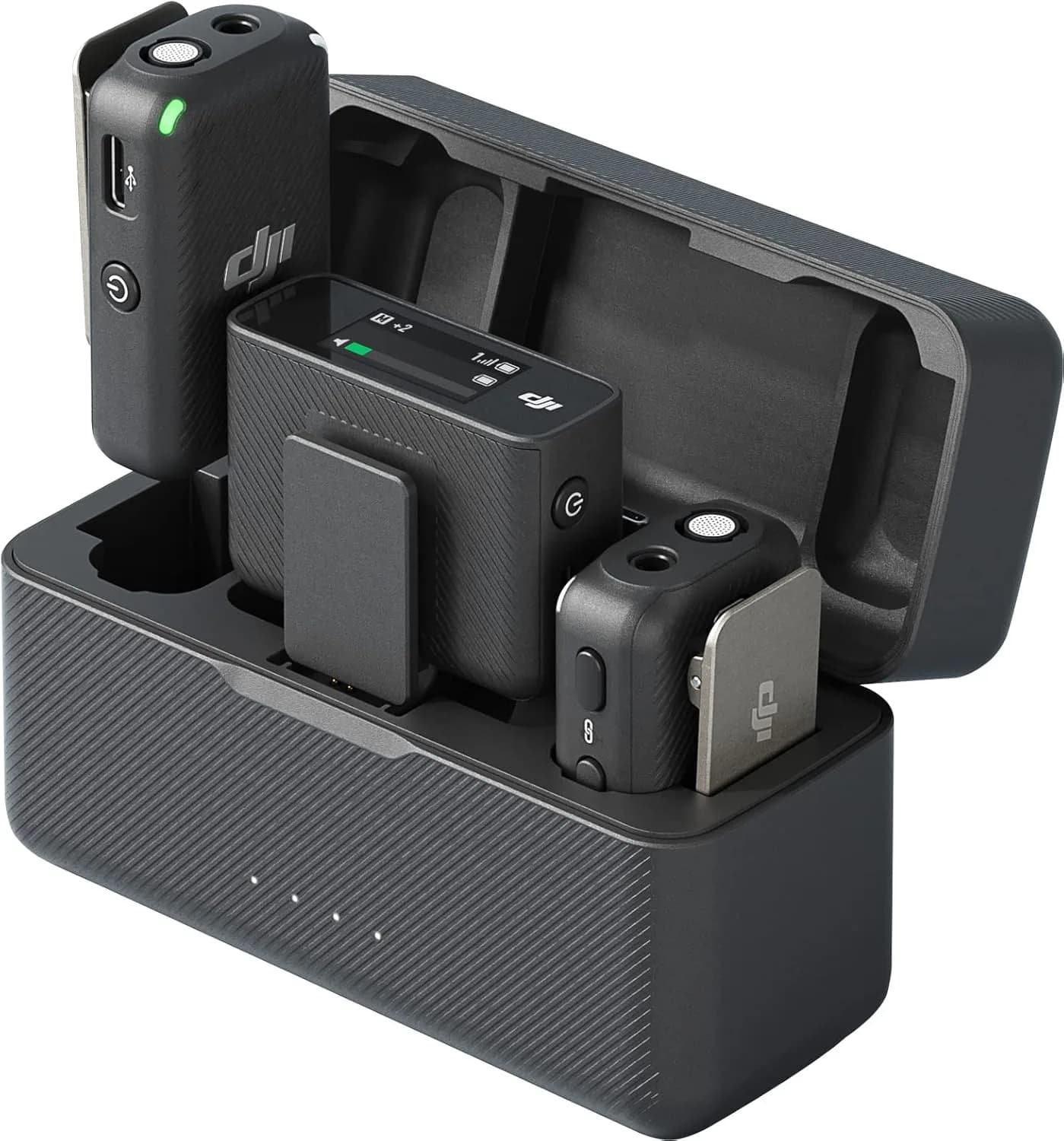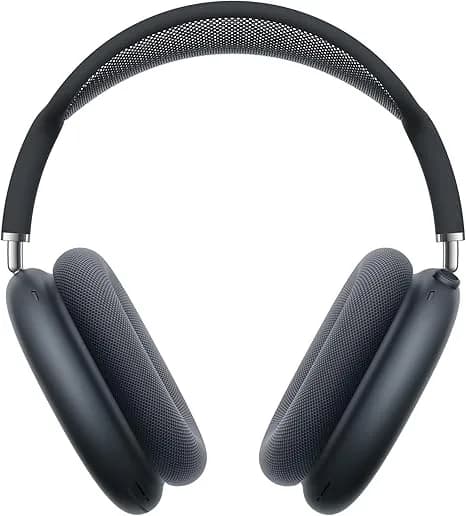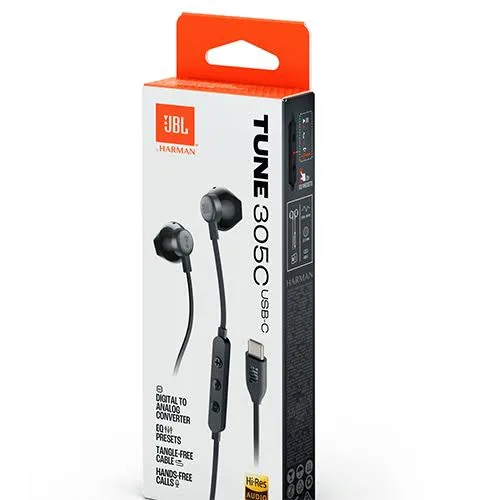
Pick up almost any pair of wireless earbuds or Bluetooth speaker today and you will find a code on the box: IPX4, IPX5, IPX7, IP67. Sellers say "waterproof" and "sweatproof" in the same breath, and buyers in Nairobi who run in the rain, wash a speaker after a barbecue or drop earbuds in a sink are left guessing what those letters actually promise. This guide gives you IPX ratings explained in plain language: what each digit means, what the rating does not cover, how to look after water-resistant gear, and how to tell when a "waterproof" claim is not true.
If you want help choosing a model, our team at City Gadgets Kenya can match a rating to how you really use your gear. Message us on WhatsApp and we will tell you honestly what a given model can and cannot survive.
The short version
- IP stands for Ingress Protection. It is an international code (IEC 60529) that describes how well an enclosure keeps out solids (dust) and liquids (water).
- The first digit is dust, the second is water. In "IP67", 6 is dust and 7 is water. In "IPX4", the X means dust was simply not rated.
- A higher water digit is not always "better" in every way. IPX5 and IPX6 are about jets of water. IPX7 and IPX8 are about immersion. They test different things.
- "Water-resistant" is not "waterproof". No consumer rating means the product can be used underwater for long periods, in the sea, in a hot shower or in a pool with chlorine.
- The rating usually applies to a new product in fresh water. Seals age, drops damage them and soap, salt and heat can defeat them.
- Charging cases and the earbuds themselves often have different ratings. Check both.
- Always verify the claim on the manufacturer's page. A sticker on a box is not a certificate.
| Rating | Plain-English meaning | Typical use |
|---|---|---|
| IPX0 | No protection | Basic gadgets |
| IPX1–IPX2 | Vertical drips (IPX1), tilted drips (IPX2) | Rarely quoted for audio |
| IPX3 | Spray up to 60° from vertical | Light rain |
| IPX4 | Splashes from any direction | Sweat, light rain, gym |
| IPX5 | Low-pressure water jets | Rinsing, heavy sweat, heavy rain |
| IPX6 | Powerful water jets | Hose-down, outdoor use |
| IPX7 | Immersion up to 1 m for 30 minutes | Accidental drops in water |
| IPX8 | Continuous immersion beyond 1 m, depth/time set by the maker | Pool-side, shallow dips |
| IP5X / IP6X | Dust protected / dust tight | Sand, dusty sites |
What does "IP" actually stand for?
IP means Ingress Protection. The code was defined by the International Electrotechnical Commission and appears as two digits. The first digit describes protection against solid objects, from large items such as fingers down to fine dust. The second digit describes protection against liquids, from vertical drips up to continuous immersion.
When one digit is missing, it is replaced with an X. That does not mean the product is bad at that protection; it means the manufacturer either did not test for it or chose not to publish a result. So IPX4 says "tested for splashes, dust not rated", whereas IP54 says "dust protected and splash proof". A product labelled IP67 has been tested for both: completely dust tight (6) and immersion up to 1 metre for 30 minutes (7).
The tests are run in a laboratory, with fresh water at room temperature, on new units. That last detail is the one most buyers overlook, and we will return to it throughout this guide.
The dust digit: 0 to 6
You will meet the dust digit mostly on rugged outdoor speakers and some premium earbuds.
- IP0X: no protection.
- IP1X to IP4X: protection against progressively smaller solid objects, from a hand down to a small wire. These are rarely quoted on audio products.
- IP5X: dust protected. Some dust may get in but not enough to interfere with operation.
- IP6X: dust tight. No dust gets in under test conditions.
For a Nairobi buyer, the dust digit matters more than you might expect. Construction sites, dusty roads, dry-season winds and sandy beach trips at the coast all expose a speaker to fine particles. A speaker rated IP67 has been tested against both dust and temporary immersion, which is why outdoor speakers often carry this code. For earbuds worn in the gym, dust is much less of a worry than sweat, which is why you so often see IPX4 or IPX5 on sports models.
The water digit: 0 to 9
This is the digit most buyers care about.
IPX1 and IPX2: drips
These ratings cover water dripping vertically (IPX1) or from a slight angle (IPX2). They are not usually printed on audio gear because the protection is minimal.
IPX3: spray
The product withstands a fine spray at up to 60 degrees from vertical. Think of a light drizzle. You may see this on cheaper sports earphones.
IPX4: splash proof
This is the most common rating on earbuds. The enclosure is tested with water splashed from any direction for several minutes. It is enough for sweat, light rain and splashes at the gym. It is not enough to rinse under a tap with force or to submerge. Many popular speakers, including the Anker Soundcore Rave 3S, carry IPX4, which suits a speaker you carry to a picnic or a party where a drink might be spilt nearby.
IPX5: water jets
The test uses a 6.3 mm nozzle delivering water at roughly 12.5 litres per minute from any direction. That is a low-pressure jet. IPX5 is good for heavy sweat, running in the rain and quick rinses.
IPX6: powerful jets
The nozzle gets bigger (12.5 mm) and the flow is about eight times higher, around 100 litres per minute. IPX6 products tolerate heavy rain and being hosed down. Many outdoor Bluetooth speakers and some sports earbuds reach this level.
IPX7: temporary immersion
The product is submerged in water up to 1 metre deep for 30 minutes. This is the rating people usually mean when they say "waterproof earbuds". It covers accidental drops in a sink, a bucket or a shallow puddle. It does not mean you can swim with them.
IPX8: deeper or longer immersion
IPX8 means the product survives continuous immersion under conditions the manufacturer specifies, which must be tougher than IPX7. One brand's IPX8 might be 1.5 metres for 30 minutes; another's might be 3 metres for an hour. That freedom is why you must read the footnote and not just the code.
IPX9 and IPX9K
IPX9 (and the older German standard IP69K) refers to high-pressure, high-temperature jets. It is intended for industrial equipment, not earbuds.
IPX4 vs IPX5 vs IPX7: which one do you actually need?
Many buyers assume the highest number is simply best. The better question is what will actually happen to the product.
| Your situation | Rating that makes sense | Why |
|---|---|---|
| Gym, sweaty workouts | IPX4 or IPX5 | Sweat is salty and constant; splash and jet protection is the point |
| Running in the rain | IPX5 or higher | Rain from all angles for longer periods |
| Showering with a speaker nearby | IPX5 to IPX7 | Splashes and steam; do not fully submerge |
| Camping, beach days | IP67 | Dust and sand plus accidental dunking |
| Kitchen use | IPX4 or IPX5 | Splashes and occasional rinsing |
| Pool parties | IPX7 or IP67 | Floating or accidental drops |
| Everyday office or commute | IPX4 | Occasional rain is enough |
One thing surprises people: IPX7 is not "better" than IPX5 at everything. A jet test and an immersion test measure different stresses. A product could pass one and fail the other, and a given model with both ratings (for example IPX5 and IPX7 on a data sheet) has been tested for both. In practice, anything IPX7 or above handles sweat and rain easily; the bigger difference is the seal quality and your own habits.
What a rating does NOT promise
This is the section sellers rarely write.
- It does not cover seawater. Salt is corrosive and conductive. Salt water can penetrate seals and corrode contacts even when fresh water would not.
- It does not cover chlorinated pool water. Chlorine degrades rubber gaskets and adhesives over time.
- It does not cover soap, shampoo or lotion. Soap reduces surface tension and lets water creep into gaps it would otherwise bead against.
- It does not cover hot water or steam. A hot shower, a sauna or a steam room can force vapour past seals and damage glue.
- It does not cover pressure changes. Diving, jumping into water or the pressure of swimming strokes can exceed the test conditions.
- It does not cover wear and tear. Rubber ages, adhesives dry, and a drop that cracks the casing breaks the seal.
- It rarely covers the charging case. Many "waterproof" earbuds come in a case that is not waterproof at all, or is rated lower.
- It rarely covers the charging port while it is wet. Plugging in a cable while the port is damp can short the circuit and corrode the contacts.
- Warranty usually excludes liquid damage. Many manufacturers sell the rating as a feature but still refuse to repair water damage under warranty. Read the warranty terms.
If you remember one sentence from this guide, make it this: a water-resistance rating describes how a new product behaved under laboratory conditions, not how your product will behave after a year of real life.
Sweat, salt and why gym earbuds die
Sweat is one of the most common causes of earbud failure, and it explains why many gym earbuds die even when they are rated IPX4. Sweat is slightly acidic and contains salt. Over months it creeps into microphone ports, eartip mesh and charging contacts. The ports corrode and the earbud stops charging.
You can extend the life of your earbuds simply:
- Wipe the earbuds with a soft, slightly damp cloth after every workout, then dry them.
- Let them air-dry before returning them to the case.
- Clean the charging contacts on the earbuds and in the case with a dry cotton bud from time to time.
- Do not charge earbuds that are still damp.
- Replace ear tips regularly; they hold sweat.
A rating of IPX4 or IPX5 with this routine will outlast a rating of IPX7 with none.
How the rating is tested, in practice
The tests are not mysterious, and it helps to picture them.
For IPX4, the product sits on a turntable and is splashed by an oscillating tube or a spray nozzle from every direction for at least ten minutes. For IPX5 and IPX6, a person aims a nozzle at the product from a distance of about three metres for a set time. For IPX7, the product is lowered so that its lowest point is 1 metre beneath the surface and stays there for 30 minutes. After the test, the product must still operate and not have water inside.
Notice what is missing: a hot environment, soapy water, movement, repeated tests, age. The test is a snapshot. That is why a manufacturer's own claim about "waterproof for swimming" is not the same as an IP rating.
Earbuds vs speakers: the rating means different things
The same code behaves differently depending on the product.
Earbuds are small, worn on the body and exposed to sweat, rain and ear wax. They have tiny microphone and speaker ports that are hard to seal, and the charging case is a separate device. When you compare earbuds, ask three questions: what is the rating of the buds, what is the rating of the case, and does the rating apply when the ear tips are removed or damaged? Many of the earbuds we sell are rated IPX4 or IPX5, which is perfectly adequate for workouts and commuting. Sony, JBL, Anker Soundcore and others publish the rating of each model on their product pages, and we check it with you before you buy.
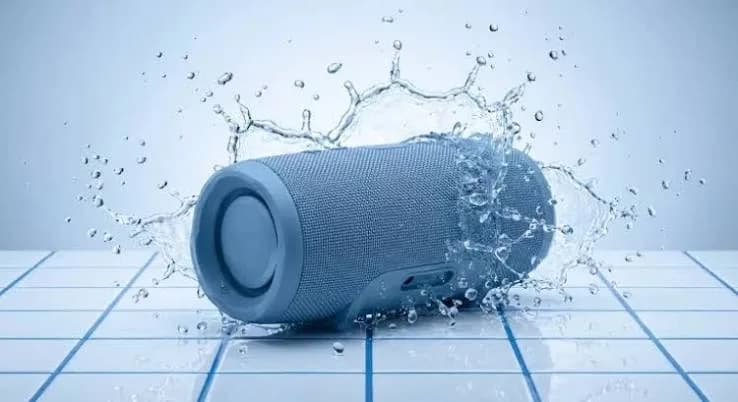
Bluetooth speakers are larger, have fewer ports and can use bigger gaskets. Their rating is also usually applied to the speaker with its port covers closed. Speakers with a flap over the USB-C port are only protected while the flap is shut. Leaving the flap open after charging defeats the rating. A speaker like the Anker Soundcore Select 4 Go, rated IP67, is built for dust and temporary immersion, which is why it suits beach trips and camping; the Soundcore Rave 3S, rated IPX4, is built for splashes, which suits parties and patios but not deliberate dunking.
Soundbars, home theatre systems and PC speakers are almost never rated. They are indoor products. If a listing claims a soundbar is waterproof, be suspicious.
IP ratings on phones, watches and power banks
The same code appears on many other devices, and it helps to know how they compare.
- Smartphones: flagship phones are commonly rated IP67 or IP68. Because these tests are for fresh water, the phone maker's warranty may still exclude liquid damage. See our phones category to compare current models.
- Smartwatches and fitness bands: often rated 5 ATM or IP68, which covers swimming in a pool but not diving.
- Action cameras and rugged cameras: may have a rating but often need a separate housing for deeper use.
- Power banks and chargers: usually have no rating at all. Do not assume a power bank is splash proof.
A useful rule is to treat the rating as a safety margin, not a licence to use the device in water on purpose.
Does a waterproof rating hurt sound quality?
Sealing a speaker or earbud does impose design constraints, and it is fair to ask whether you pay for protection with sound. In practice, modern sealed designs sound very good because the engineers account for the enclosure in the acoustic design. What does change is the following:
- Ports and vents that normally let air move are replaced by membranes that pass air but block water. These membranes can slightly dampen very high frequencies.
- Microphones may be less sensitive, which sometimes affects call quality in wind.
- Passive radiators and bass ports on speakers must be sealed or covered with membranes.
For most listeners the difference is negligible. If you want the best sound indoors and do not need protection, a non-rated model may offer slightly better tuning at the same cost; if you will use the speaker around water, protection is worth far more than a tiny loss at the extremes.
Caring for water-resistant earbuds and speakers
A rating is not a promise to last forever. These habits make a real difference.
- Dry after exposure. Wipe the product dry, and shake out any water from ports gently.
- Never charge wet. Wait until the charging port is fully dry. Some devices warn you; many do not.
- Keep port covers closed. Press flaps and plugs until they seat fully.
- Rinse after salt or chlorine. If a rated speaker got splashed with sea water, rinse it briefly under a gentle stream of fresh water, then dry it. Check the manufacturer's advice first.
- Avoid heat. Do not leave speakers in a parked car or on a sunny dashboard; heat softens adhesives.
- Avoid soap and chemicals. Wipe with plain water or a very slightly damp cloth.
- Inspect gaskets. If you can see a gap, crack or a lifted seal, treat the rating as gone.
- Replace worn ear tips. They keep sweat and moisture off the body of the earbud.
- Do not use compressed air. It can force water or damage membranes.
- Do not use rice. The old advice of putting wet gadgets in rice does not help and can leave dust inside. Dry the device in open air.
What to do if your earbuds or speaker get wet
If a product gets wet beyond its rating or unexpectedly:
- Switch it off immediately and do not plug in a charger.
- Remove cases, covers and ear tips and wipe everything dry.
- Leave it to dry in a well-ventilated place at room temperature for at least a day, ideally two.
- Test before charging. If it will not turn on, do not keep pressing buttons.
- Bring it to us. Our repair desk can inspect charging ports and contacts for corrosion.
Do not try to open sealed earbuds yourself; you will destroy the seals and any chance of a manufacturer's service.
Common myths about waterproof ratings
"IPX7 means I can swim with my earbuds." No. Swimming involves movement, pressure and chlorine or salt. IPX7 covers a short immersion in still fresh water. If swimming is the goal, look for earbuds explicitly designed for it, often with built-in storage and a different design.
"IPX8 is always better than IPX7." Not necessarily. IPX8 depends on conditions the maker chooses. A weak IPX8 can be easier to pass than a strong IPX7 test in some cases, so always read the footnote.
"If it survived once, it is fine forever." Seals age. A product that survived a dunk last year may fail this year.
"Waterproof and water-resistant mean the same thing." Legally and technically they do not. Most consumer products are water resistant. Use the word "waterproof" only when a product is built and warranted for it.
"Sweat is just water." Sweat contains salt and acids, and it is more corrosive than plain tap water.
"A higher IP number means more durable." The digits are categories, not a durability ranking. An IP68 phone can still crack when dropped.
"My charging case is waterproof because the earbuds are." Often false. Read the specification page.
IP ratings and real-life Kenyan use
Local conditions shape what is worth paying for.
- Rainy seasons in Nairobi bring sudden downpours. Walking to a matatu stage with earbuds in is the most common wet exposure; IPX4 handles this, IPX5 is more reassuring.
- Coast trips to Mombasa, Diani or Watamu involve salt, sand and sun. An IP67 speaker is a sensible choice; rinse it afterwards with fresh water.
- Gyms, runs and football: sweat is the enemy. IPX4 or IPX5 with a cleaning routine is enough.
- Construction, site work and workshops: dust matters. A rugged speaker with a dust digit helps; also protect the charging port.
- Weddings and outdoor events: spilled drinks are the main hazard. IPX4 is the practical minimum for a speaker on a table.
- Kitchens and bathrooms: humidity and steam are persistent. A rated speaker lasts longer than an unrated one, but keep it out of direct shower spray.
Reading a spec sheet like a buyer, not a shopper
Spec sheets hide the important details in small print. When you compare two products, work through this short checklist.
Is the rating for the product or for the packaging? Some listings quote the rating of an accessory, such as a pouch, rather than the device itself. The rating must be stated for the exact model.
Is the rating for all parts? A speaker might be IP67 with its port cover closed and unrated with it open. Earbuds might be IPX5 while the case has no rating. If the page does not say, ask.
Does the manufacturer mention conditions? Honest brands state "fresh water only" or "not for use in hot water or salt water". Vague claims such as "fully waterproof" with no conditions deserve caution.
Does the warranty mention liquid damage? A brand that is confident in its seals may cover accidental water exposure within limits. Most do not, and you should know that before an accident rather than after.
Is the model number consistent? The model on the box, the manual and the manufacturer's page must match. A near-match, such as one letter different, often means a different product with different protection.
Does the rating match the price tier? Genuine protection costs money to engineer and test. Extreme claims at very low prices are the most common sign of a false rating.
A short example comparison
Imagine you are choosing between two Bluetooth speakers for a weekend away. Speaker A is rated IPX4 and is light and compact; Speaker B is rated IP67 and is larger and heavier. If your weekend is a barbecue in a garden, Speaker A is enough, easier to carry and usually cheaper. If your weekend involves a beach, a river or a campsite where the speaker may end up in sand or a puddle, Speaker B is the safer choice. Neither is "better" overall; each fits a different use. The point of understanding the code is that you can choose without paying for protection you will never use, or skipping protection you will need.
How to spot a fake IP rating or a counterfeit "waterproof" product
False waterproof claims are common in online listings and market stalls. Fake or counterfeit audio products often copy the packaging of a trusted brand and add a rating that the real product does not have. Here is how to protect yourself.
1. Check the rating against the brand's official page. Every serious manufacturer publishes the IP rating of each model on its website. If the box says IPX7 but the brand's page says IPX4, you have either a counterfeit or a mislabelled import.
2. Be wary of ratings on very cheap products. A genuine IPX7 test costs money and requires proper gaskets. When an unbranded earbud priced far below the genuine brand's model claims IP68, be suspicious.
3. Look at the writing on the box. Counterfeits often have spelling mistakes, blurry printing, wrong logos or inconsistent model names. Genuine products print the rating consistently across the box, the manual and the product itself.
4. Check the product itself. Many genuine products have the rating marked in the manual and sometimes on the case or the device. Counterfeits may leave this blank or use a sticker that peels off.
5. Check port covers and seals. On a speaker marketed as rugged, the USB-C cover should fit snugly with a visible rubber seal. Loose, flimsy or missing covers are a red flag.
6. Test the packaging and accessories. Genuine boxes include proper documentation, warranty information and often a serial number. Counterfeit boxes often have thin manuals with generic text.
7. Pair it and check the details. Genuine products usually show the correct model name on your phone's Bluetooth list and in the brand's companion app. Wrong names or unknown model codes are suspicious.
8. Do not test it by dunking. If you have to prove the rating by submerging a product you just bought, you have already been misled. A trustworthy seller tells you the rating up front and stands behind it.
9. Compare weight and build. Genuine rugged speakers usually feel dense and solid. Hollow, light products with thin plastic are often not sealed at all.
10. Buy from a seller who can answer questions. Ask the shop for the exact model number, the rating of the case and the buds, and the warranty. Evasive answers are a bad sign.
If you are unsure, send photos of the box, the product and any serial number to us on WhatsApp and we will tell you what we see.
Why buy water-resistant earbuds and speakers from City Gadgets Kenya
- Genuine products from brands that publish their ratings, including Anker Soundcore, JBL, Sony and others, so you can verify every claim on the maker's own site.
- Honest advice about ratings. If an IPX4 model suits you better than an expensive IP68 one, we say so. We do not push the highest number.
- We explain the case, the buds and the port separately, because they are often rated differently.
- A real shop in Nairobi CBD at New Alnoor Exhibition, Second Floor, Shop C7, Accra Road, where you can handle the product and inspect port covers before paying.
- Same-day delivery in Nairobi and next-day outside Nairobi, with M-Pesa payment.
- Support after the sale for setup, cleaning advice and charging problems, with a repair desk for faults.
- Message us for today's price. We do not print prices that go stale; we quote the current price on WhatsApp.
Browse our accessories category for earbuds, speakers and more, or read our guides to Bluetooth speakers and wireless earbuds.
Choosing by rating: a quick decision path
- Will it touch water on purpose? If yes, look for IPX7 or IP67 and above, and a case of the same standard if you care about the case.
- Will it mostly face sweat and light rain? IPX4 or IPX5 is enough.
- Will it go to the beach or a dusty site? Choose a dust digit as well, such as IP67.
- Will it live indoors? A rating is a bonus, not a necessity; buy for sound and features.
- Is warranty cover for liquid damage important? Ask the seller and read the policy.
- Is the rating verifiable? If you cannot find it on the brand's official page, treat it as unproven.
Frequently asked questions
What does IPX mean on earbuds? IPX means the product has been tested for water protection but not for dust. The number after X is the water level, for example IPX4 for splashes or IPX7 for temporary immersion.
What is the difference between IPX4 and IPX5? IPX4 is tested against splashes from any direction. IPX5 is tested against low-pressure water jets, so it handles heavier rain and rinsing better.
Is IPX7 fully waterproof? No. IPX7 means the product survives immersion up to 1 metre for 30 minutes in fresh water. It is not designed for swimming, salt water, hot water or continuous use underwater.
Can I wear IPX4 earbuds in the rain? Yes, in light to moderate rain. For heavy rain or frequent wet use, IPX5 or higher is more comfortable.
Can I shower with waterproof earbuds? We do not recommend it. Soap, steam and hot water can defeat the seals, even on IPX7 products.
What does IP67 mean? It means dust tight (6) and temporary immersion up to 1 metre for 30 minutes (7).
What is the difference between IP67 and IP68? IP68 means immersion beyond 1 metre or for longer, as specified by the manufacturer. Always read the footnote.
Does the charging case need to be waterproof? Not necessarily, but if you are worried about moisture, check the case's rating. Many cases are less protected than the earbuds.
Is a waterproof speaker safe in the sea? Rated speakers are designed for fresh water. If you take one near the sea, rinse it with fresh water afterwards and dry it.
Does water damage void the warranty? Often yes. Many warranties exclude liquid damage even for rated products. Ask us before you buy.
Can I charge my earbuds right after the gym? Wipe them dry and let them air out first. Charging wet contacts can cause corrosion.
How do I know if the IP rating is real? Check the manufacturer's official product page for the exact model, compare the box and manual, and buy from a seller you trust.
Will an IP rating last forever? No. Seals wear and adhesives age. Treat the rating as a margin that shrinks with time.
Are soundbars waterproof? Almost never. Soundbars are indoor products and carry no rating.
Is IPX7 better than IPX5? They measure different things. IPX7 is about immersion; IPX5 is about jets. Choose according to how you will use the product.
Ready to choose?
Tell us how you will use your next pair of earbuds or speaker, and we will match the rating to the job and confirm it against the manufacturer's specification before you pay.
WhatsApp: wa.me/254745575931 Visit: New Alnoor Exhibition, Second Floor, Shop C7, Accra Road, Nairobi CBD. Same-day delivery in Nairobi; next-day outside Nairobi.
Related reading: how active noise cancelling works, earbuds battery life explained, speaker watts explained.