If you have ever put on a pair of good noise cancelling headphones in a noisy place, you know the strange moment when the world seems to drop a few notches. The rumble of a matatu engine fades, the aircraft hum vanishes, the open-plan office chatter becomes a distant murmur. It feels like magic, but how active noise cancelling works is actually a neat piece of physics, signal processing and engineering. This guide explains it in plain language: what sound is, how a pair of headphones can create "anti-sound", why some noises vanish while others stay, the difference between feedforward, feedback, hybrid and adaptive ANC, how it affects battery life and comfort, and how to choose and verify genuine ANC earbuds and headphones in Kenya, where look-alike fakes are common. We use real products from our range, such as the Sony WH-1000XM6, Samsung Galaxy Buds3 Pro, Apple AirPods 4 with ANC, CMF Buds Pro 2 and the Anker Soundcore range, as examples.
The short version
Active noise cancelling (ANC) uses tiny microphones to listen to the noise around you, then plays an opposite sound wave through the speaker so the two waves cancel each other at your ear. It works best on steady, low-pitched sounds like engines, fans and air conditioning. It works less well on sudden, high-pitched or changing sounds like voices, clapping and car horns. Good ANC combines clever electronics with a good physical seal, because the best noise cancelling is half technology and half fit.
First, what is sound?
Sound is a pressure wave travelling through air. When a matatu engine runs, it makes the air pressure around it rise and fall rapidly. Those pressure changes reach your eardrum, which vibrates, and your brain interprets the vibrations as sound.
Three properties matter for understanding ANC:
- Frequency is how fast the pressure rises and falls, measured in hertz (Hz). Low frequencies (50-500 Hz) feel like rumble: engines, bass, air conditioners. High frequencies (2,000-8,000 Hz) feel like hiss, whistles and the "s" sounds in speech.
- Amplitude is how big the pressure changes are, which is what we hear as loudness.
- Phase is where in its up-and-down cycle the wave is at a given moment. Two identical waves that are perfectly in step add up; two identical waves that are perfectly opposite cancel out.
That last idea is the secret of ANC.
The core idea: destructive interference
Imagine two ripples on a pond. Where a crest meets a crest, the ripple grows taller. Where a crest meets a trough of the same size, the water goes flat. Sound waves do exactly the same thing. This is called destructive interference.
An ANC system does this deliberately:
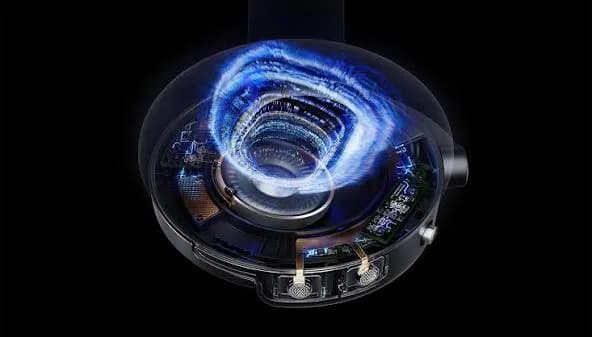
- A microphone picks up the incoming noise wave.
- A chip analyses its shape.
- The chip generates a copy of the wave that is flipped upside down: same size, opposite phase.
- The speaker plays the flipped wave into your ear at the same moment the original noise arrives.
- The two waves meet at your eardrum, where they cancel each other, and you hear much less.
The sound has not been blocked. It has been neutralised by adding its mirror image. That is why the technology is called "active": the headphones do work to cancel the noise, rather than just passively blocking it.
Why it is hard: timing is everything
The idea is simple, but the execution is demanding. To cancel a wave, the anti-noise must arrive at your ear at exactly the right time and with exactly the right size. For a low-pitched hum at 100 Hz, one full cycle lasts 10 milliseconds, so the system has some leeway. For a sound at 2,000 Hz, a cycle lasts only half a millisecond, so even a tiny delay puts the anti-noise out of step and can make things worse instead of better. This is why ANC is much better at low-frequency noise than at high-frequency noise.
The chip must listen, analyse, generate and play the inverse signal within a fraction of a millisecond. Modern ANC uses a digital signal processor (DSP) and fast converters, and the best systems work with delays measured in microseconds. This is part of what you pay for in a premium product.
Passive vs active noise reduction
It is important to separate two things that both make the world quieter.
Passive noise isolation is the physical blocking of sound by the headphone structure: the ear cups, the cushions, the silicone ear tips. A good seal blocks mid and high frequencies well. This is what a foam earplug does.
Active noise cancelling is the electronic part, and it works best on low frequencies, which are the ones that physical barriers block least. This is why the two work together. Good ANC headphones have a good seal for the highs and electronics for the lows. If the seal is bad, ANC cannot do its best, which is why fit matters so much in earbuds.
| Method | Works best on | How it works | Weakness |
|---|---|---|---|
| Passive isolation | Mid and high frequencies | Physical seal and materials | Poor on low rumble |
| Active noise cancelling | Low and steady frequencies | Anti-noise via microphones and DSP | Poor on sudden and high-pitched sounds |
| Both together | Most everyday noise | Seal plus electronics | Cost, battery use, sometimes a feeling of pressure |
The microphones: feedforward, feedback and hybrid
ANC systems differ in where they put their microphones.
Feedforward ANC (outside microphone)
A microphone on the outside of the ear cup or earbud listens to the noise before it reaches your ear. The chip creates the anti-noise in advance. This works well for a wide range of frequencies and gives the system a head start, but it cannot know exactly what actually arrives at your ear, because it is listening from outside the seal.
Feedback ANC (inside microphone)
A microphone inside, near the ear canal, listens to what you actually hear, including the music and any leftover noise, and adjusts the anti-noise to correct errors. It is good at fine-tuning, especially for low frequencies, but it can be unstable at higher frequencies and can add a slight hiss or pressure.
Hybrid ANC (both)
Hybrid ANC uses both: an outside microphone to predict the noise and an inside microphone to correct the result. This is what most good modern headphones and earbuds do. The Anker Soundcore Life Q30, for instance, is described as using hybrid ANC with microphones inside and outside each ear cup. Hybrid ANC gives wider and deeper cancellation than either method alone.
Adaptive ANC
Adaptive ANC adds another layer: the system continuously measures the environment and the fit, then adjusts the cancellation profile in near real time. If you walk from a quiet office into a noisy street, or the seal changes because you shift the headphones, the system adapts. Sony's flagship WH-1000 series uses an adaptive approach, and Anker's Soundcore Liberty 4 NC (Adaptive ANC 2.0) and Space series (adaptive ANC with adjustable levels) do the same. Adaptive systems generally feel smoother and more consistent in changing environments such as Nairobi streets, where noise changes minute to minute.
What ANC cancels well, and what it does not
This is where expectations go wrong, so it is worth being plain.
| Noise | ANC performance | Why |
|---|---|---|
| Matatu or bus engine rumble | Excellent | Low frequency, steady |
| Aircraft cabin drone | Excellent | Low frequency, steady |
| Air conditioner or fan hum | Excellent | Low, constant |
| Train or road noise | Very good | Mostly low-mid steady |
| Office background chatter | Partial | Voices have mid and high content that changes |
| A person speaking next to you | Reduced but still audible | Speech is varied and mid-high frequency |
| Sudden sounds (door slam, horn, clap) | Poor | Too fast for the system to predict |
| Wind noise | Poor, may even cause artefacts | Chaotic, microphones overwhelmed |
| High-pitched whistles and alarms | Poor | High frequency, passive isolation matters more |
This also explains why ANC headphones do not make you deaf to the world. The sounds that matter for safety, such as sirens, horns and shouted warnings, are exactly the ones ANC handles least well. That is partly by physics, not design. Even so, be careful when walking along roads with ANC on, and use transparency mode (below) when you need awareness.
Why the world sounds "pressurised" with ANC on
Some people feel a sense of pressure or fullness in their ears when ANC is switched on, as if they are in a plane or underwater. There is no actual pressure change. What happens is that your brain is used to low-frequency noise as a constant companion, and when it suddenly disappears, the silence feels odd. Poorly tuned ANC with a strong feedback component can also create an infrasonic "hum" that some people detect as pressure. Better systems, and adjustable ANC levels in the companion app, reduce this feeling. If you are sensitive, try a lower ANC level or a different brand, and give yourself a few days to adjust.
Transparency, ambient and "awareness" modes
Transparency mode is ANC's mirror image. The outside microphones pick up the world around you, and the system plays it into your ears, sometimes with processing to keep speech clear and wind noise down. It lets you hear announcements, talk to a cashier or notice traffic without removing your headphones. Good implementations sound natural; poor ones sound tinny or hissy. Most premium models also offer adjustable levels and the ability to let through voices only. The Soundcore Space One, for example, offers five adjustable transparency levels.
Earbuds vs over-ear headphones: why the shape changes the result
Over-ear headphones usually cancel noise better because they have more room for microphones and larger drivers, and the ear cups create a larger sealed chamber, so more passive isolation helps the ANC. Earbuds have to do the same job in a far smaller space, and the quality of the seal depends on the ear tip fit.
Silicone-tip earbuds
Earbuds with silicone tips seal the ear canal and combine passive isolation with ANC. The Samsung Galaxy Buds3 Pro, Anker Soundcore Liberty 4 NC and CMF Buds Pro 2 all fit this category. The seal is critical: try every size of tip supplied in the box. A mismatched tip leaks sound and weakens ANC, especially in bass. Many people use tips that are too small.
Open-fit earbuds
The AirPods 4 have an open design without tips. This changes the physics because there is no seal for the ANC to work with. Apple's noise cancelling version of the AirPods 4 can reduce steady background noise, such as the hum of a bus or office air conditioning, but an open-fit earbud cannot block sound the way a sealed one does. If strong isolation is your main goal, a sealed earbud or over-ear headphone is the better tool. If comfort and awareness matter, and you want a modest reduction, open-fit ANC is a legitimate choice.
Over-ear headphones
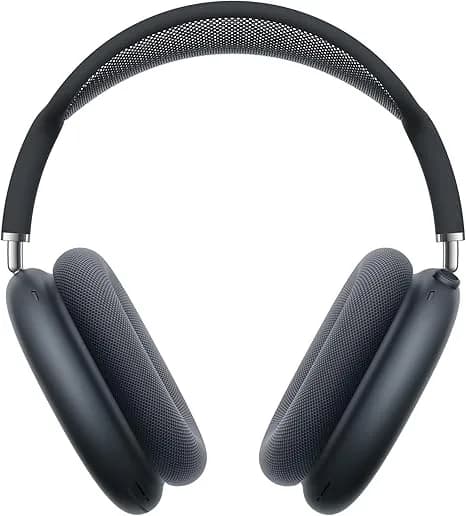
The Sony WH-1000XM6, the Soundcore Space One and Space Q45, and the Life Q30 are over-ear designs. Their size gives them an advantage in cancelling and in battery life. The Space Q45 is listed with up to 50 hours of battery with ANC on, and the Space One with up to 40 hours. The trade-off is bulk: over-ear headphones are heavier and warmer to wear in Kenya's warmer weather.
| Type | ANC strength | Comfort in heat | Portability | Examples we stock |
|---|---|---|---|---|
| Over-ear | Strongest | Warmer | Bulkier | Sony WH-1000XM6, Soundcore Space One, Space Q45, Life Q30 |
| Sealed earbuds | Strong | Cooler | Pocketable | Galaxy Buds3 Pro, Soundcore Liberty 4 NC, CMF Buds Pro 2 |
| Open-fit earbuds | Moderate | Cool, airy | Pocketable | AirPods 4 with ANC |
ANC and battery life
ANC needs power: microphones, a chip and extra processing run continuously. That is why battery figures are always quoted twice, with ANC on and off. The Soundcore Liberty 4 NC, for example, is listed at up to 10 hours in the earbuds with ANC off and up to 8 hours with ANC on, with the case adding about 40-50 hours in total. The Space Q45 lists up to 50 hours with ANC on and up to 65 hours with ANC off.
The practical lesson: use ANC when you need it, and switch it off or use transparency when you don't. Using ANC while you walk quiet streets or sit in a silent room drains the battery for no benefit. Most apps let you set automatic rules based on location or activity.
Note: manufacturers' battery claims come from lab conditions at moderate volume. Real-world results are usually a little lower, and battery capacity declines over the years.
The ANC levels and personalisation you should look for
Premium ANC products give you control, which matters because noise is not constant.
- Adjustable ANC levels in the app, from light to strong, to suit different environments and avoid the pressure feeling.
- Adaptive mode that adjusts automatically.
- Fit test features that tell you whether your ear tips are sealing properly.
- Transparency levels, and the option to let voices through.
- Wind reduction in transparency mode.
- Presets for commute, office, flight and home.
- Multipoint connection so the headphones can connect to a phone and a laptop at once. The Liberty 4 NC lists Bluetooth 5.3 with multipoint.
ANC and your hearing: a genuine benefit
There is a health argument for ANC that gets less attention than it deserves. In a noisy environment, people turn up the volume to hear their music or podcast over the background. Prolonged high-volume listening can damage hearing. With effective ANC, the background drops, so you can listen at a lower and safer volume. For people who commute daily by matatu or who work near generators, traffic or machinery, that is a real advantage.
The caution is the other way round: because ANC makes everything feel quiet and comfortable, some people turn the volume up without realising. Check your phone's hearing health tools, and remember that ANC doesn't protect you from loud noise itself. It reduces the noise reaching you, but it is not hearing protection for industrial noise, gunfire or very loud events.
ANC in everyday Kenyan situations
The daily commute. Matatu engines, music, conductors and traffic create constant noise. Over-ear ANC or sealed earbuds can transform a long commute into a quiet time to listen to a podcast, take a call or simply rest. Switch to transparency when you need to hear the conductor or stage announcements.
The open-plan office. ANC reduces air conditioning, fans and background hum, which helps concentration. It reduces but won't remove conversation. Pair it with focus music or white noise if talk is the issue.
Flights. Aircraft cabin noise is the classic ANC target. If you fly regularly, from Nairobi to Mombasa, or to Europe or the Gulf, a good pair makes a long journey less tiring.
Studying. Students in noisy hostels or libraries benefit. See our guide on headsets for online classes.
Working from home. Generators, neighbours' music, construction and traffic are common distractions. Over-ear ANC headphones with a good microphone suit remote work. See our guide to working from home setups.
Calls. ANC cancels noise in what you hear. Call quality for the other person depends on the microphones, which is a separate system (see our blog on headset microphone types).
Common myths about ANC
Myth: ANC makes everything silent. No. It reduces steady low-frequency noise very well, and others less so.
Myth: ANC damages your ears. No credible evidence suggests that ANC itself harms hearing. The unusual sensation is an adjustment effect. Still, if you get headaches or discomfort, reduce the level or take a break.
Myth: More expensive always means better ANC. Generally, premium products are better, but the gap between mid-range and flagship has narrowed. Fit, comfort and features matter as much as the ANC rating.
Myth: Percentage claims such as "98% noise reduction" describe everyday results. Manufacturers like Anker quote figures such as 98% or 98.5% reduction, tested in laboratory conditions on particular frequencies. These claims are real in the sense that they come from tests, but they don't mean you will hear 98% less noise on a Nairobi street. Treat them as marketing, and judge ANC by trying it.
Myth: ANC works the same on every phone. The ANC works inside the headphones, but controls, adaptive modes and some features depend on the companion app and the phone brand. For example, Apple's AirPods have features that work best with iPhone, and Samsung's Galaxy Buds work best with Galaxy phones.
Choosing ANC headphones or earbuds: a practical guide
| Your priority | Look for | Options in our range |
|---|---|---|
| Best-in-class ANC and call quality | Premium over-ear with adaptive hybrid ANC | Sony WH-1000XM6 |
| Long battery on a budget | Over-ear with big battery | Soundcore Space Q45, Space One, Life Q30 |
| Pocketable ANC for Android | Sealed earbuds with app control | Galaxy Buds3 Pro, CMF Buds Pro 2, Soundcore Liberty 4 NC |
| iPhone user wanting comfort and awareness | Open-fit with ANC | AirPods 4 with ANC |
| Hi-res wireless audio | LDAC support | Soundcore Liberty 4 NC, Space Q45 |
For a full buyer's walk-through, see our guides to the best noise cancelling headphones and the best wireless earbuds in Kenya.
A short history: from pilots' headsets to your pocket
Active noise cancelling is older than most people assume. The principle of cancelling sound with an opposing wave was patented in the 1930s, and the first practical headsets were developed in the decades that followed for aircraft pilots, whose cockpits were damaging to hearing and made radio communication difficult. For many years the technology was analogue, bulky and expensive, found in aviation and specialist equipment. As chips became smaller and faster, ANC moved into consumer headphones for frequent flyers and eventually into earbuds small enough to sit in the ear.
The big change in recent years has been digital processing. Early systems used fixed analogue circuits that worked at one setting. Modern systems use DSPs, and in some cases machine-learning models, to adapt cancellation to the noise, the fit and even the shape of your ear. Newer chips can process more microphone inputs with lower delay, which is why the latest flagship headphones cancel more of the mid frequencies, where voices live, than their predecessors did. This is the direction in which products such as the Sony WH-1000XM6 are developed, with more processing power and more microphones used for both cancelling and calls.
Analogue vs digital ANC
You may see these terms in product descriptions. Analogue ANC uses fixed electronic filters with very low delay, so it can be effective and efficient but cannot adapt. Digital ANC uses a processor that can be updated, tuned for different environments and customised, at the cost of slightly higher delay and power use. Most modern consumer products use digital or hybrid analogue-digital designs. Buyers do not need to choose between them; what matters is the result you hear.
Why different brands sound and cancel differently
Every manufacturer tunes its ANC differently. Some prefer a strong, deep silence at the cost of a slight pressure or a hiss. Others prefer a gentler effect that feels more natural. Some prioritise bass-heavy noise like engines; others push to reduce more voice noise. It is a matter of design choices, which is why the same noise can feel different on a Sony, a Samsung or a Soundcore. The most reliable test is to listen yourself in a noisy place.
Caring for your ANC gear in Kenyan conditions
ANC depends on tiny microphones and a good seal, and both suffer from dust, sweat and earwax.
- Clean the microphone ports. Dust, wax or a smear of sweat over a microphone hole reduces ANC performance. Use a soft dry brush or a dry cotton bud, never liquid poked into the hole.
- Replace ear tips. Silicone tips lose shape and become sticky or loose. A fresh pair restores the seal, and with it the ANC. Replacement tips are inexpensive.
- Replace ear cushions on over-ear headphones when they crack or flatten, because worn cushions leak sound.
- Dry them after exercise. Sweat damages electronics and corrodes charging contacts.
- Update firmware. Manufacturers improve ANC tuning through app updates.
- Store in the case. Hot cars, bags with keys and damp pockets shorten life.
- Watch the battery. Lithium batteries age. After two or three years of daily use, battery life will be noticeably shorter, which is normal.
How to test ANC properly before you buy
- Fit first. For earbuds, try each tip size until the sound feels full and the outside noise drops. Use the app's fit test if there is one.
- Test in noise, not in a quiet shop. Turn ANC on and off while standing near a fan, an air conditioner or a busy road. Compare.
- Play nothing at first. ANC should reduce noise even without music. Listen for a clean reduction, not hiss.
- Check for artefacts. A faint hiss, wind-like rushing or pressure is normal at a low level, but should not be annoying.
- Test transparency mode. Speak to someone while wearing them and see how natural the world sounds.
- Test the microphones. Make a call in a noisy place and ask the other person how you sound.
- Check comfort over time. An hour of wear tells you more than five minutes.
At our shop in Nairobi CBD you are welcome to test products before you buy.
How to spot fake ANC headphones and earbuds
Noise cancelling is exactly the feature that fake products imitate worst. A counterfeit pair can look identical, pair with your phone and even display a fake ANC switch, but have no real ANC hardware inside. Here is how to check.
1. Test the ANC itself
Genuine ANC works. Put the headphones on near a fan or air conditioner, switch ANC on and off, and listen. If you hear no real difference, or only a slight change in volume, it is a fake or a faulty unit. Fake "ANC" is often just a recorded click or a light that changes.
2. Check the serial number with the brand
- Apple AirPods: find the serial number (in Settings, About, or on the case and earbuds) and check it on Apple's coverage-check page. Fake AirPods often have a serial that does not exist or belongs to a different product.
- Samsung Galaxy Buds: pair them with the Galaxy Wearable app; fakes often cannot complete setup, show the wrong model, or lack the proper settings screens.
- Sony headphones: use Sony's headphone companion app (Sound Connect) to pair; genuine models show their model name and settings, including adaptive controls.
- Anker Soundcore: use the Soundcore app, which identifies the model and shows the ANC settings. Anker also uses authentication features on some packaging; check the packaging for the official verification details.
- CMF by Nothing: use the Nothing X app.
If the official app does not recognise the product, or the app shows wrong settings, stop and return the product.
3. Check price and seller
A flagship ANC product sold at half the price of established sellers is almost always a fake or a stolen or grey-market unit.
4. Check build, packaging and accessories
Genuine packaging is sealed, with sharp printing and correct model numbers. Cables, tips and cases are consistent in quality. Fakes often have flimsy plastic, loose hinges, poor stitching on headband pads, misaligned logos and cheap-feeling charging cases.
5. Check the weight and the feel
Genuine headphones and cases have a balanced weight because of the battery and components. A very light case or earbuds can indicate cheap parts.
6. Check the sound
Fakes often sound thin, tinny or have no bass, and calls may sound echoey. If the music sounds flat and the volume control behaves oddly, be suspicious.
7. Check software behaviour
Genuine products offer firmware updates through their app. Fakes commonly can't update, or show errors.
8. Check the warranty
Ask the seller what warranty applies and who provides it. Keep your receipt.
Why buy ANC headphones and earbuds from City Gadgets Kenya
- Genuine products from Sony, Samsung, Apple, Anker Soundcore and CMF, with specifications confirmed for the exact unit.
- Try before you buy. Visit us at New Alnoor Exhibition, Second Floor, Shop C7, Accra Road, Nairobi CBD, and test the fit and ANC in person.
- Honest advice. If open-fit AirPods will not give you the isolation you want, we will tell you. If a cheaper Soundcore will serve you as well as a flagship, we will tell you that too.
- Same-day delivery in Nairobi, next-day outside Nairobi through reputable couriers, with M-Pesa payment.
- After-sales help with app pairing, firmware and fit.
Browse the full accessories category.
Frequently asked questions
How does active noise cancelling work in simple terms? Microphones listen to outside noise, and the headphones play an opposite sound wave so the two cancel each other at your ear.
Does ANC work with no music playing? Yes. It works independently of music, and many people use ANC alone for quiet.
Why can I still hear voices with ANC on? Voices change quickly and contain mid and high frequencies, which ANC handles less well than steady low rumble.
Is ANC bad for your ears? There is no good evidence that ANC harms hearing. Some people feel pressure or discomfort; lowering the level helps.
Do ANC earbuds work as well as over-ear headphones? Over-ear models usually cancel more, but good sealed earbuds are close for everyday noise.
Do AirPods 4 with ANC block noise like sealed earbuds? No. Their open design reduces steady background noise but cannot isolate as strongly as tip-sealed earbuds.
Does ANC drain the battery? Yes, somewhat. Battery life is lower with ANC on than off.
Can I use ANC headphones on an iPhone or Android? Yes. Core ANC works with both, though some features depend on the phone and app.
How can I tell if my ANC headphones are fake? Test the ANC, check the serial or companion app, and buy from a trustworthy seller.
Can I try them in your shop? Yes, visit us in Nairobi CBD or message us on WhatsApp first.
Ready to find your pair?
Tell us how you listen, where you commute, and whether you want over-ear or earbuds, and we will recommend the right ANC product.
WhatsApp: wa.me/254745575931 Visit: New Alnoor Exhibition, Second Floor, Shop C7, Accra Road, Nairobi CBD. Same-day delivery in Nairobi; next-day outside Nairobi.
Related reading: ANC vs transparency vs passive isolation, Bluetooth codecs explained, best wireless earbuds in Kenya.