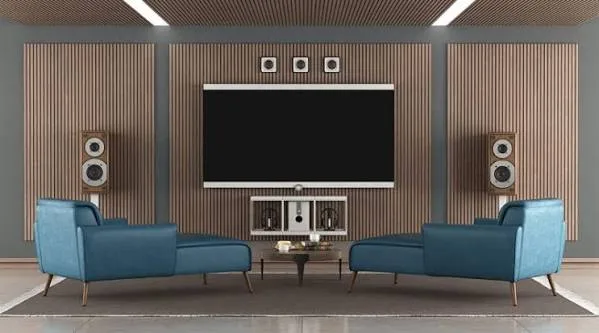
A good home theatre turns an ordinary Saturday into a night at the cinema: the Champions League final with the crowd roaring around you, a thriller where footsteps creep up from behind, a concert where the bass lands in your chest. You do not need a dedicated room or a fortune to get there, but you do need to understand what you are buying. This guide to a home theatre system in Kenya explains the different kinds of system, what 5.1, Dolby Atmos and eARC actually mean, how to match a system to your TV and room, and how to compare the Sony HT-S60, Hisense AX5100Q, JBL Bar 800 MK2, Logitech Z906 and other options we stock.
We are City Gadgets Kenya, at New Alnoor Exhibition, Second Floor, Shop C7, Accra Road, Nairobi CBD. We sell TVs, soundbars, speakers and accessories, and we set up systems for customers. Specifications below come from our catalogue notes and manufacturer or retailer listings, and where a detail matters we say "we confirm per unit."
The short version
- Home theatre means surround sound plus a screen. You can get there with a soundbar system, a speaker set like the Logitech Z906, or a full receiver and speakers.
- Soundbar systems with a subwoofer and rear speakers are the easiest route for most Kenyan homes: few boxes, one remote, one HDMI cable.
- 5.1 means five speakers plus a subwoofer. Atmos adds height effects, but only with Atmos content and a capable system.
- eARC is the HDMI connection that carries the best audio from your TV to your system.
- Room size, seating and TV size matter as much as watts.
- Wireless rear speakers still need power sockets. Plan sockets, not just placement.
- Buy from a seller with a warranty. Fake or misrepresented home audio is common.
| Your situation | Look at | Why |
|---|---|---|
| Large living room, wants power and Atmos | Sony HT-S60 (BRAVIA Theatre System 6) | 5.1, 1,000W per Sony, Dolby Atmos and DTS:X, wireless rear speakers |
| Film lover on a sensible budget, Atmos support | Hisense AX5100Q | 5.1, 580W maximum, Atmos and DTS:X |
| Surround without cable runs, premium brand | JBL Bar 800 MK2 | Detachable wireless surround speakers, Atmos |
| Real 5.1 at entry level | Sony HT-S20R, Hisense HS5100 | Rear speakers and subwoofer, modest cost |
| Loud, wired, big speaker set | Logitech Z906 | 5.1, 1000W rated, THX-certified |
| Smaller room, simpler upgrade | Soundbar with subwoofer | See best soundbar in Kenya |
What is a home theatre system?
A home theatre system reproduces the multi-speaker sound of a cinema at home. Instead of two speakers firing at you from the front, sound comes from several directions: dialogue from the centre, effects and music from left and right, ambience and movement from the rear, and low bass from a dedicated subwoofer. The result is an immersive sense that you are inside the scene.
There are three common routes.
1. Soundbar with subwoofer and rear speakers
A bar sits below the TV and contains the front channels, often with a centre channel. A wireless subwoofer and two rear speakers complete a 5.1 layout. This is the simplest home theatre: one main unit, a few extra boxes, one HDMI cable to the TV. Examples: Sony HT-S20R, HT-S40R, HT-S60, Hisense HS5100 and AX5100Q.
2. Soundbar with detachable surrounds
JBL's Bar 800 MK2 is built around end sections that detach from the bar and become wireless rear speakers. They are battery powered when detached, so you do not run cables to the back of the room. It supports Dolby Atmos.
3. Separate speakers
A multi-speaker set such as the Logitech Z906 uses a subwoofer, a control unit and five speakers wired together. It delivers big power and genuine surround, but requires more cabling, floor space and setup effort. A true separates system adds an AV receiver and individual speakers, which gives the best flexibility and the most complexity.
Understanding the numbers on the box
2.1, 3.1, 5.1, 7.1: channels
The first number counts the speaker channels around you. The ".1" is the subwoofer. A 5.1 system has left, centre, right, two rears and a subwoofer. A 7.1 system adds two side speakers. Read what does 5.1 and 2.1 mean on soundbars.
Dolby Atmos and DTS:X
These are object-based formats that treat sounds as objects that can be placed anywhere in the room, including above you. To hear them properly you need Atmos or DTS:X content, a source that outputs them (a streaming device, disc player or a TV passing them through), and a system that can decode and render them. Many soundbars simulate height with processing. The Sony HT-S60 uses a Vertical Surround Engine to create height without up-firing or ceiling speakers, and the Hisense AX5100Q also creates height virtually.
Our spatial audio and Dolby Atmos explained article goes deeper.
HDMI ARC and eARC
ARC sends audio from the TV to the system through the same cable that carries video the other way. eARC is the enhanced version with more bandwidth, needed for the highest-quality formats such as Dolby TrueHD and uncompressed multichannel audio. The Sony HT-S60 lists HDMI eARC. Check that your TV has an eARC port too. See HDMI ARC and eARC explained.
Watts
Total watts are a manufacturer's figure. Sony lists the HT-S60 at 1,000W total, with 152W each for front left, right and centre and the rears, and 240W for the subwoofer. The Logitech Z906 is rated at 1000 watts across the system. Use the number to place a system in a tier, not to promise loudness. Our watts RMS vs peak explained article shows why.
The systems we stock
Sony BRAVIA Theatre System 6 (HT-S60)
Sony's powerful 5.1-channel soundbar system: 1,000W total, Dolby Atmos, Dolby Digital Plus, Dolby TrueHD and DTS:X, a wireless subwoofer and wireless rear speakers, HDMI eARC and Bluetooth, plus the BRAVIA Connect app, Voice Zoom 3 for clearer dialogue and a Multi Stereo mode. The soundbar is about 907 mm wide, so it suits TVs of about 43 inches and up. The rear speakers and subwoofer still need power sockets. It is the most capable Sony system in our soundbar range.
Best for: large living rooms, film fans, buyers who want Atmos and wireless rears from a premium brand.
Sony HT-S40R and HT-S20R
The HT-S40R is a 5.1 system with 600W, a subwoofer and wireless-connected rear speakers (Dolby Audio, no Atmos). The HT-S20R is a 5.1 system with 400W, wired rear speakers and a wired subwoofer, with HDMI ARC, optical, analogue and USB inputs, Bluetooth 5.0 and HDMI CEC. Both give real rear speakers at a sensible tier.
Hisense AX5100Q and HS5100
The AX5100Q is a 5.1 system with Dolby Atmos and DTS:X, an eight-speaker soundbar, a 6.5-inch wireless subwoofer, semi-wireless rear speakers and 580W maximum. The HS5100 is a 5.1 system at 540W with Dolby Digital, Dolby Digital Plus and DTS Virtual:X, and no Atmos. For HS5100 rear speakers, listings differ between wired and wireless, so we confirm per unit. Read Sony vs Hisense soundbars.
JBL Bar 800 MK2 and Bar 500 MK2
The Bar 800 MK2 is JBL's flagship soundbar with detachable battery-powered rear speakers and Dolby Atmos. The Bar 500 MK2 is a conventional bar with a wireless subwoofer and Dolby Atmos support, without detachable surrounds. We confirm battery life, HDMI inputs and specifications per unit.
Logitech Z906
A full 5.1 speaker system rated at 1000 watts and THX-certified, with five speakers and a subwoofer, for living rooms and media rooms. It needs careful speaker placement and cable runs. It is a strong option for movies, gaming and music for buyers who prefer a speaker set to a soundbar. Read best PC and multimedia speakers in Kenya.
JBL 2.1 MK2
A compact 2.1 system with a dedicated subwoofer, for smaller rooms and simple upgrades.
Message us for today's price on any of these, and browse accessories.
Soundbar system or speaker set?
| Factor | Soundbar system (HT-S60, AX5100Q, Bar 800 MK2) | Speaker set (Z906) |
|---|---|---|
| Setup effort | Low to moderate | Moderate to high |
| Cables | Few; rear speakers need power | Many speaker cables |
| Looks | Tidy | Five speakers to place |
| Atmos support | Yes on several models | Not on the Z906 |
| Power | Strong, tier dependent | Strong, 1000W rated |
| HDMI and TV integration | Strong (ARC, eARC, CEC) | Limited; check inputs |
| Best for | Most living rooms | Buyers who want a loud, wired set |
| Flexibility | Limited upgrades | Can reposition speakers freely |
For most Kenyan homes, a soundbar system wins on simplicity. A speaker set suits people who enjoy setting things up and want a lot of power and are willing to run cables.
Room size, seating and TV size
Match the system to the room
- Up to about 15 square metres: a compact soundbar with subwoofer or a 2.1 system is enough. A big 5.1 system will overpower the space.
- 15 to 30 square metres: the sweet spot for 5.1 soundbar systems such as the HT-S40R, HT-S20R, HS5100 and AX5100Q.
- Above 30 square metres or open plan: consider the HT-S60 or Z906 for power, and think carefully about rear speaker placement.
Match the system to the TV
A soundbar should be about as wide as the TV, or a little narrower. The Sony HT-S60 bar is about 907 mm wide and suits TVs of about 43 inches and up. A very small TV with a large bar looks odd, and a very large TV with a tiny bar sounds underpowered. We stock Sony Bravia TVs from 50 inches to 98 inches; ask us to pair a TV and system together. Browse the accessories category and message us for today's price.
Seating distance
Sit where the front, centre and rear speakers form a rough circle around you. If your sofa is against the back wall, rear speakers can sit on the side walls or on stands behind the sofa. If the sofa is in the middle of the room, place rears behind and slightly above ear height.
Speaker placement for a 5.1 soundbar system
- Soundbar: centred below the TV, not hidden in a cabinet, and not blocking the TV's remote sensor.
- Subwoofer: on the floor near the front. Try a few positions by playing a bass-heavy scene and walking the room. Leave space around it.
- Rear speakers: at or slightly above ear height, behind or beside the seating position, pointing toward the listener. Keep them roughly the same distance from the sofa on each side.
- Power: plan sockets for the rears and subwoofer. Use cable covers or trunking to hide cables. Wireless rear speakers need power just like wired ones.
- Distance: avoid placing the rears right against a wall if they are bipolar or if the manufacturer advises space.
- Test: run the system's setup or test tone feature and adjust levels so all speakers sound balanced.
Speaker placement for a Z906-style set
- Centre speaker above or below the TV, facing the seating position.
- Front left and right at ear height, angled toward you, about as far apart as the distance to your seat.
- Rear left and right behind or beside the seating position, slightly above ear height.
- Subwoofer on the floor at the front, with space around it.
- Control unit within reach, with the connection to your source.
- Cables run neatly with clips or trunking. Avoid walkways.
Sources: what to connect
TV and streaming
Most people send everything through the TV. Streaming apps, decoders and TV tuners feed audio to the system via ARC or eARC. Check your TV settings so audio outputs as passthrough or auto where the system supports surround formats.
Game consoles
Connect the console to the TV and use ARC, or to the system directly if it has HDMI inputs and passes video through. Enable game mode on the TV for low delay. Competitive players may still prefer a headset; see best gaming headset in Kenya.
Blu-ray and media players
A disc player or media player can output Atmos or lossless audio. For the best quality, use eARC-capable systems and check that your player is set to bitstream output.
Streaming sticks and boxes
Many devices output Dolby formats. Set the output to the highest format your system supports. If your system lacks Atmos, set it to Dolby Digital Plus or similar.
Phones and laptops
Bluetooth for music. HDMI from a laptop to the TV for films.
Calibration: getting it to sound right
- Run the system's auto-calibration or test tone.
- Set the subwoofer level so bass supports but does not dominate.
- Set the centre or voice level so dialogue is clear.
- Check the rear level so effects are noticeable but not distracting.
- Use voice or night modes for late viewing.
- Test with a familiar scene, a football match and a music track.
- Adjust over a few days. Your ears take time to settle.
The Sony HT-S60 includes Voice Zoom 3 for clearer dialogue and a Multi Stereo mode that plays the same sound from front and rear speakers for a big, room-filling effect. The BRAVIA Connect app helps with settings.
Room acoustics on a budget
You do not need a studio to improve your room's sound.
- Soft furnishings such as curtains, rugs and sofas absorb reflections and reduce echo.
- Bare walls and tiled floors make a room bright and echoey; add a rug between you and the speakers.
- Bookshelves scatter sound nicely.
- Avoid placing speakers in corners unless you want boomy bass.
- Keep the TV and bar away from windows where sound leaks.
- Close doors to reduce outside noise.
- Consider neighbours. Bass travels through walls; use night mode and sensible levels.
Power protection for your home theatre
A home theatre includes expensive electronics that dislike surges and sudden outages. Use a quality surge protector or AVR for the TV and system, and make sure your wiring is sound. Read power surges and AVR in Kenya and earthing and wiring for UPS in Kenya. Unplug during storms.
Common mistakes when buying a home theatre system
- Buying only by watts. Compare layout and features.
- Forgetting power sockets for the subwoofer and rears.
- Ignoring the TV's ports. Check ARC or eARC.
- Buying Atmos you will not use.
- Putting the bar in a cabinet.
- Placing rears too far forward.
- Overpowering a small room.
- Skipping the warranty.
- Buying from a seller who cannot tell you what is in the box.
- Ignoring neighbours.
Example scenarios: which system for which home?
A family living room in Ngong with a 55-inch TV
Evening news, football, Sunday films and kids' shows. The room is medium sized, with a sofa against the back wall. A 5.1 soundbar system such as the Sony HT-S20R or Hisense HS5100 gives real surround at a sensible tier. Rear speakers can sit on side shelves or stands near the sofa. Plan sockets before delivery.
A film lover's open-plan lounge with a 65-inch or larger TV
Open-plan rooms swallow sound. Power and clarity matter, so the Sony HT-S60 or Hisense AX5100Q suits better, with wireless rear speakers placed beside the seating area. An eARC-capable TV lets the system receive the best audio. Add rugs or curtains to reduce echo.
A rented flat where drilling and cable runs are not allowed
The JBL Bar 800 MK2, with detachable wireless rear speakers, avoids long cable runs. Alternatively, a Sony HT-S40R with wireless-connected rears needs only sockets. Tell us the layout and we will suggest the simplest option.
A gamer who also wants cinema nights
A Logitech Z906 on a PC or console gives loud, wired surround, and a headset covers late-night play. If the TV is the hub, a soundbar system is easier. We can help you choose between the two based on your desk or lounge setup.
A small business lounge or waiting area
Clear speech and music, not surround. A 3.1 soundbar or a compact 2.1 system is enough, mounted securely with tidy cables.
These are illustrative scenarios, not customer records. Use them as prompts to describe your own room to us.
What to ask the seller before you buy
- Which exact model is this, and what is the model number on the box?
- What is in the box?
- Which HDMI port do I use: ARC or eARC?
- Are the rear speakers wired or wireless, and do they need power?
- Does it support Dolby Atmos or DTS:X, and how is height created?
- Does it work with my TV model and remote?
- How wide is the bar, and will it fit my TV stand or wall bracket?
- What is the warranty, and who handles repairs?
- Can I see it working?
- What is the return policy if it does not suit my room?
A good seller answers plainly. If the answer is "we confirm per unit," ask them to confirm before you pay.
A note on cables and HDMI quality
A home theatre is only as good as its weakest link, and cheap or damaged HDMI cables are a common culprit. For ARC and eARC, use a certified high-speed or ultra high-speed HDMI cable of sensible length. Very long runs or poor-quality cables can cause dropouts, no sound or handshake failures. If you mount the TV on a wall and run cables through a conduit, plan for a cable that can be replaced later. Keep power cables separate from signal cables where possible, and label both ends of each cable so you can trace problems quickly.
How to spot a fake or misrepresented home theatre system
Home audio is often misrepresented rather than counterfeited outright. Typical tricks are inflated watt figures, relabelled cheaper models, missing accessories and no warranty. Use these ten checks.
- Watt claims. Enormous peak numbers on a small box are marketing. Compare with the manufacturer's figure. Sony lists the HT-S60 at 1,000W total with the breakdown per speaker; a system that claims far more with far smaller speakers is suspect.
- Model name and number. The box, unit and manual must match. HT-S60, HT-S40R and similar codes should appear consistently.
- Box contents. Soundbar, subwoofer, rear speakers, remote, cables, power adapters and manual. Missing items suggest a repack or incomplete unit.
- Weight. Subwoofers and speaker sets should be heavy for their size. A feather-light subwoofer has a tiny magnet.
- Ports. The ports must match the listing: HDMI eARC, optical, Bluetooth, USB. A "Dolby Atmos" system without a compatible HDMI port is questionable.
- Branding and labels. Crisp logos, regulatory labels and serial numbers. Blurry, misspelt or missing labels are warnings.
- App and features. Genuine systems connect to their apps and show their features. Ask for a demonstration.
- Sound test. Play a bass-heavy scene and a dialogue-heavy scene. Distortion, rattling or hollow sound are bad signs.
- Price. A premium system far below the normal market price needs an explanation.
- Seller and warranty. A seller without a shop, receipt or warranty is a risk.
When you buy from City Gadgets Kenya, you buy from a real shop at New Alnoor Exhibition, Second Floor, Shop C7, Accra Road, Nairobi CBD. We confirm model, connections and box contents per unit.
Why buy your home theatre system from City Gadgets Kenya
- Sony, Hisense, JBL and Logitech under one roof. Compare real options.
- TV and system pairing. We stock Sony Bravia TVs and can match a system to your screen.
- Honest advice. We tell you when a simpler system is enough, and we do not push Atmos on people who will not use it.
- Setup guidance. Tell us your room and TV and we will confirm connections and placement.
- A shop to visit. Hear the systems on Accra Road.
- Delivery. Same-day within Nairobi and next-day outside Nairobi.
- Payment. M-Pesa accepted.
- Support. WhatsApp us for setup help and warranty.
Message us for today's price.
Choosing by what you watch
Football and live sport
Commentary clarity and crowd atmosphere matter. A dedicated centre channel and a dialogue mode help. Multi Stereo-style modes that spread crowd sound across all speakers make a match feel like a stadium. Sports modes on many systems balance voices and crowd.
Films and series
Surround and bass matter most. A 5.1 system gives clear rear effects. Atmos adds height for Atmos films and shows on supported streaming services and discs. Use movie mode and a sensible subwoofer level.
Music
A system with Bluetooth, a balanced music mode and decent stereo performance is fine for casual listening. For critical listening, a stereo pair of speakers is often better than surround. Use stereo or music modes rather than surround processing for songs.
Gaming
Low delay and clear positional sound matter. Use game mode on the TV. Surround helps single-player cinematic games. Competitive players often prefer headsets.
Kids' content and mixed households
A night mode helps keep volume peaks in check. Voice modes help with dialogue. Mind children's hearing and keep volume reasonable.
Budget thinking without prices
We do not publish prices in guides because they change. Here is how to think about budget.
- Set a ceiling, then ask us for options inside it.
- Pay for what you will use. Atmos, eARC and wireless rears cost more. If you do not need them, spend on a better room or surge protection.
- Think about the whole setup. A great system on a poor TV, or with poor wiring, wastes money.
- Include accessories. HDMI cables, brackets, cable covers and surge protection.
- Weigh warranty and support. A trusted local seller is worth more than a small saving.
- Ask about payment options. M-Pesa is accepted.
Upgrade paths
You do not have to buy everything at once.
- Start with a soundbar and subwoofer. Later, add rear speakers if the system supports them.
- Upgrade the TV later. An eARC system will work with a newer TV.
- Add a streaming device for Atmos content.
- Add acoustic treatment with rugs and curtains.
- Add a headset for late-night viewing and gaming.
- Add a UPS or surge protection to protect your investment.
If you plan to expand, tell us. Some systems allow add-ons; others are fixed.
Maintenance
- Dust speakers with a soft brush.
- Keep vents clear.
- Don't leave liquids on top of the subwoofer.
- Check cables and connectors every few months.
- Update software and firmware where supported.
- Keep spare remote batteries.
- Unplug during storms.
- Keep your receipt and warranty card.
Troubleshooting common issues
No sound from rear speakers. Check power, pairing, the sound mode and the source format. Many sources send stereo; use a surround mode if needed.
Dialogue is too quiet. Raise the centre or voice level, use a dialogue mode, and check the TV's audio output settings.
Bass is boomy. Lower the subwoofer level, move it away from walls and corners.
Audio is out of sync. Use the lip-sync or delay setting on the TV or system.
Atmos not showing. Check the source, app, TV passthrough and eARC connection.
HDMI not working. Try another cable and port, and ensure the ARC or eARC port is used.
System turns off by itself. Check auto standby settings.
Remote does not work. Replace batteries and enable HDMI CEC.
If you are stuck, WhatsApp us with your TV model and system and we will help.
Home theatre checklist
- I know my room size and seating position.
- I know my TV size and ports, including eARC.
- I have decided on soundbar system or speaker set.
- I know whether I want Atmos.
- I have planned rear speaker and subwoofer sockets.
- I have a surge protector or AVR.
- I have checked the box contents and warranty.
- I have checked for signs of a fake.
- I am buying from a seller I can return to.
Frequently asked questions
What is the best home theatre system in Kenya? It depends on your room, TV and budget. For power and Atmos from a premium brand, the Sony HT-S60. For Atmos on a sensible budget, the Hisense AX5100Q. For surround without cable runs, the JBL Bar 800 MK2. For a loud wired set, the Logitech Z906. We confirm per unit.
Do I need Dolby Atmos? No. It helps with Atmos content on a capable system. A good 5.1 system serves most people.
What is eARC? The enhanced HDMI audio return channel that carries higher quality audio from your TV to the system. Check that your TV and system both support it.
Do wireless rear speakers need power? Yes. They connect without a signal cable but need a power socket.
Can I use a soundbar with any TV? Most modern TVs work through HDMI ARC or optical. Tell us your TV model.
Is a soundbar or speaker set better? Soundbars are tidier and easier. Speaker sets like the Z906 offer power and flexibility but need more setup.
How big should my soundbar be for my TV? About the same width as the TV or slightly narrower. The Sony HT-S60 bar suits TVs of about 43 inches and up.
How do I avoid disturbing neighbours? Use night mode and moderate the subwoofer level.
How do I spot a fake home theatre system? Check watt claims, model, box contents, weight, ports, labels, sound and warranty.
Ready to choose?
Tell us your TV model, room size and what you watch, and we will recommend a system and confirm the connections. WhatsApp us: https://wa.me/254745575931. Or visit New Alnoor Exhibition, Second Floor, Shop C7, Accra Road, Nairobi CBD. Message us for today's price. Same-day Nairobi delivery, next-day outside Nairobi, M-Pesa accepted.
Related reading: Best soundbar in Kenya, Sony vs Hisense soundbars, HDMI ARC and eARC explained, spatial audio and Dolby Atmos explained.