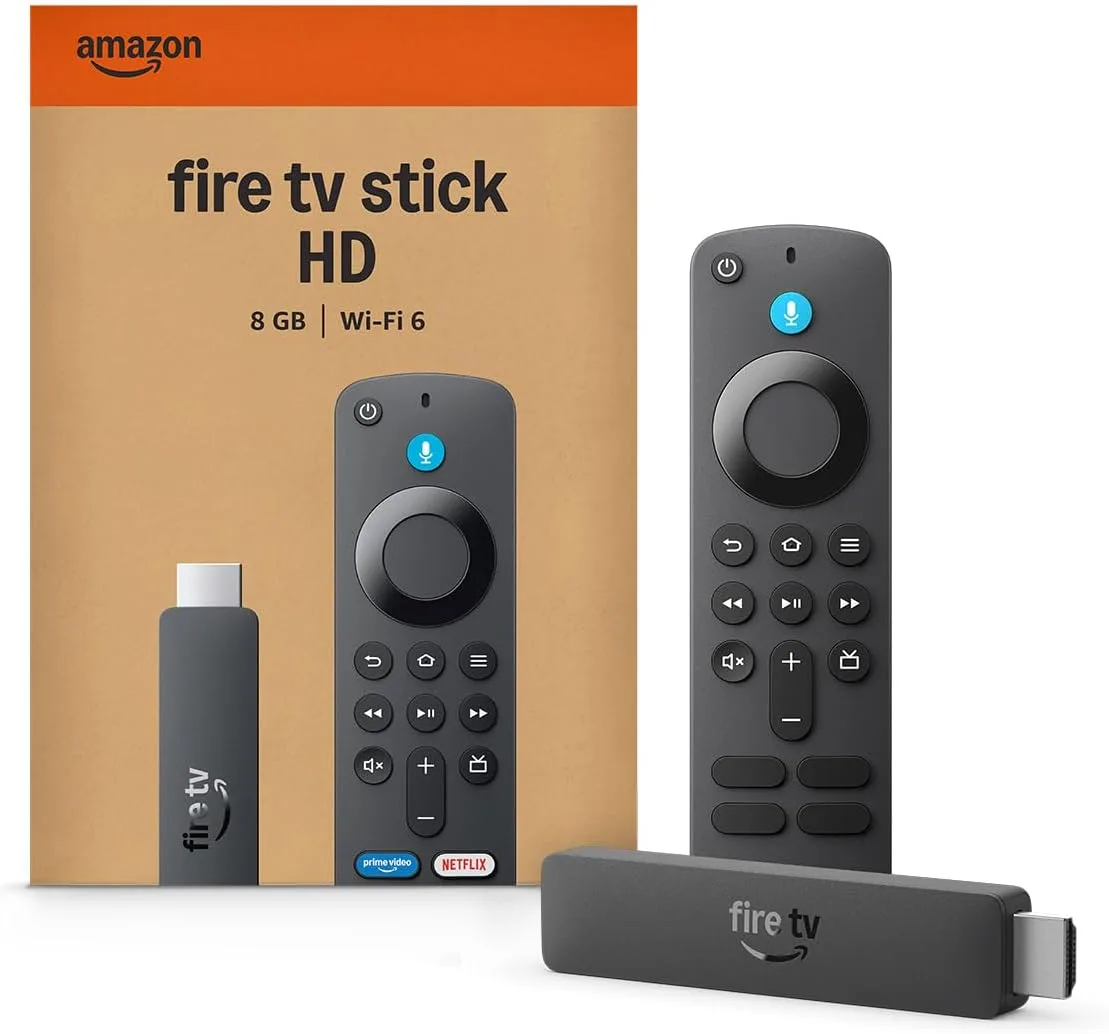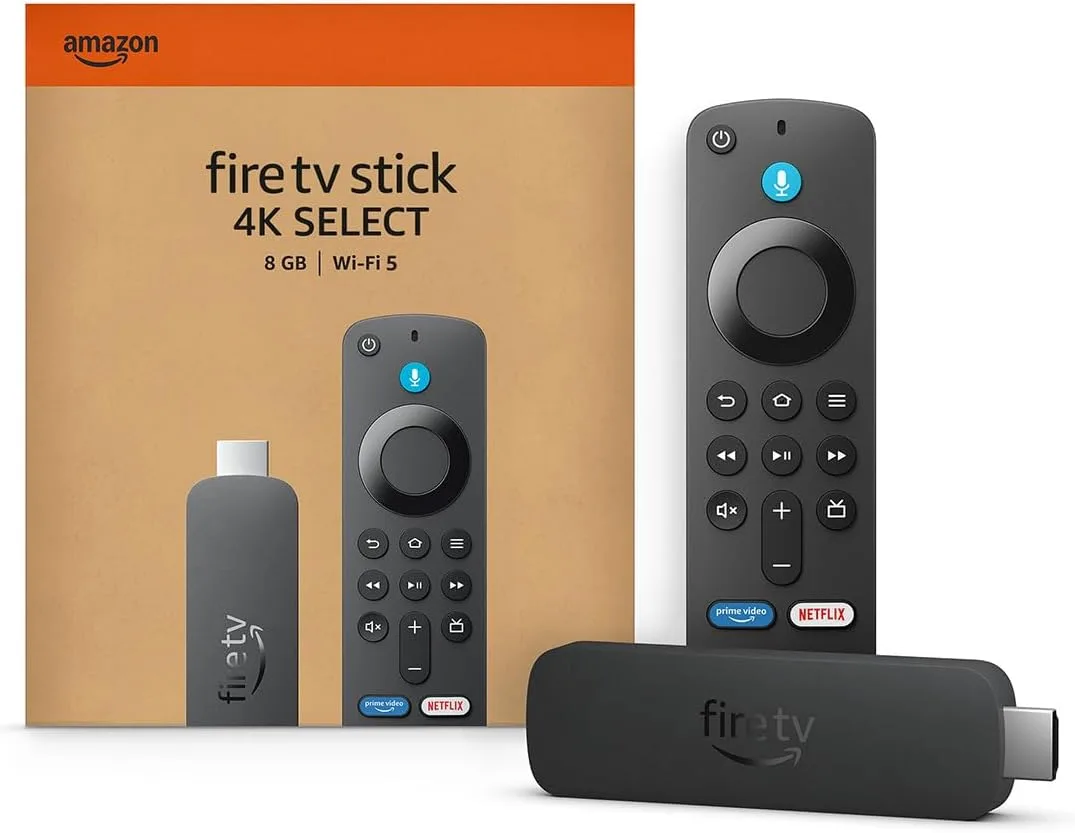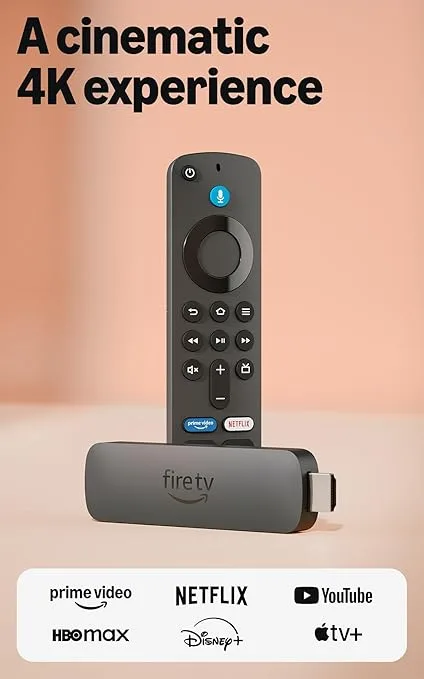
Fire TV Stick 4K vs Fire TV Stick 4K Max in Nairobi: Which One Should You Buy?
Quick answer up front: buy the Fire TV Stick 4K Max if you can stretch to it — the extra Ksh 2,000 buys a genuinely faster device with double the storage and a full generation ahead in Wi-Fi. Buy the base Fire TV Stick 4K if you want to save that money and your household's Wi-Fi environment isn't especially crowded. That's the short version. Here's the full breakdown of why, so you can decide with confidence rather than guessing from a spec sheet.
Full Spec Comparison: Fire TV Stick 4K vs Fire TV Stick 4K Max
| Spec | Fire TV Stick 4K | Fire TV Stick 4K Max |
|---|---|---|
| Price in Nairobi | Ksh 6,500 | Ksh 8,500 |
| Processor | Standard Fire OS chip | 1.8GHz processor + 750MHz GPU |
| RAM | 1.5GB | 2GB |
| Storage | 8GB | 16GB |
| Wi-Fi | Wi-Fi 5 | Wi-Fi 6E |
| Resolution | 4K Ultra HD | 4K Ultra HD |
| HDR | Dolby Vision, HDR10+, HLG | Dolby Vision, HDR10+, HLG |
| Audio | Dolby Atmos | Dolby Atmos |
| Remote | Alexa Voice Remote | Alexa Voice Remote Enhanced |
| Extra Features | Standard Fire OS | Ambient Experience, Picture-in-Picture |
| Warranty | 12 months official | 12 months official |
Both devices give you the same picture and audio format support — 4K, Dolby Vision, HDR10+, HLG, and Dolby Atmos are identical on paper. The real gap between them is entirely about speed, storage, and wireless performance, not resolution or HDR. That's worth knowing upfront, because it reframes the whole decision: you're not paying extra for a "better picture," you're paying extra for a smoother, faster, more future-proof device around that same picture.
Difference 1: Processor and RAM — How Snappy the Interface Feels
The Fire TV Stick 4K Max's dedicated 1.8GHz processor and 750MHz GPU, paired with 2GB of RAM, is a genuinely faster combination than the base 4K stick's chip and 1.5GB of RAM. In daily use, this shows up as quicker app launches, smoother scrolling through Fire OS's menus, and less waiting when you switch between apps — small moments individually, but ones that happen dozens of times a day, every day you use the device.
If a snappy, no-lag interface matters to you, this is the Max's first real win.
Difference 2: Storage — 16GB vs 8GB
The Fire TV Stick 4K Max's 16GB of storage is double the base 4K stick's 8GB. For a household that installs a handful of streaming apps and leaves it at that — Netflix, YouTube, Prime Video, Showmax — 8GB is genuinely enough and you're unlikely to ever notice the limit. If you tend to install more apps, games, or several regional and sports apps side by side, the Max's extra headroom means you won't need to manage storage actively or delete apps to make room for new ones.
If you install apps freely and rarely clean up, the Max's storage advantage becomes a real practical benefit over time.
Difference 3: Wi-Fi Standard — Wi-Fi 5 vs Wi-Fi 6E
This is arguably the most important difference for Nairobi specifically, and it deserves real explanation rather than a line on a spec sheet. The base Fire TV Stick 4K uses Wi-Fi 5, an older wireless standard. The Fire TV Stick 4K Max uses Wi-Fi 6E, a genuinely newer generation built specifically to perform well in crowded, high-density wireless environments — exactly the situation in most Nairobi apartment buildings, where dozens of neighbouring Wi-Fi networks, smartphones, laptops, and smart devices are all competing for the same airwaves, especially during peak evening hours when everyone is home and streaming at once.
In practice, this means the 4K Max holds a noticeably more stable stream during a busy Friday night in a crowded building, with fewer buffering interruptions, compared to the base 4K stick working through the same congested wireless environment on the older Wi-Fi 5 standard.
If you live in a dense apartment block or a household with lots of connected devices, this is genuinely the single biggest reason to pay extra for the Max.
Difference 4: The Remote and Extra Software Features
The 4K Max ships with the Alexa Voice Remote Enhanced, plus Amazon's Ambient Experience (turning your TV into a smart display showing photos, weather, and smart home controls when not actively streaming) and Picture-in-Picture support for keeping an eye on a second feed while browsing menus. The base 4K stick gets the standard Alexa Voice Remote without these extras. These are genuinely nice-to-haves rather than essential — worth factoring in, but not a reason on their own to spend the extra money if the processor, storage, and Wi-Fi differences don't already sway you.
What's Identical Between Them
It's worth being clear about what you're not sacrificing by choosing the cheaper option. Both devices deliver the exact same 4K Ultra HD resolution, the same Dolby Vision, HDR10+, and HLG HDR format support, and the same Dolby Atmos audio. If picture and sound quality on a capable TV and sound system are your main concern, the base Fire TV Stick 4K matches the Max stride for stride — you're not watching a worse-looking picture by saving Ksh 2,000.
So, Which One Should You Actually Buy?
Buy the Fire TV Stick 4K Max (Ksh 8,500) if:
- You live in a busy apartment building in Nairobi with lots of neighbouring Wi-Fi networks and devices competing for bandwidth.
- You want the snappiest, most responsive interface, particularly if you switch between apps often or use the device daily for hours.
- You plan to install a large number of apps, games, or several sports and regional streaming services at once.
- You want the Ambient Experience and Picture-in-Picture features, or simply want Amazon's best available Fire TV Stick without needing to think about it further.
Buy the base Fire TV Stick 4K (Ksh 6,500) if:
- You want to save Ksh 2,000 and your household's Wi-Fi environment is relatively uncongested — a standalone house or a less densely packed building.
- You mainly install a handful of core streaming apps and don't need extra storage headroom.
- Picture and sound quality are your main priority, and processor speed or Wi-Fi generation matter less to your specific viewing habits.
If you're genuinely torn and your budget can stretch the extra Ksh 2,000, lean toward the 4K Max — Wi-Fi 6E is the one upgrade here with real, lasting day-to-day impact in a Nairobi household specifically, since wireless congestion during peak hours is a near-universal experience in the city's apartment buildings, and it's the kind of frustration you'll notice on exactly the nights you most want smooth streaming.
A Quick Reality Check: Is the Jump Worth It for Everyone?
Not necessarily. If you live somewhere with a genuinely uncrowded Wi-Fi environment — a standalone home with few neighbouring networks, or you're the only heavy internet user in the house — the base Fire TV Stick 4K delivers essentially the same viewing experience for meaningfully less money. The Max's real advantages are performance-under-pressure advantages, and if your setup rarely puts pressure on the device in the first place, you may simply never notice the difference day to day. This is a genuinely honest point worth making rather than defaulting to "always buy the pricier one."
Why Buy Either One From City Gadgets Kenya
Whichever tier fits your household, buying from a source that guarantees genuine hardware and honest specifications matters just as much as the device itself. City Gadgets Kenya stocks both the Fire TV Stick 4K and Fire TV Stick 4K Max, each listed with its exact processor, RAM, storage, and Wi-Fi standard stated clearly upfront, backed by a 12-month official brand warranty, brand new and sealed, with same-day delivery within Nairobi and countrywide shipping across Kenya. Payment options include M-Pesa, card, or cash on delivery.
Reach out via WhatsApp to confirm current stock and pricing, or browse the listings directly: Fire TV Stick 4K and Fire TV Stick 4K Max.
Frequently Asked Questions
Is the Fire TV Stick 4K Max worth the extra money over the base 4K? For most Nairobi households, yes — the Wi-Fi 6E upgrade genuinely helps in the city's typically crowded apartment-building Wi-Fi environments, and the faster processor and double storage add up to a noticeably smoother daily experience.
Do the 4K and 4K Max have different picture quality? No — both support identical 4K Ultra HD resolution, Dolby Vision, HDR10+, and HLG. The difference is entirely in speed, storage, and Wi-Fi performance, not picture or sound.
How much more does the 4K Max cost in Kenya? Roughly Ksh 2,000 more — Ksh 6,500 for the base 4K versus Ksh 8,500 for the 4K Max.
Which has better Wi-Fi? The Fire TV Stick 4K Max, with Wi-Fi 6E, a full generation ahead of the base 4K stick's Wi-Fi 5, and noticeably better at handling congested wireless environments.
Should I buy the base Fire TV Stick 4K to save money? Yes, if your Wi-Fi environment is relatively uncrowded and you only need to run a handful of core streaming apps — you'll get the same picture and sound quality as the Max for Ksh 2,000 less.
Where can I buy a genuine Fire TV Stick 4K or 4K Max in Nairobi? City Gadgets Kenya stocks both, genuine and warrantied, with same-day Nairobi delivery. Reach out via WhatsApp to confirm stock and pricing.
Final Word
If your budget allows it, the Fire TV Stick 4K Max is the smarter buy for most households in Nairobi specifically — its Wi-Fi 6E advantage directly addresses the kind of network congestion common in the city's apartment buildings, and its faster processor and doubled storage make for a genuinely smoother daily experience. If you're working with a tighter budget or know your Wi-Fi environment is uncrowded, the base Fire TV Stick 4K delivers the same picture and sound quality for Ksh 2,000 less, without any real compromise for lighter, more casual use.
Browse both at City Gadgets Kenya, or reach out on WhatsApp to help decide which fits your household.