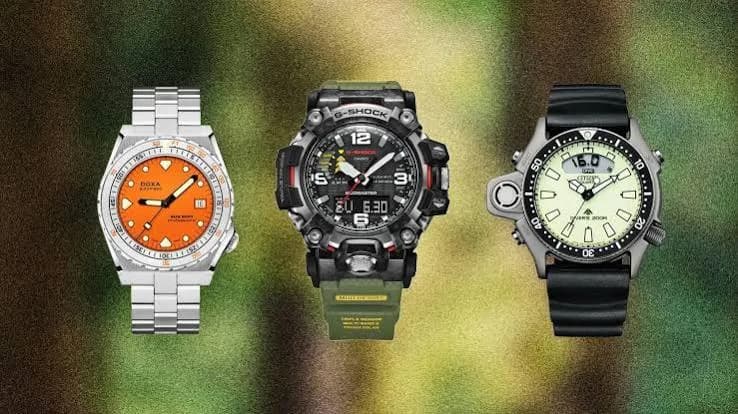
Kenya is one of the best countries in the world for outdoor sport: the Ngong Hills, Mount Longonot, Hell's Gate, the Aberdares, Mount Kenya, the Rift Valley, Karura Forest and a running culture famous worldwide. A good outdoor watch can record your route, warn you when your battery is low, survive a fall and tell you where you are when the phone signal drops. This guide to the best outdoor sports watch Kenya has to offer compares the rugged and performance watches we stock, explains what actually matters on the trail and helps you avoid overpaying or buying a fake. We hedge where specifications vary and say "we confirm per unit" for exact figures.
City Gadgets Kenya sells outdoor watches at New Alnoor Exhibition, Second Floor, Shop C7, Accra Road, Nairobi CBD, with same-day Nairobi delivery and next-day delivery outside Nairobi. Message us on WhatsApp for today's price.
The short version
- Best rugged value: Amazfit T-Rex 3, with a military-grade rugged build, dual-band GPS and long battery life, per Amazfit's claims.
- Best rugged premium: Amazfit T-Rex 3 Pro (titanium bezel, sapphire glass, built-in flashlight) or T-Rex Ultra 2 (grade 5 titanium and battery up to about 30 days per our listing).
- Best for trail and ultra runners: Amazfit Cheetah 2 Ultra.
- Best for Samsung and Android users: Galaxy Watch Ultra (47mm), with titanium, sapphire crystal and a Quick Button.
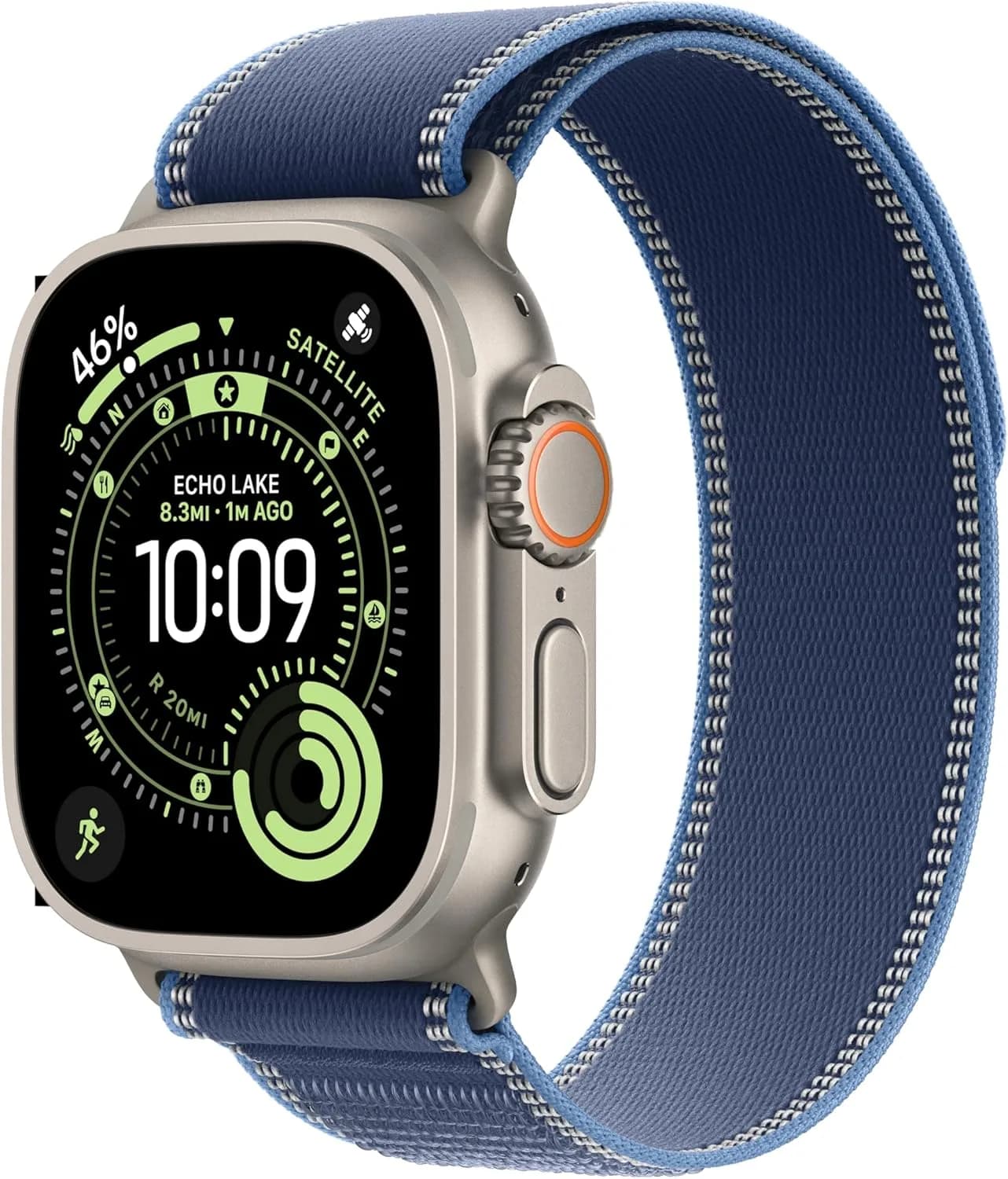
- Best for iPhone users: Apple Watch Ultra 3 (49mm).
- Best premium style with expedition features: Huawei Watch 6 Pro, in ceramic or titanium.
- Battery varies hugely, from a day or two on some smartwatches to weeks on rugged Amazfit models in low-power modes. We confirm per unit.
| Watch | Best for | Phone | Build highlights (per maker) |
|---|---|---|---|
| Amazfit T-Rex 3 | Rugged on a budget | Android, iPhone | Military-grade rugged, dual-band GPS |
| Amazfit T-Rex 3 Pro | Rugged premium | Android, iPhone | Titanium bezel, sapphire glass, flashlight |
| Amazfit T-Rex Ultra 2 | Flagship rugged | Android, iPhone | Grade 5 titanium, battery up to about 30 days |
| Amazfit Cheetah 2 Ultra | Trail and ultra running | Android, iPhone | Titanium and sapphire |
| Samsung Galaxy Watch Ultra | Android adventure | Android | Titanium, sapphire, Quick Button |
| Apple Watch Ultra 3 | iPhone adventure | iPhone | Rugged Apple Watch, large case |
| Huawei Watch 6 Pro | Premium and expedition | Android, iPhone | Ceramic or titanium, expedition app |
Message us for today's price on any watch.
What makes a good outdoor watch?
1. Battery life
On a long hike or race, a dead watch is just a bracelet. Outdoor watches need enough battery for your longest day with GPS on. As a rule of thumb, add a margin of 30 to 50 percent to the time you expect to be out. Battery claims are made under specific test conditions. Heavy GPS use, bright displays and cold temperatures shorten life. Always-on display costs battery. We confirm per unit and are glad to explain what to expect.
2. GPS accuracy
Dual-band GPS uses two frequency bands to reduce errors from reflections off buildings and cliffs, and to improve tracks under tree cover. On open trails, standard GPS is often fine. In forests, canyons or cities, dual-band helps. Look for dual-band on rugged and premium models.
3. Durability
Real outdoor use means rocks, branches, doors, rain, dust and sweat. Look for:
- Strong case materials: titanium, stainless steel, ceramic or tough polymer.
- Scratch-resistant glass: sapphire is far harder than ordinary glass.
- Water resistance: 5 ATM is common; some rugged models claim more. Follow the maker's guidance.
- Shock and temperature tests: military-grade claims refer to standardised tests and are a reasonable indicator of toughness.
4. Navigation tools
Offline maps, route import, breadcrumb trails and return-to-start features can help you navigate when signal is weak. Not every watch has them, and features differ by model. We confirm per unit.
5. Display readability
Outdoor sun is harsh. Bright AMOLED screens, high peak brightness and good contrast help. Gloves and wet fingers reduce touchscreen usability, so physical buttons or a Quick Button matter.
6. Sensors
A barometer helps with elevation and weather trends. A compass helps with orientation. A heart-rate sensor, SpO2 and temperature sensors support training and safety. Wrist sensors are less accurate in cold, wet or vibrating conditions. We confirm per unit.
7. Comfort
You may wear the watch for hours, and for sleep. A large rugged case can feel heavy. Try before you buy if you can.
8. Ecosystem
Choose a watch that works with your phone and apps. The Galaxy Watch Ultra pairs best with Android. The Apple Watch Ultra works with iPhone. Amazfit and Huawei work with both for core features.
Amazfit T-Rex 3
The T-Rex 3 is a rugged GPS smartwatch with a military-grade rugged build, dual-band GPS and long battery life, per Amazfit's claims and our listing. It targets hikers, campers, runners and field workers who want toughness without a flagship price.
Strengths: rugged build, dual-band GPS, long battery, many sport modes, works with Android and iPhone. Limits: large and chunky; lighter app ecosystem than Wear OS or watchOS; real battery depends on GPS and display use.
Best for: hikers, campers, security staff and anyone who is hard on their watch.
Amazfit T-Rex 3 Pro
The T-Rex 3 Pro steps up with a titanium bezel, sapphire glass and a built-in flashlight, per our listing. The flashlight is surprisingly useful for early starts, late finishes and campsites.
Strengths: premium materials, scratch-resistant glass, flashlight, rugged build. Limits: costs more than the T-Rex 3; large case.
Best for: outdoor enthusiasts who want a premium rugged watch.
Amazfit T-Rex Ultra 2
The T-Rex Ultra 2 is Amazfit's flagship rugged watch, with a grade 5 titanium build and battery claimed at up to about 30 days in ideal conditions per our listing. It targets expedition and endurance users who want maximum battery and toughness.
Strengths: flagship materials, very long battery, rugged design. Limits: premium price tier; large; the 30-day figure applies to light use, not constant GPS.
Best for: multi-day trekkers, expedition users and anyone who wants the toughest Amazfit.
Amazfit Cheetah 2 Ultra
The Cheetah 2 Ultra is built for trail and ultra runners, with titanium and sapphire materials and performance-focused GPS and training features. It prioritises light weight and running tools over sheer ruggedness.
Strengths: running-focused features, premium materials, accurate GPS. Limits: less rugged-looking than the T-Rex; running-centred.
Best for: serious trail and ultra runners. We confirm per unit the exact feature set. See our Amazfit guide for the full line.
Samsung Galaxy Watch Ultra (47mm)
Samsung's rugged flagship has a titanium case, a sapphire crystal display, a larger battery with power-saving modes for long GPS sessions and a customisable Quick Button on the side. The Quick Button is more useful than it sounds: with wet, cold or gloved hands, a physical button that starts a workout or marks a segment beats tapping a screen. It carries Samsung's full health platform and works best with a Samsung Galaxy phone, and with other Android phones. It is not designed for iPhone. Read our Galaxy Watch7 vs Watch8 vs Ultra guide for the details.
Strengths: premium materials, Quick Button, big battery by Galaxy Watch standards, Wear OS apps. Limits: large; battery is shorter than rugged Amazfit models; Android only.
Best for: Android users who want an app-rich rugged smartwatch.
Apple Watch Ultra 3 (49mm)
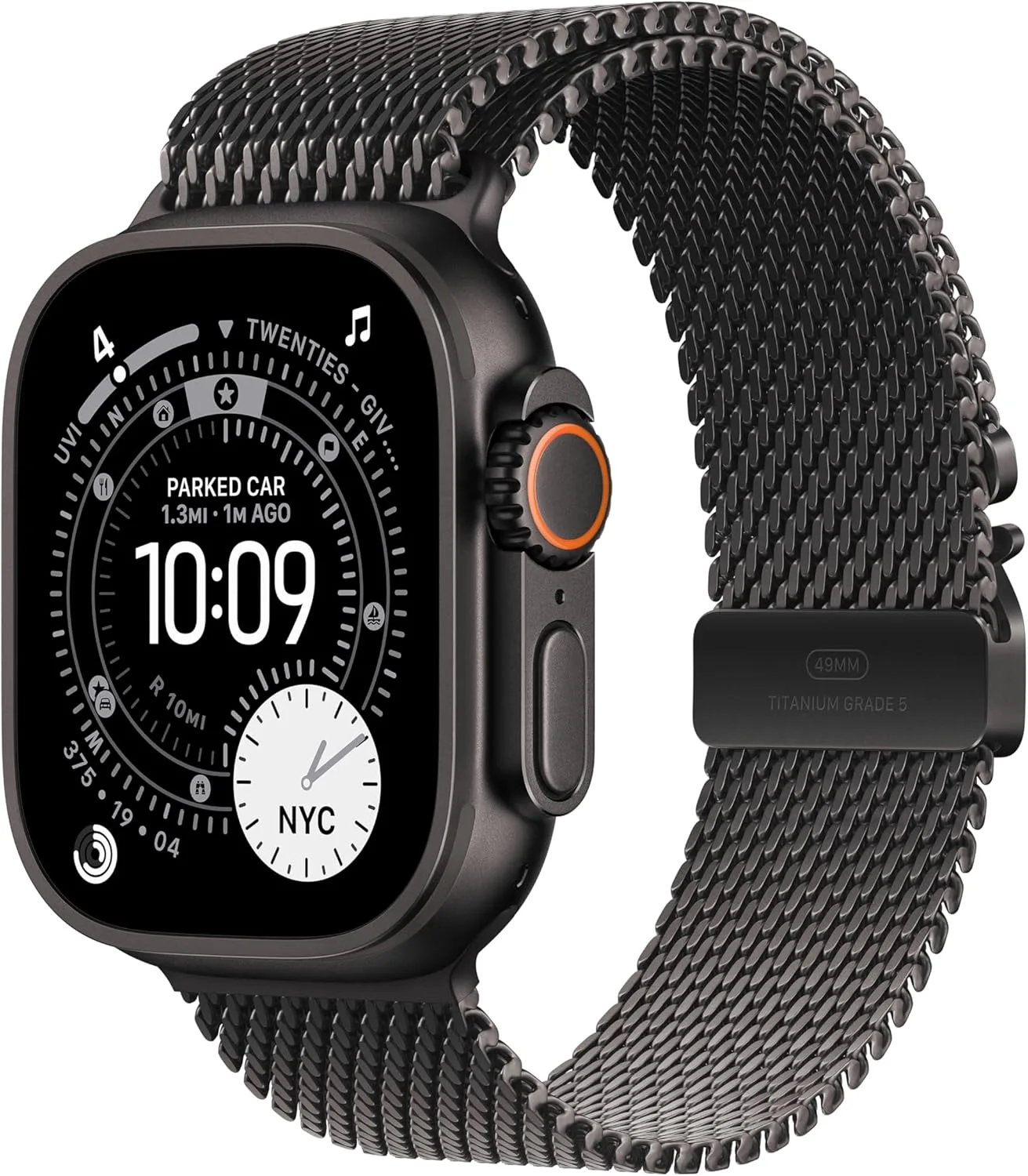
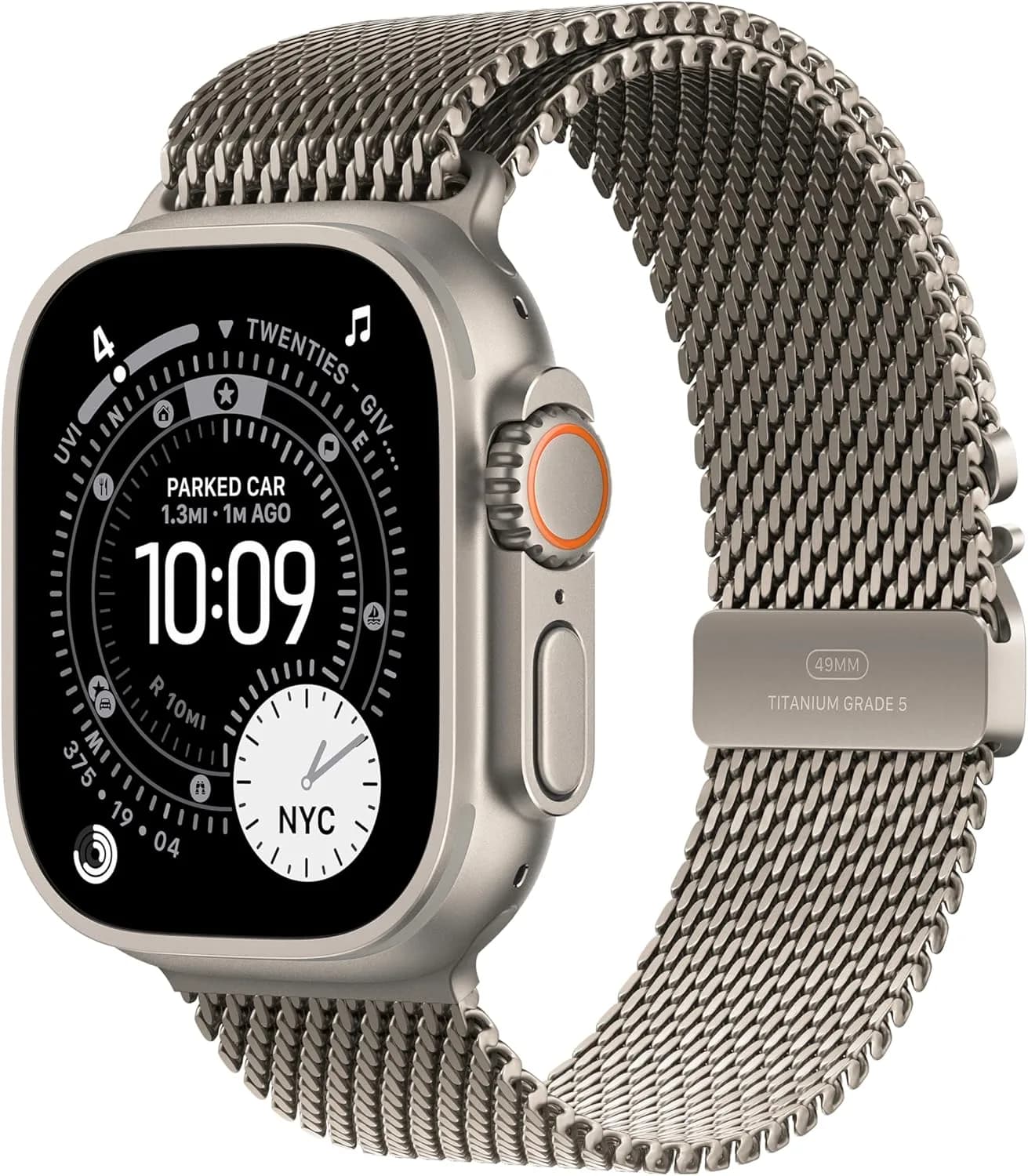
Apple's most rugged smartwatch has a larger, tougher case and a bigger battery than Series and SE models, plus features designed for sport and outdoor use. Our version comes in the 49mm case with the Black Ocean Band, a strap designed for water use and secure fit. It works with iPhone only and needs an iPhone to set up. Real battery life depends on GPS, brightness and cellular use. We confirm per unit. See our best smartwatch for iPhone guide.
Strengths: rugged, large screen, bigger battery than other Apple Watches, deep iPhone integration. Limits: iPhone only; premium price tier; battery shorter than long-life Amazfit or Garmin-style watches.
Best for: iPhone users who do serious outdoor, endurance or water sports.
Huawei Watch 6 Pro
Huawei's premium watch is available in nano-tech ceramic (43mm) and titanium (46mm), with a sapphire-glass LTPO OLED display up to about 3,500 nits, dual-band GPS and an Expedition app, per Huawei's published specifications. Battery is about 3 days on the 43mm and up to about 4.5 days on the 46mm. Listings also cite diving capability and 64 GB of storage on some units. We confirm per unit. See our Huawei guide.
Strengths: beautiful materials, very bright display, dual-band GPS, expedition features, works with Android and iPhone. Limits: battery in days, not weeks; less rugged-looking than the T-Rex; premium price tier.
Best for: people who want a stylish watch that also handles weekends outdoors.
Which outdoor watch should you buy? A decision guide
- What phone do you use? iPhone: Apple Watch Ultra 3, Amazfit or Huawei. Android: Galaxy Watch Ultra, Amazfit or Huawei.
- How long are your outings? Day hikes and runs: most watches work. Multi-day treks: favour the T-Rex Ultra 2 or other long-battery models.
- Do you run trails? Look at the Cheetah 2 Ultra.
- Are you hard on your watch? Look at the T-Rex line or the Galaxy Watch Ultra.
- Do you want a dressier look too? Look at the Huawei Watch 6 Pro.
- Do you need apps and replies? Galaxy Watch Ultra or Apple Watch Ultra 3.
- Is budget the main limit? Look at the T-Rex 3.
| If you are... | Consider |
|---|---|
| A weekend hiker on a budget | T-Rex 3 |
| A trekker doing multi-day trips | T-Rex Ultra 2 |
| A trail or ultra runner | Cheetah 2 Ultra |
| An Android user wanting apps | Galaxy Watch Ultra |
| An iPhone user wanting toughness | Apple Watch Ultra 3 |
| Someone who wants luxury plus expedition | Huawei Watch 6 Pro |
| A field worker or security officer | T-Rex 3 or 3 Pro |
Rugged smartwatch vs dedicated sports watch
Dedicated sports watches from specialist brands often focus on training analytics, extreme battery and navigation. Rugged smartwatches like the Galaxy Watch Ultra and Apple Watch Ultra add apps, payments and phone features, with shorter battery. Amazfit sits between them, with rugged builds, strong GPS and long battery at friendlier prices. Choose by what you value: apps and ecosystem, or battery and training depth. We confirm per unit what each model offers.
Battery planning for adventures
Plan your battery like you plan your water.
- Know your longest day. If you expect eight hours with GPS, choose a watch rated well beyond that in GPS mode.
- Charge before you leave. Top up to full the night before.
- Use battery-saving modes. Reduce GPS sampling, turn off always-on display and limit notifications.
- Carry a backup. A small power bank and short cable help on multi-day trips. See our accessories category and our guide to power bank mAh vs Wh.
- Mind the cold. Batteries lose capacity at low temperatures, a real factor on Mount Kenya.
- Do not rely on the watch alone. Carry a map, a charged phone and tell someone your route.
Navigation features explained
Breadcrumb trail. The watch records your path so you can retrace your steps. This is basic and valuable.
Route import. You load a planned route from your phone or an app and follow it on the watch.
Offline maps. Maps stored on the watch work without signal. Not all models have them.
Return to start. The watch guides you back along your route.
Compass and barometer. Help with orientation and weather changes. A falling barometer can warn of an approaching storm.
Navigation on a watch is a backup, not a substitute for preparation. Learn the route, carry a proper map and check conditions.
Safety features on the trail
Some outdoor watches include fall detection, emergency SOS, location sharing or siren features, depending on model, phone connection and software. Their availability in Kenya can depend on carriers and services, so we confirm per unit. Do not assume a watch can call for help without signal. For serious trips, tell someone your route and expected return time, travel with companions and carry appropriate safety gear.
Using your outdoor watch in Kenya
- Mount Kenya, Aberdares, Mount Longonot, Ngong Hills: expect cold, wind and changing weather. Battery drops in the cold; carry a backup.
- Hell's Gate and Rift Valley: heat and dust; wipe the sensor and avoid direct sun on a hot dashboard afterward.
- Coast: salt water and humidity; rinse the watch with fresh water and dry it.
- Nairobi parks and forests (Karura, Ngong Road Forest): tree cover and tall trees; dual-band GPS helps.
- Marathons and road races: city GPS between buildings; dual-band helps.
Accessories for outdoor use
- A spare strap, for example silicone for sweat and swimming.
- A screen protector for non-sapphire watches.
- A charging cable and a small power bank.
- A strap or case that fits your activity.
See the accessories category.
Common mistakes when buying an outdoor watch
- Buying for appearance alone. Check battery and GPS.
- Ignoring size. Rugged watches are big. Try them on.
- Trusting battery claims. Real life with GPS is shorter.
- Expecting iPhone features from a non-Apple watch.
- Relying on the watch for navigation.
- Buying from unverified sellers. Fakes exist.
- Skipping the receipt and warranty.
- Overbuying. You do not need a titanium expedition watch for the gym.
Example scenarios
These scenarios are illustrative, not customer records.
A weekend hiker on Ngong Hills. She wants a rugged, readable watch with GPS for day hikes. The T-Rex 3 gives toughness and battery without a flagship price.
A trekker planning a multi-day Mount Kenya climb. He needs battery that survives cold nights and several days. The T-Rex Ultra 2, plus a small power bank, is the sensible plan.
A trail runner training for a mountain race. She wants light weight and accurate GPS. The Cheetah 2 Ultra suits her.
A Samsung phone owner who rides and runs. He wants apps, music and a Quick Button. The Galaxy Watch Ultra fits.
An iPhone user who swims at the coast and hikes at weekends. She wants a tough, water-ready watch. The Apple Watch Ultra 3 with the Ocean Band fits.
A professional who wants one watch for the office and for weekends away. He values a refined look and expedition features. The Huawei Watch 6 Pro fits.
A security officer on night shifts. He wants a tough watch with a flashlight and long battery. The T-Rex 3 Pro fits.
Health and training features
Outdoor watches track heart rate, sleep, activity and workouts, and many add training load, recovery time, VO2 max estimates and pace guidance. These help you train sensibly, but they take time to calibrate. Wear the watch consistently for a couple of weeks and do several GPS workouts before you trust the numbers. Wrist-based heart rate can be less accurate during intense intervals, cold weather or heavy vibration, for example on rough descents. Treat the numbers as guidance. If you have a health condition, talk to your doctor before starting a demanding programme. Health features are wellness tools, not medical devices.
Altitude, weather and the barometer
Mountain weather changes fast. A barometer in the watch measures air pressure, which tracks altitude changes and can show falling pressure that may warn of worsening weather. Altitude readings from a barometer are more responsive than GPS elevation, but they need calibration, especially when the weather changes. At altitude, the body works harder, so heart-rate readings will rise. Respect altitude sickness warnings and plan acclimatisation on high mountains such as Mount Kenya, and do not rely on the watch to detect illness.
Care and maintenance for rugged watches
- Rinse after sweat, dust and salt water, then dry.
- Clean the sensor and charging contacts regularly.
- Check straps for wear, especially before a big trip.
- Update firmware before an expedition, not on the trailhead.
- Charge fully before a trip and carry a cable.
- Store the watch cool and dry, not in a hot car.
If something goes wrong, our repair service can advise. Battery care tips are in our lithium-ion battery care guide.
Packing and preparing for a big outing
A watch is one item among many on a serious trip. A sensible checklist keeps you safer and your gadgets useful.
- Charge everything the night before: watch, phone and power bank.
- Update firmware and maps at home, where Wi-Fi is reliable.
- Load your route onto the watch and phone, and download offline maps.
- Set your battery mode to match the length of the day.
- Pack a short charging cable and a small power bank, and keep them dry.
- Carry a paper map and compass for serious trips.
- Tell someone your route and expected return time.
- Check the weather and the local advice for the area.
- Pack layers, water, food and a torch even if your watch has a flashlight.
- Know your limits and turn back when conditions change.
How outdoor watches compare with using your phone
Phones have good GPS and large screens, so why buy a watch? Because a watch is on your wrist, visible with one glance, usually more waterproof and more durable, and uses far less battery for tracking. It frees your hands, keeps your phone in your bag away from rain and sweat and gives you heart-rate and training data in real time. A phone remains useful as a backup and for maps. The best setup is a watch for tracking and a phone for emergencies and navigation.
Wearing a watch while swimming and at the coast
If you holiday at Diani, Watamu or Lamu, or swim in lakes and pools, check the water resistance rating and the maker's guidance on depth and duration. Salt water is hard on seals, straps and charging contacts. Rinse the watch with fresh water after every swim and dry it before charging. Avoid pressing buttons underwater unless the manufacturer says it is safe. Silicone and ocean-style straps hold up better than leather in water. The Apple Watch Ultra 3 Ocean Band and the sturdy straps on Amazfit rugged models are designed for this kind of use. We confirm per unit the water rating on each watch.
Climate and temperature
Kenya spans coastal heat, highland cold and mountain frost. Watches handle a wide range of temperatures, but extremes affect batteries and screens. In the cold, battery drains faster and a touchscreen can respond slowly. Keep the watch under a sleeve when practical. In the heat, avoid leaving the watch in direct sun or in a hot car, and let it cool before charging. These small habits extend battery life and keep readings reliable.
When a rugged watch is overkill
Not everyone needs a titanium expedition watch. If you mostly jog around Karura Forest, go to the gym and hike occasionally, a Bip 6, Active 2 or Watch Fit 5 may be plenty. We would rather recommend the right watch than the most expensive one. See our fitness tracker guide for simpler options and our Huawei guide for stylish alternatives.
A final word on choosing
An outdoor watch is a tool. Choose the one that fits your phone, your longest day and your wrist, then buy it genuine and treat it well. A T-Rex for toughness and battery, a Cheetah for trail running, a Galaxy Watch Ultra or Apple Watch Ultra 3 for apps and ecosystem, a Huawei Watch 6 Pro for style with expedition features. Whichever you choose, carry a backup, tell someone where you are going and enjoy Kenya's trails.
Questions to ask any seller before you pay
- Is the watch new, sealed and genuine?
- Which exact model and case material is this?
- What battery should I realistically expect with GPS on?
- Does it have dual-band GPS, a barometer and offline maps if I need them?
- Can I see the serial number and check it matches the box?
- Is there a receipt and warranty, and who honours it?
- Where do I go if something goes wrong?
A good seller answers these plainly. At City Gadgets Kenya, we answer them in the shop or on WhatsApp before you spend anything.
Straps matter more than you think
On the trail, a strap is the part that fails first. A strap that loosens, chafes or snaps can cost you your watch. Silicone straps are comfortable, durable and easy to clean. Nylon and woven straps are breathable and secure. Metal and leather straps look smart but are less suited to sweat, mud and water. Check strap width and lug compatibility before buying a spare, and test a new strap on a short outing before a big trip. Carry a spare strap or a strap pin on expeditions. Cheap straps can irritate skin and fail early, so buy from a seller you trust.
Software updates and support
Rugged and premium watches receive firmware updates that improve GPS accuracy, battery use and features. Before a major trip, check for updates at home. During a trip, avoid updating, since a failed update in the field is a nuisance. Support periods differ by brand: Apple and Samsung typically offer longer software support than smaller brands, while Amazfit and Huawei focus on steady improvements per model. If you plan to keep the watch for many years, ask us about the expected support and the availability of straps and chargers. We confirm per unit.
Final check before you commit
Hold the watch on your wrist for a few minutes. Does it feel comfortable? Can you read the screen in bright light? Can you press the buttons with a gloved finger? Do the controls make sense? A watch that feels right in the shop usually feels right on the trail. If you are buying online, ask us to confirm the details and arrange a try-on at our shop before you decide.
How to spot a fake outdoor watch
Counterfeit and look-alike rugged watches are common, because rugged designs are popular and easy to imitate. Use these ten checks together.
- Pair it with the official app. Genuine Amazfit, Samsung, Apple and Huawei watches pair through their official apps (Zepp, Galaxy Wearable, Watch, Huawei Health). A fake needs a different, unknown app.
- Check the interface. A genuine watch has a polished, consistent interface and real watch faces. A fake looks glitchy or generic.
- Verify the model name and serial. They appear in settings and on the box and should match.
- Inspect the packaging. Genuine boxes are clean and accurate. Spelling errors and poor printing are red flags.
- Check the materials and weight. A watch that claims titanium and sapphire but feels light and plasticky is suspicious. Titanium watches have a distinctive solid feel without heaviness, and sapphire resists scratching.
- Test the buttons and bezel. They should feel precise. Wobbly or decorative controls are a red flag. Check that the Quick Button or crown does what it claims.
- Check the display. A genuine AMOLED screen is bright and sharp, even in sun. A fake is often dim.
- Test GPS and sensors. A genuine watch locks GPS and gives plausible readings. A fake may show random or fixed numbers.
- Check the battery. A fake that claims weeks may die within days.
- Check the seller. An unrealistically low price, no shop address and no receipt are warning signs.
If you are unsure, bring the watch to us at New Alnoor Exhibition, Second Floor, Shop C7, Accra Road, and we will help you check it.
Why buy your outdoor watch from City Gadgets Kenya
- Genuine products, checked before they reach you.
- A real shop at New Alnoor Exhibition, Second Floor, Shop C7, Accra Road, Nairobi CBD.
- Same-day delivery in Nairobi and next-day delivery outside Nairobi.
- M-Pesa payment and clear receipts.
- Honest advice, including telling you when you do not need a flagship.
- Straps, chargers and power banks in our accessories category.
- Support and repairs through our repair service.
- Trade-ins through our sell page.
- WhatsApp help on +254745575931.
Quick checklist
- My phone is compatible with the watch.
- I know my longest day and the battery I need.
- I need dual-band GPS or not.
- I tried the size.
- I chose durable materials if I am hard on my watch.
- I checked the model name, serial and packaging.
- I have a receipt and know where to get support.
- I have a backup plan for navigation and power.
Frequently asked questions
What is the best outdoor sports watch in Kenya? It depends on your phone and your sport. For rugged value, the Amazfit T-Rex 3. For Android apps, the Galaxy Watch Ultra. For iPhone, the Apple Watch Ultra 3. For trail running, the Cheetah 2 Ultra.
Which has the best battery? The Amazfit T-Rex Ultra 2 claims up to about 30 days in ideal use per our listing. We confirm per unit.
Do I need dual-band GPS? It helps in forests, cities and canyons. It is less critical on open trails.
Is a rugged smartwatch worth it? If you are hard on watches or spend long days outdoors, yes.
Can I swim with these? Most are rated for swimming. Follow the maker's guidance.
Does the Galaxy Watch Ultra work with iPhone? No.
Does the Apple Watch Ultra work with Android? No.
Is the watch accurate on Mount Kenya? GPS works well in open terrain. The barometer needs calibration. Carry a map and a backup.
How do I know it is genuine? Use the ten checks above.
Where can I buy an outdoor watch in Nairobi? At City Gadgets Kenya, Shop C7, Second Floor, New Alnoor Exhibition, Accra Road.
Ready to choose?
Message us on WhatsApp with your phone, your sport and your longest outing, and we will recommend the right watch.
Related reading: Amazfit smartwatch guide · Galaxy Watch7 vs Watch8 vs Ultra · Best fitness tracker · Best smartwatch for health tracking