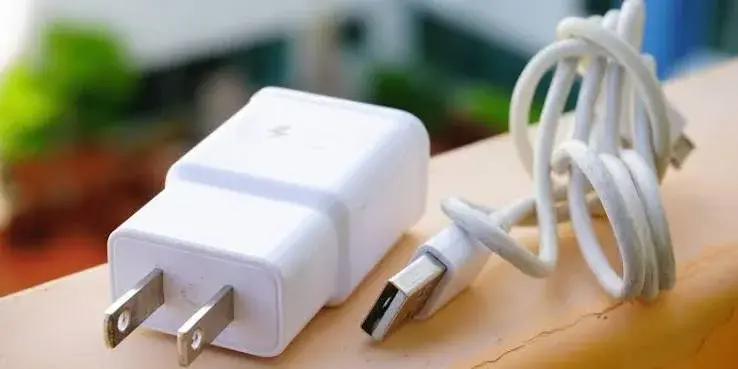
A slow charger wastes your time, and a bad charger can wreck your phone. Walk through any market in Nairobi and you will see stalls of chargers labelled "fast", "super fast", "65W" and "100W" at prices that make no sense for the parts inside. Many of them charge slowly, run hot or lack the protection circuits that keep a phone battery safe. Meanwhile, the genuine chargers that do work well come in a confusing array of wattages and standards: USB-C Power Delivery, PPS, Quick Charge, Samsung Super Fast Charging, Apple fast charging. This guide to the best fast charger in Kenya explains the standards in plain language, shows how to match a charger to your phone, tablet or laptop, compares the genuine Samsung, Anker and CMF chargers we stock, and shows how to avoid fakes.
We are City Gadgets Kenya, at New Alnoor Exhibition, Second Floor, Shop C7, Accra Road, Nairobi CBD, with same-day delivery in Nairobi and next-day delivery outside Nairobi. Specifications are per the makers or retailer listings, and we confirm details per unit. Prices change, so message us on WhatsApp for today's price.
The short version
- A charger can only charge as fast as your phone allows. A higher-wattage charger does not harm a phone; the phone takes what it supports.
- Match the charger to the device: 15W for basic and overnight, 25W for most current Samsung Galaxy phones, 45W for the few high-end Samsung devices that support it, 45W to 100W USB-C for laptops.
- Use a good cable. A weak cable limits speed.
- Buy genuine. Fast charging pushes more power, so the safety circuits in a real charger matter more.
- Check the standard: USB-C Power Delivery (PD) with PPS suits modern Samsung and many other phones; iPhones fast-charge using USB-C PD.
| Charger | Output | Best for |
|---|---|---|
| Samsung 15W adapter | 15W | Basic and overnight charging, accessories |
| Samsung 25W adapter | 25W | Most current Galaxy phones |
| Samsung 45W adapter with cable | 45W | High-end Galaxy phones and tablets that support 45W |
| Anker Nano Charger 45W (A2692) | Up to 45W PD, PPS | Phones, tablets, light laptops |
| CMF Power 100W GaN charger | Up to 100W | Laptops, phones and tablets from one plug |
| Anker car charger 67W with cable | 67W total | Charging in the car |
Figures are per Samsung, Anker and CMF listings, and we confirm the exact model and what is in the box per unit.
How fast charging works, in plain words
Charging speed is power, measured in watts. Power equals voltage multiplied by current. A basic USB charger delivers 5 volts at 1 to 2 amps, which is 5 to 10 watts. Fast charging raises the voltage, the current or both, so a charger can deliver 25, 45, 65 or 100 watts, but only if the charger and the device agree on it.
That agreement is a short digital conversation. When you plug in, the phone and charger negotiate: the phone says what it can accept, and the charger offers matching voltage steps. If either side does not speak the same language, charging falls back to a slower, safe speed. This is why a cheap charger with a "fast" label can charge slowly, and why the cable and charger and phone all matter.
Typical USB Power Delivery steps
USB-C Power Delivery uses voltage steps such as 5, 9, 12, 15 and 20 volts. The Anker Nano 45W lists steps of 5 V, 9 V, 12 V, 15 V up to 3 A, and 20 V at 2.25 A, per retailer listings of Anker's specification. 20 V × 2.25 A = 45 W. Our arithmetic checks out: 15 V × 3 A is also 45 W.
PPS: programmable power supply
PPS is an extension of USB-C PD that lets the phone request exact voltage and current in small steps. This reduces heat and lets some phones, notably Samsung Galaxy models, charge at their top speed efficiently. The Anker Nano 45W supports PPS up to 45 W, according to a retailer listing. If your phone supports PPS, a PPS charger gets the best from it.
Other standards you will see
- Quick Charge (Qualcomm). An older fast-charging system found on many Android phones. Many modern chargers are PD-first.
- Samsung Super Fast Charging. Samsung's branding for its 25W and 45W fast charging, built on USB-C PD with PPS.
- Apple fast charging. Recent iPhones fast-charge through USB-C Power Delivery.
- Proprietary systems from some phone makers, which work best with their own chargers.
Many modern phones also fall back to standard PD, so a good PD charger is a safe general choice. Check your phone's specification for its maximum wattage and standard.
Matching wattage to your device
Look up your device's maximum charging power in the maker's specification. Then use this guide.
| Device | Typical need |
|---|---|
| Budget Android phone | 10 to 25W |
| Mid-range Samsung Galaxy phone | 15 to 25W |
| High-end Samsung Galaxy phone or tablet | 25 to 45W |
| iPhone | Fast charging with a USB-C PD charger; check your model |
| Tablet | 15 to 45W |
| Ultrabook or small laptop | 45 to 65W |
| Larger laptop | 65 to 100W or more |
| Earbuds, smartwatch, small accessories | 5 to 15W |
These are broad ranges, not specifications for any phone. Your phone's maker publishes the real figure.
Buying a stronger charger than you need is safe. The device only draws what it can accept. Buy more only if it adds value: a 45W charger can charge a phone and also a tablet or small laptop. Buying a weaker charger than you need is not harmful but slow. A laptop on a 15W phone charger may charge extremely slowly or not at all while in use.
Samsung chargers: 15W, 25W and 45W
Original Samsung chargers are built to Samsung's own safety and performance standards, and they include the protection and communication that let the phone and charger agree on a safe speed.
Samsung 15W adapter
A compact original wall charger suited to everyday charging of Galaxy phones, earbuds and other accessories. It suits overnight charging, accessories and anyone who wants a dependable spare. If your phone supports faster charging, a 25W or 45W adapter will use that ability.
Samsung 25W adapter
The balanced choice for most current Galaxy phones. It charges compatible phones noticeably faster than 15W. Many recent Galaxy models support 25W; older or entry-level models may be limited to lower speeds, and then the phone charges at its own maximum without harm.
Samsung 45W adapter with cable
Samsung's highest-speed original adapter, supplied with a cable. It is intended for the small group of high-end Galaxy phones and tablets designed to accept 45W. On phones that top out at 25W or less, the phone simply charges at its own maximum. It is only worth the extra cost if your device supports 45W. We confirm the exact cable included per unit.
For a deeper dive, see our Samsung charger guide.
Anker Nano Charger 45W
The Anker Nano Charger (model A2692, per retailer listings) offers up to 45W through USB-C Power Delivery, with PPS support, per a retailer listing. It is small, with a folding plug in Anker's Nano range, which makes it easy to pack. Some packages include a USB-C to USB-C cable. We confirm per unit.
Good for:
- Samsung and Android users who want the fastest charging their phone supports.
- iPhone and iPad owners who want quick charging from a small adapter.
- Students and travellers with a small USB-C laptop.
- Anyone replacing a slow, bulky charger.
Things to know:
- Heavier laptops that need 65W or more will charge slowly or may not charge.
- It has a single port, so one device at a time.
- Cable quality matters. Pair it with a good USB-C cable. See our USB-C cable guide.
CMF Power 100W GaN charger
The CMF Power 100W GaN charger from CMF by Nothing is a compact, high-power wall charger that can charge several devices, including laptops, from one plug, per the product page. GaN (gallium nitride) chargers waste less energy as heat and let makers pack parts more tightly, so they can be smaller than silicon chargers of the same power. See our GaN charger guide.
Good for:
- Students and professionals who travel with a laptop and phone.
- Owners of USB-C laptops that accept up to 100W.
- Anyone who wants one charger for several devices.
Things to know:
- When several devices are connected, total power is shared between ports, so each charges slower than alone. We confirm the exact port layout and power split per unit.
- Check your laptop's charging requirement. Many USB-C laptops charge from 65W to 100W, but some need a specific charger or do not charge over USB-C.
- A suitable cable is needed for higher power.
Anker car charger 67W with cable
The Anker car charger (67W, with cable) plugs into the 12V socket and charges devices while you drive. A 67W total output can fast-charge a phone and a tablet at once and keep many USB-C laptops topped up, per our product notes. Anker sells several car chargers with similar names, so we confirm the ports, cable type and length per unit. Unplug it when you leave the car for long periods if your socket stays live. See our car charger guide.
The cable matters as much as the charger
A fast charger with a weak cable is a slow charger. Cables carry current through thin wires, and the cable's rating limits how much power can flow.
- A 60W cable can carry up to 3 amps at 20 volts, per the standard, enough for fast phone charging, tablets and small laptops. The Anker 322 USB-C to USB-C cable (3 ft, 60W) is in this class.
- A 240W cable is rated for the highest USB-C power, using 48 volts at 5 amps, per the standard. The Anker 240W cable (6 ft) is for large laptops, gaming laptops and high-output power banks, per Anker.
- A USB-A to USB-C cable works with older USB-A chargers and ports, but USB-A generally charges more slowly than USB-C Power Delivery. Anker's 6 ft USB-A to USB-C cable suits bedside and car use.
- Cheap cables may lack the right wiring for fast charging, may overheat or may wear out in weeks.
If your phone charges slowly with a good charger, swap the cable first. Our USB-C cable guide explains the ratings in detail.
Kenyan plugs and voltage: what to know
Kenya uses 240 V mains at 50 Hz with the three-pin Type G plug, the same style as the UK. Chargers designed for Kenya use this plug. Travellers arriving with other plugs need adapters. Some compact chargers have folding pins, and others have interchangeable plugs. The Anker 3-in-1 Cube with MagSafe includes a 30W charger with interchangeable plugs, per Anker. If you buy a charger online from abroad, check that the plug fits Kenyan sockets, and avoid cheap plug adapters that wobble or have thin pins, which can overheat.
Because power surges and unstable voltage are common, plug expensive chargers into surge-protected extensions. Our guide to power surges and AVR in Kenya explains the options.
Is fast charging bad for your battery?
A common worry is that fast charging "kills" the battery. The truth is more balanced.
- Heat and time at high charge are the main enemies of lithium batteries. Fast charging produces more heat, but phones manage it by charging fast when the battery is low and slowing as it fills.
- Modern phones are built for the speeds they advertise. Using the charger the maker designed, at the speed it supports, is within design.
- Using a stronger charger than needed does not speed up wear, because the phone limits the current.
- Poor chargers are the real risk, because they may deliver unstable power without proper protection.
- Some phones offer battery protection modes, such as limiting charge to 80 or 85 per cent, which can slow ageing if you charge overnight often. Check your phone's battery settings.
Practical habits: avoid charging in hot places, do not cover the phone while charging, remove thick cases if the phone gets hot, and use fast charging when you need speed and a slower charger overnight if you prefer.
Charging in the real world: how long should it take?
Charging speed depends on battery size, the phone's maximum power and how full the battery is. Phones charge fastest from low levels and slow down as they approach full to protect the battery. Makers sometimes quote "50 per cent in about 30 minutes", for example, but the real time depends on the model and conditions. We do not quote times here because they vary, and you should check your phone's maker for its figure.
A simple estimate: energy in Wh divided by the charging power gives the minimum time. A phone battery of about 19 Wh (a 5,000 mAh cell at 3.7 V) charged at an average of 20 W would take around an hour, and in practice somewhat longer once losses and the slow-down at the end are included. This is our rough calculation, not a promise for any phone.
Multi-port chargers: sharing power
Multi-port chargers split total power between ports. A 100W charger with two USB-C ports might give 100W to one device alone, and something like 65W plus 30W when two are used, depending on the design. The CMF Power 100W GaN charger shares total power across ports, per the product page. Before buying, ask how power is divided when several devices are connected, and which port is the main one. For a laptop and a phone together, make sure the laptop port still gets enough watts.
Wall chargers, power banks and cars: which fits where
- Wall charger: the fastest and most efficient way to charge at home or the office.
- Power bank: for charging away from sockets. See our best power bank guide and capacity guide.
- Car charger: for drivers and passengers, such as the Anker 67W.
- Wireless charger: convenient but slower. See our wireless charger guide.
Safety: why fake fast chargers are dangerous
A charger takes 240 V mains power and converts it to a low, stable voltage for your device. The part that does this safely needs good components, insulation and protection circuits. Counterfeit and cheap unbranded chargers often cut corners, which can cause:
- Overheating and melted plastic.
- Electric shock if insulation is poor.
- Voltage spikes that damage your phone's battery or circuits.
- Fire.
- Slow, unreliable charging.
Never use a charger that is very hot, smells of burning, buzzes loudly, sparks or has damaged pins or cable. Do not charge under pillows or on beds. Do not leave chargers plugged in near water. Replace damaged chargers immediately.
Reading a charger's label
Every genuine charger has a label, usually moulded or printed on the body, that tells you what it can do. A typical fast charger lists:
- Input: for example 100–240 V, 50/60 Hz, with a current figure. This means it works on Kenyan 240 V mains and on other countries' voltages.
- Output: one or more combinations such as 5 V at 3 A, 9 V at 3 A, 15 V at 3 A, 20 V at 2.25 A. Multiply voltage by current to get watts for each step.
- Model number, matching the maker's website.
- Certification marks that show the product has been tested to safety standards.
- Brand and manufacturer details.
How to read the output line: the highest watts in the list is the maximum power, such as 45 W from 15 V at 3 A or 20 V at 2.25 A. If a label claims 65 W but lists only 5 V at 2 A, something is wrong. If the label has no output details at all, treat the charger with suspicion.
Charging an iPhone, iPad and other Apple devices
Recent iPhones and iPads support fast charging through USB-C Power Delivery. You need a PD charger, such as the Anker Nano 45W, and a USB-C cable that fits your device (USB-C to USB-C for newer devices, USB-C to Lightning for older ones). Exact charging speeds depend on the model, so check Apple's specification for yours. A 45W charger is more than an iPhone needs, but it is safe, and it also charges an iPad or a light MacBook faster. Apple accessories such as MagSafe use their own charging rules, covered in our wireless charger guide. The Anker 3-in-1 Cube with MagSafe charges an iPhone, an Apple Watch and AirPods together, with up to 15 W for an iPhone through an MFi-approved MagSafe module on iPhone 12 to 15 series, per Anker.
Charging tablets and laptops
Tablets benefit from 25 to 45 W chargers, depending on the model. A larger battery takes longer, so a stronger charger helps. Samsung Galaxy tablets that support 45 W charging use the Samsung 45 W adapter.
Laptops charge over USB-C if their port supports Power Delivery. Check the laptop's rated charging power on its original charger label, usually 45 W, 65 W or more. The Anker Nano 45W suits lightweight ultrabooks, while the CMF 100W suits laptops needing up to 100 W, per our product notes. Heavier laptops with proprietary round-pin chargers cannot be charged this way. Tell us your laptop model and we will confirm. If you work from home, see our home office setup guide.
Charging safely at home and at work
- Use the charger that suits the device.
- Charge on a hard, flat, ventilated surface, not under a pillow or on a bed.
- Do not charge unattended for long periods if you can avoid it, and never leave a charging device in a closed bag.
- Unplug chargers in storms or use surge protection.
- Do not use damaged cables or chargers.
- Keep liquids away.
- Do not overload extension sockets. A multi-plug has a rated load, and a busy desk can exceed it.
- Check the wiring and earthing where you charge. See our earthing and wiring guide.
- Keep children away from mains chargers.
Chargers for offices, schools and shops
Organisations that equip many staff or students should standardise on one or two charger models. This makes spares interchangeable and reduces mistakes. For shared desks, multi-port chargers cut clutter. For reception and visitor areas, a small number of charging points with cables on hand is helpful, but remember to protect them from theft. Buy genuine products and keep receipts for warranty claims. Message us on WhatsApp with your numbers, and we will discuss availability and delivery.
Which charger should you buy? A quick decision guide
You have a Samsung Galaxy phone. Check its maximum charging power. If it is 25 W, buy the Samsung 25W adapter. If it supports 45 W, the 45W adapter with cable makes sense. If it is 15 W, the 15W adapter or a spare you already own is enough.
You have an iPhone and want fast charging. A USB-C Power Delivery charger such as the Anker Nano 45W, plus the right cable for your model.
You have a phone and a USB-C laptop. One compact 45W charger may cover both if the laptop needs 45 W or less. For a laptop needing up to 100 W, the CMF 100W GaN charger fits, per our product notes.
You spend hours in the car. The Anker 67W car charger with cable.
You want a spare for the office or bedside. A basic original 15W or 25W Samsung adapter.
You are not sure. Message us with your phone, tablet and laptop models, and we will tell you what you need and, just as importantly, what you do not.
Care and lifespan of chargers
Chargers last for years if you treat them well. Do not yank them out by the cable. Do not wrap cables tightly around the charger. Keep them dry and away from heat. Check the pins and cable for damage every few months. If a charger starts buzzing, getting very hot, or charging intermittently, stop using it and replace it. A charger is a small price compared with the phone or laptop it protects. Keep the receipt in your phone for warranty claims, and ask us if you are unsure whether a fault is covered.
Common mistakes when buying a fast charger
- Buying on the wattage number alone.
- Choosing a 45W charger for a phone that supports 15W, expecting faster charging.
- Ignoring the cable.
- Buying from a stall with no receipt or warranty.
- Trusting inflated claims such as "120W" on a tiny, light, cheap unit.
- Using a laptop on a phone charger and wondering why it does not charge.
- Plugging into a damaged or overloaded extension.
- Not checking the plug type and fit.
- Ignoring heat.
- Skipping the warranty.
Example scenarios
These are illustrative scenarios, not customer records.
The Samsung user with a slow charger. Their phone takes hours to charge. A genuine Samsung 25W adapter and a good cable bring it to the speed the phone was designed for.
The student with a USB-C ultrabook and a phone. They carry a laptop brick and a phone charger. One compact 45W Anker Nano or a CMF 100W GaN charger replaces both, depending on the laptop's needs.
The rideshare driver. Their phone runs navigation all day. A 67W car charger with a good cable keeps it topped up.
The family with several phones. A multi-port charger in the living room means one plug for everyone, as long as the total power covers the devices.
Questions to ask any seller before you pay
- Is this a genuine product, and is the box sealed?
- What is the exact model and maximum output?
- Which standards does it support: PD, PPS, Quick Charge?
- Will it work at full speed with my phone model?
- Is a cable included, and what is its rating?
- For multi-port chargers, how is power shared?
- Is the plug type correct for Kenyan sockets?
- What warranty applies, and who services it?
- Will I get a receipt?
How to spot a fake fast charger
Charger counterfeits are everywhere, and they can be dangerous. Use these ten checks together.
- Check the weight. Genuine chargers have transformers, capacitors and shielding with real weight. A very light unit is suspicious, especially one that claims high wattage. GaN chargers are lighter than old ones, so compare with a genuine unit of the same wattage.
- Check the markings. The label should show the brand, model number, input (100–240 V), output voltages and amps, and certification marks. Blurry or missing text is a red flag.
- Check the maths on the label. The listed voltage and current should be consistent with the claimed wattage. For example, 20 V at 2.25 A is 45 W.
- Check the packaging. Genuine boxes have sharp printing, accurate model names and clean seals. Spelling mistakes are red flags.
- Check the pins and plug. They should be firm, well made and fit a Kenyan socket snugly. Loose or thin pins are dangerous.
- Check the model number on the maker's website.
- Check the seams and finish. Gaps, rough plastic and uneven ports suggest poor build.
- Test charging. The phone should show a fast-charging indicator when appropriate, and the charger should be warm but not too hot to touch.
- Check the seller and warranty. A genuine seller has a shop address, gives a receipt and states the warranty period.
- Check the price. A price far below normal for a branded high-wattage charger is a red flag.
If you are unsure, bring the charger to New Alnoor Exhibition, Second Floor, Shop C7, Accra Road, and we will help you check it.
Why buy your fast charger from City Gadgets Kenya
- Genuine Samsung, Anker and CMF chargers, checked before they reach you.
- A real shop at New Alnoor Exhibition, Second Floor, Shop C7, Accra Road, Nairobi CBD, opening from 9:00 AM.
- Same-day delivery in Nairobi and next-day delivery outside Nairobi.
- M-Pesa payment and clear receipts.
- Honest advice, including telling you when the cheaper charger is enough.
- Compatibility checks. Tell us your phone or laptop and we will confirm the right wattage.
- Cables, power banks and hubs in our accessories category.
- Support and repairs through our repair service.
- Trade-ins through our sell page.
- WhatsApp help on +254745575931.
Your fast charger checklist
- I know my device's maximum charging power.
- I chose a charger that matches or exceeds it.
- I have a good cable with the right rating.
- The charger supports the standard my phone uses.
- The plug fits Kenyan sockets.
- I checked the label, weight and box for signs of a fake.
- I have a receipt and know the warranty terms.
Frequently asked questions
What is the best fast charger in Kenya? It depends on your device: Samsung 25W for most Galaxy phones, Anker Nano 45W for phones, tablets and light laptops, CMF 100W for laptops and several devices.
Can I use a 45W charger on a phone that supports 15W? Yes. The phone charges at its own maximum.
Is a higher-wattage charger bad for my phone? No, the phone limits the current it draws.
Why does my phone charge slowly with a fast charger? The cable, the standard, the phone's limit or a fake charger could be the cause.
What is PPS? A USB-C PD feature letting the phone request exact voltage and current, which helps efficient fast charging on compatible phones.
Will a phone charger charge my laptop? Only if it supplies enough watts and the laptop charges over USB-C.
Is GaN better? GaN chargers are smaller and cooler for their power, but the real benefit depends on the design.
Can I pay by M-Pesa? Yes.
How do I know it is genuine? Use the ten checks above.
Where can I buy a charger in Nairobi? At City Gadgets Kenya, Shop C7, Second Floor, New Alnoor Exhibition, Accra Road.
Ready to choose?
Message us on WhatsApp with your phone, tablet or laptop model, and we will recommend the right charger and cable.
Related reading: Best GaN charger in Kenya · Best USB-C cable in Kenya · Samsung charger guide · Best power bank in Kenya