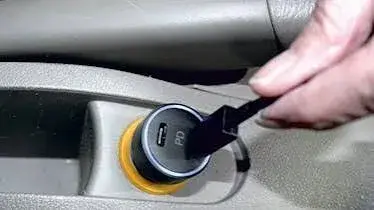
If you drive in Nairobi, you already know the problem. A phone running maps, music and calls drains faster than a cheap charger can refill it, and the little car charger from a roadside stall gets hot, charges slowly and sometimes makes your phone stop charging altogether. Rideshare drivers, sales reps, matatu owners, families on a road trip to Mombasa and anyone who works from the car all need power on the move, and the quality of the charger matters more than most people think. A car charger sits in a hot cabin, takes power from the vehicle's electrical system and feeds it to an expensive phone, so a poorly built one is a real risk.
This guide to the best car charger in Kenya explains how car chargers work, how many watts you actually need, what the 12V socket and fuse can handle, how to charge safely with the engine on or off, how the Anker 67W car charger with cable fits, and how to spot a fake before you pay.
We are City Gadgets Kenya, at New Alnoor Exhibition, Second Floor, Shop C7, Accra Road, Nairobi CBD, with same-day delivery in Nairobi and next-day delivery outside Nairobi. Specifications are per the makers or retailer listings, and we confirm details per unit. Calculations are our own, from stated assumptions. Prices change, so message us on WhatsApp for today's price.
The short version
- A car charger turns the car's 12V supply into the 5V to 20V your device needs. A good one does this efficiently and safely.
- Watts decide speed. A 67W charger can fast-charge a phone, charge a tablet, or top up many USB-C laptops, depending on how the power is split between ports.
- The built-in cable matters. The Anker 67W car charger comes with a cable, so you do not need a separate one in the car.
- Check how the power is shared. The total is not always available on every port at once, so we confirm the port split for your model.
- Use it sensibly. Unplug it if your socket stays live with the engine off, and keep it out of direct sun when parked.
- Buy genuine. Fake car chargers can overheat, damage phones and blow fuses.
| Item | What it suits |
|---|---|
| Anker car charger 67W with cable | Phones, tablets and many USB-C laptops in the car, with a cable included |
| Anker Nano Charger 45W (wall) | A wall charger for home or office, a good partner for car use |
| Anker 322 USB-C cable 3 ft 60W | A spare cable for the car or your bag |
| Anker power banks | Charging when you are away from the car |
Figures are per the makers or retailer listings, and we confirm the exact model and what is in the box per unit.
How a car charger works
A car's electrical system runs at about 12 volts. When the engine is off, the battery supplies about 12 volts. When the engine is running, the alternator charges the battery and the system voltage rises to roughly 13.5 to 14.5 volts. Your phone, tablet or laptop needs something very different: 5 volts for basic USB, or higher voltages such as 9, 12, 15 or 20 volts for fast charging.
A car charger is a small DC-to-DC converter. It takes the 12V supply from the socket and converts it to the voltages your device asks for, using electronics very similar to those inside a wall charger. A good car charger also handles the spikes and dips that car systems produce, for example when the engine starts and the voltage briefly drops, and it includes protection against overheating, over-current and short circuits.
The negotiation between charger and device
Like a wall charger, a modern car charger talks to your device. A USB-C port that supports Power Delivery (PD) offers a list of voltage and current combinations, and the device picks the one it can accept. If the charger supports PPS (programmable power supply), it can fine-tune voltage in small steps, which many Samsung phones use. If the two do not share a fast-charging language, charging falls back to a slower, safe speed. We explain the same ideas for wall chargers in our best fast charger in Kenya guide.
The Anker car charger 67W with cable
Our catalogue includes the Anker car charger 67W with cable. According to our product notes, it plugs into the car's 12V socket and delivers a total of up to 67W, which is enough to fast-charge a phone and a tablet together, and to keep many USB-C laptops topped up on the road. The cable that comes with this version means you do not need a separate one in the car.
What to expect:
- Total output of 67W. That is the maximum across the charger, not necessarily on every port at once.
- A built-in or included cable, which makes the setup tidy. Cable type and length vary by version, so we confirm yours.
- Fast charging for phones and tablets, where the device supports a fast-charging standard.
- Laptop top-up. Many USB-C laptops accept 45W to 65W, so 67W can help, but a laptop that needs more will charge slowly or only maintain its battery.
Confirm the exact model. Anker sells several car chargers with similar names and different outputs. How the 67W is split between ports depends on the model. Ask our team to confirm the ports, cable type and length for the unit you order, and what each port delivers when both are in use.
How many watts do you actually need?
More watts is not automatically better. Pick the wattage that matches what you charge. These figures are typical, not exact.
| Device | Typical fast-charge power | Notes |
|---|---|---|
| Basic phone | 10 to 18W | Any decent charger works |
| Current Samsung Galaxy phone | 25W, sometimes 45W on high-end models | Needs PD with PPS for full speed |
| iPhone | About 20W to 30W with USB-C PD | Needs a PD charger and a USB-C cable |
| Tablet | 15 to 45W | Depends on the model |
| Laptop | 45 to 100W | A 65W laptop on a 45W charger charges slowly |
| Dashcam, GPS, small accessories | 5 to 15W | Often a USB-A port is enough |
From our calculation, a charger delivering 67W from a 12V socket draws about 5.6 amps from the car side at 12 volts, and slightly more allowing for conversion losses. With the engine running at about 14.4 volts, the same output draws about 4.7 amps. A single phone charging at 25W draws about 2.1 amps at 12 volts. These numbers matter when we look at the socket's fuse.
The 12V socket and its fuse
The socket in your car, often called the cigarette lighter socket, is protected by a fuse. The rating differs between vehicles, and many are commonly rated around 10 to 15 amps, but you should check your owner's manual or the fuse box label. From our calculation, a 67W charger using about 5.6 amps is within the usual range, but a charger and other devices sharing the same circuit, such as a tyre inflator or a cooler, can exceed it.
Practical rules:
- Do not plug a high-power appliance and a charger into the same socket through a splitter. The combined current can blow the fuse.
- If the charger stops working, check the car's fuse before you blame the charger.
- Never replace a fuse with a higher-rated one to get around a blown fuse. The fuse protects the wiring.
- Use the manual if you are unsure which fuse protects the socket.
Engine on or engine off?
This is the question we hear most. The sensible answer is that charging a phone with the engine off for a short time is fine, but long sessions with the engine off can drain the car battery.
From our calculation, assuming a typical car battery of about 50 amp-hours at 12 volts, which is about 600 watt-hours nominal, a charger delivering 67W for one hour takes about 67 watt-hours, which is roughly 11 percent of the nominal capacity. A car battery that is old or already weak has less to give, and starting the engine needs a large burst of current. So:
- Short stops with the engine off, such as waiting for a client, are fine for a phone.
- Long waits call for the engine to run, or for a power bank.
- If the car is hard to start, avoid charging with the engine off.
- Older or weak batteries make the risk higher.
Live sockets: unplug when you leave
In some cars the 12V socket switches off with the ignition. In others it stays live all the time. A charger plugged into a live socket draws a small amount of power even when nothing is charging, and a charger left in the socket for weeks while the car sits can contribute to a flat battery. If you leave your car parked for days, unplug the charger. If you are unsure whether your socket is live, plug in a charger, switch the car off and see whether the light on the charger stays on.
Heat: the quiet killer of car electronics
A parked car in Nairobi sun can become very hot inside. Heat shortens the life of chargers, cables and phone batteries. Some guidance:
- Do not leave the phone on the dashboard in direct sun while it charges. Phone and charger together generate heat.
- Unplug the charger when you park in full sun, or at least keep it shaded.
- Do not cover the charger with cloth, bags or papers.
- If the phone shows a temperature warning, stop charging and let it cool in the shade.
Our guides on lithium-ion battery care and fast charging and battery health myths explain why heat matters more than fast charging itself.
Cables: the other half of car charging
A car charger is only as good as the cable that carries its power. The Anker 67W car charger comes with a cable, which removes one variable. If you use a separate cable, remember:
- A weak cable limits speed. A thin, cheap USB-C cable may not carry the current needed for fast charging.
- Match the connector to the device: USB-C to USB-C for most Android phones, tablets and laptops, USB-C to Lightning for older iPhones, USB-A to USB-C for basic charging.
- Keep it short in the car. A short cable loses less power and does not tangle with the gear stick.
- Do not let it snag. A cable pulled across the cabin can damage the port on the phone.
Our guide to the best USB-C cable in Kenya explains which rated cables suit which watt levels, including the Anker 322 USB-C cable (3 ft, 60W) and the Anker USB-C cable (6 ft, 240W) we stock.
Car charger vs power bank vs inverter
A car charger is not the only way to power devices on the road. Compare:
| Option | Strengths | Limits |
|---|---|---|
| Car charger | Always available in the car, no charging needed, fast for phones and tablets | Needs the car's power, limited to the socket's capacity |
| Power bank | Works anywhere, in the car or on foot | Must be charged beforehand, finite capacity |
| Power inverter | Gives mains sockets for laptops and appliances | Bulky, draws more current, needs correct size and care |
For most drivers, a good car charger plus a small power bank is the best combination. The car charger keeps phones topped up on the road, and the power bank covers you when you leave the car. See our best power bank in Kenya and power bank capacity guide for choosing one.
What can you charge in the car?
Smartphones
Phones are the main use. A fast car charger with USB-C PD can charge most modern phones quickly, and a charger with PPS helps current Samsung phones reach their top speed. Running maps and streaming music while charging slows the net gain, so a phone that is in heavy use will charge more slowly than one that is idle.
Tablets and e-readers
Tablets charge well from a 20W to 45W port. A tablet showing a movie for children on a long trip is a common car use. See what the tablet accepts before you assume it will fast charge.
Laptops
Many laptops charge through USB-C. A 67W charger can supply enough for laptops that accept 45W to 65W, but the laptop may charge slowly under heavy load. Laptops with proprietary round connectors need a different solution, such as an inverter.
Dashcams, GPS units and small accessories
These use small amounts of power. Many dashcams use a USB-A port or a dedicated cable. If your dashcam stays plugged in with the engine off, check whether it has parking-mode settings that draw from the battery.
Earbuds, watches and power banks
You can charge earbuds and smartwatches with their own cables, and a power bank can recharge while you drive. See our guide to the best fast charger in Kenya for the wattages they accept.
Choosing the right car charger: a decision guide
- How many devices do you charge at once? One phone needs a simple single-port charger. A phone plus a tablet, or two passengers, needs a dual-port charger.
- What connectors do your devices use? If you use USB-C phones, make sure there is a USB-C PD port.
- Do you charge a laptop? If so, look for 45W to 65W on a single USB-C port.
- Do you want a built-in cable? A charger with a cable is tidier. A charger with ports only gives flexibility.
- Does your vehicle have a 12V socket in a good position? Some cars have deep or loose sockets, so check the fit.
- Is your vehicle 24V? Some trucks and buses use a 24V system, so check the charger's input range. Many car chargers accept a range that covers both, but confirm with the maker.
- Budget and brand. Pay for safety and genuine parts, not for a big number on the label.
If you are unsure, message us on WhatsApp with your car model and the devices you charge, and we will recommend a suitable option.
Safety: why fake car chargers are dangerous
A car charger is a small box of electronics sitting in a hot cabin, connected to the car's electrical system and to your phone. A poorly made one can:
- Overheat and melt the plastic or damage the socket.
- Blow the fuse by drawing more current than the socket can supply.
- Damage the phone's battery or charging port with unstable voltage.
- Cause interference with the car radio or navigation.
- In extreme cases, start a fire.
Genuine chargers from known makers include protection against over-current, over-voltage, over-temperature and short circuits. A fake charger copies the shell and the label but skips the safety parts. You cannot see inside, so the safest protection is to buy from a seller you can trust.
Installing and using a car charger correctly
- Switch off the engine before plugging in, or at least plug in before you start driving.
- Push the charger fully into the socket until it sits firmly.
- Connect the cable to the charger and your device.
- Check the indicator light, if there is one, and check that your device shows it is charging.
- Keep the cable tidy, away from the gear stick, pedals and airbag areas.
- Do not use your phone dangerously while driving. Set up maps and music before you move.
- Unplug the charger if you leave the car for a long time.
Troubleshooting a car charger
| Problem | Likely cause | What to try |
|---|---|---|
| No charging at all | Socket has no power or blown fuse | Try another device in the socket, check the fuse |
| Charging starts and stops | Loose socket, poor cable | Re-seat the charger, try another cable |
| Charging is slow | Weak cable or no fast-charge standard | Use a PD-rated cable, check that the device supports fast charging |
| Charger is very hot | Heat in the cabin, overload or a fake charger | Unplug, let it cool, check the load, buy genuine |
| Phone says "charging slowly" | Charger or cable does not support fast charging | Try a PD-rated cable and port |
| Car radio has static | Poor-quality charger causes interference | Try a better charger and keep cables away from the antenna |
| Charger does not fit | Socket shape differs | Check the charger fits snugly, ask us about alternatives |
Common mistakes buyers make
- Buying the cheapest charger at the roadside. Cheap chargers often have weak protection.
- Ignoring the cable. A thin cable defeats a good charger.
- Using a splitter for everything. Splitters share the same fuse.
- Charging with the engine off for hours. It can drain the battery.
- Leaving a charger in a live socket for weeks.
- Leaving the phone to bake on the dashboard.
- Assuming wattage on the label equals real output. Check the maker's specification.
How long will it take? Real-world charging times
Charging time depends on the battery size, the charging power and how the device tapers its speed as it fills. Fast charging is quickest in the first part of the charge, then slows down. As rough estimates, using our calculations with about 80 percent efficiency and ignoring tapering:
| Device | Battery (approx.) | Charging power | Rough time to fill, idle |
|---|---|---|---|
| Phone, 5,000 mAh | About 18.5 Wh | 25W | Under 1 hour, allow longer for the last part |
| Tablet, 8,000 mAh | About 29.6 Wh | 30W | About 1.2 hours |
| Laptop, 50 Wh battery | 50 Wh | 45W | About 1.3 hours, if the laptop is idle |
| Laptop, 50 Wh battery | 50 Wh | 65W | About 0.9 hours, if the laptop accepts 65W |
These are estimates. A phone running maps, a hot cabin and a weak cable all stretch the time. If your phone says "charging slowly", read the troubleshooting table above.
Kenyan roads, vibration and loose sockets
Nairobi's roads are rough, and a charger that sits loosely in the socket can lose contact on every bump, which makes charging stop and start and can cause sparking inside the socket. Choose a charger with spring-loaded contacts and a snug fit, and push it in firmly. If your car's socket is worn or the charger wobbles, ask us about an alternative design. A connector that keeps disconnecting is also bad for the phone, because the charging port is plugged in and out of power again and again.
Keeping the cabin tidy and safe
- Route the cable away from the pedals and gear stick, and never let it hang across the driver's lap.
- Use a phone mount so the phone is not sliding across the seat while it is plugged in.
- Do not place a charging phone under a seat or in a closed compartment, where heat builds up.
- Keep liquids away from the charger and socket.
- Remove the charger before cleaning the cabin or washing the car.
- Let passengers charge, but ask them to use the cable properly, so it does not get pulled.
Fleets, rental cars and shared vehicles
If you manage several vehicles, such as a delivery fleet, a tour company or a staff shuttle, buy chargers in a single model so that cables and spares are interchangeable. Label each charger with the vehicle it belongs to, so a missing one is noticed, and agree a simple rule that chargers are unplugged when a vehicle is parked overnight. Check the sockets in each vehicle, because older vehicles may have worn sockets that need attention. For rental cars, carry your own charger and cable and take them out when you return the car. Ask us about quantities and what we can confirm for a group of vehicles on WhatsApp.
Child and passenger safety
Keep cables out of children's reach, and do not let small children chew or pull on a charger or cable. A charger that has been left in the socket can be hot after a long drive, so let it cool before touching it. If anything smells of burning, unplug it immediately and have it checked. Do not keep using a charger that has cracked or melted, even if it still seems to work.
Example scenarios
A rideshare driver needs the phone charged all day while running maps and the app. A genuine fast car charger with a cable keeps the battery topped up, and heat management matters. Keep the phone off the dashboard in the sun.
A sales rep who works from the car. A 67W charger can keep a USB-C laptop and a phone topped up between visits. Check the laptop's charging requirement.
A family on a road trip. Two or more devices need charging at once. A charger with two ports and a cable for the tablet keeps everyone happy, and a power bank is useful at stops.
A taxi owner with several drivers. Buying genuine chargers once, rather than replacing cheap ones, saves money over time.
A driver with a 24V truck or bus. Check the charger's input range with the maker before buying.
Questions to ask any seller before you pay
- Is it genuine Anker, with the maker's model number I can verify?
- What is the total output, and how is it split between ports?
- Does it come with a cable, and which type and length?
- Does it support USB-C PD and PPS?
- What input voltage range does it accept?
- Does it have over-current, over-voltage and temperature protection?
- What is the warranty, and who handles it?
- Does it fit my car's socket?
- Can I see it working before I pay?
- Can I get a receipt, with the shop address?
How to spot a fake car charger
Car chargers are heavily copied, and fakes are a safety risk. Use these ten checks together.
- Check the packaging. Genuine Anker packaging has sharp printing, correct spelling and a clear model number. Blurry logos and spelling mistakes are warning signs.
- Verify the model number against the maker's website, and check that the output on the label matches the listing.
- Check the weight. A very light charger may be missing internal components.
- Check the build. The shell should fit together cleanly, with no gaps, rough edges or loose parts. The metal contact points on the plug should be firm and spring properly.
- Check the label. The printed output, safety marks and model number should be crisp. Be wary of impossible claims, such as 100W from a tiny single-port charger.
- Check the cable, if included. It should feel thick and well made, with a solid connector.
- Check the real speed. Plug in a phone that supports fast charging and check that it shows fast charging and that the charger does not get dangerously hot.
- Check the fit. The charger should sit firmly in the socket without wobbling.
- Check the seller. A genuine seller has a shop address, a receipt and clear warranty terms.
- Check the price. A price far below normal for the claimed output is a red flag.
If you are unsure, bring the charger to New Alnoor Exhibition, Second Floor, Shop C7, Accra Road, and we will help you check it.
Why buy your car charger from City Gadgets Kenya
- Genuine Anker chargers, checked before they reach you.
- A real shop at New Alnoor Exhibition, Second Floor, Shop C7, Accra Road, Nairobi CBD, opening from 9:00 AM.
- Same-day delivery in Nairobi and next-day delivery outside Nairobi.
- M-Pesa payment and clear receipts.
- Honest advice, including telling you when a simpler charger is enough.
- Cables, power banks and chargers in our accessories category.
- Support and repairs through our repair service.
- Trade-ins through our sell page.
- WhatsApp help on +254745575931.
Your car charger checklist
- I know which devices I charge in the car.
- I chose a wattage that matches them.
- I checked how the power is split between ports.
- I have a good cable that supports fast charging.
- I checked my car's socket and fuse.
- I know whether my socket stays live.
- I will keep the charger and phone out of direct sun.
- I bought genuine, with a receipt and a warranty.
Frequently asked questions
What is the best car charger in Kenya? The best one is a genuine charger that matches your devices. The Anker 67W car charger with cable suits phones, tablets and many laptops.
How many watts do I need in a car charger? 20W to 30W for a phone, 45W to 65W if you charge a laptop.
Is a 67W car charger safe for my phone? Yes. The phone takes only what it supports.
Can a car charger drain my battery? With the engine off, yes, over time. Unplug it if the socket is live.
Can I charge a laptop in the car? Many USB-C laptops can charge from a 45W to 65W car charger, but check your laptop.
Do I need a special cable? For fast charging, use a good USB-C cable. The Anker 67W comes with one.
Will it fit my car? It fits the standard 12V socket. Ask us if your car is unusual.
Does it work in a 24V truck? Check the input range with the maker. We confirm per unit.
Why does my phone charge slowly in the car? A weak cable, heat or heavy use can slow it down.
Can I pay by M-Pesa? Yes.
Where can I buy a car charger in Nairobi? At City Gadgets Kenya, Shop C7, Second Floor, New Alnoor Exhibition, Accra Road.
Ready to choose?
Message us on WhatsApp with your car model and the devices you charge, and we will recommend the right car charger.
Related reading: Best fast charger in Kenya · Best USB-C cable in Kenya · Best power bank in Kenya · Car charger safety explained